Loading Footer Banner...
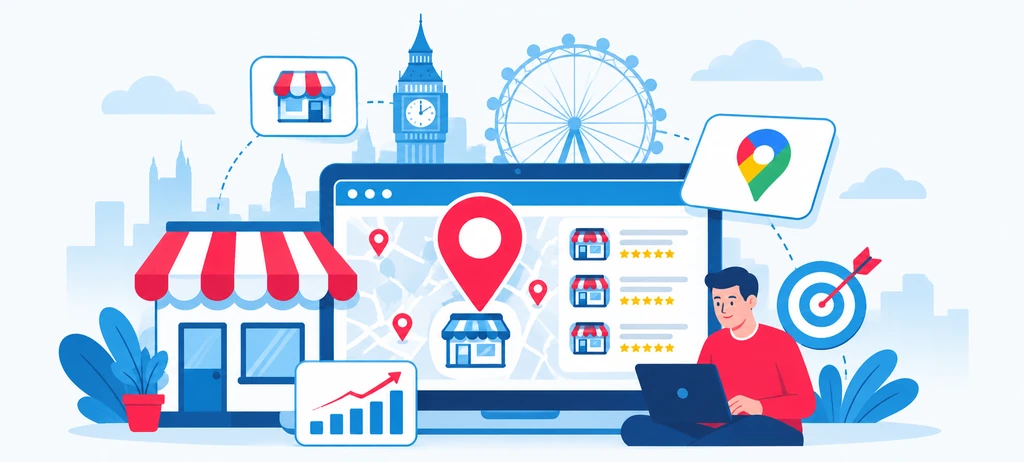
When someone in London searches for a nearby service, such as a dentist in Croydon, an electrician in Westminster, or a restaurant in Camden, they usually want to find a relevant business without spending too much time comparing options. If your business does not appear in Google Search or Google Maps for these searches, potential customers may choose another provider before they even visit your website.
This makes local search visibility an important part of growing a small business in London. According to Ofcom's Online Nation 2025 report, Google Search reached 82% of UK online adults in May 2025, while Google Maps reached 78%. These figures highlight how widely people use Google's services to find information and navigate local areas. For small businesses, having an optimised online presence can help connect their services with customers who are actively looking for them.
However, getting local visibility in London is not simply about creating a Google Business Profile or adding the name of your location to website content. Businesses need to understand how local search works, target relevant location-based keywords, maintain accurate business information, earn genuine customer reviews, build local relevance, and create useful website pages that match what potential customers are searching for.
The challenge becomes greater in a competitive market like London, where businesses often target overlapping neighbourhoods, boroughs, and service areas. A business operating in one part of the city may need a different local SEO approach from a company serving customers across multiple London locations. This is why a structured strategy covering Google Business Profile optimisation, local keyword research, website optimisation, local citations, customer reviews, and performance tracking is essential.
In this guide, we will explore practical local SEO strategies for small businesses in London, explain how to improve Google Maps and local search visibility, and show how to attract more relevant local visitors, enquiries, and potential customers. Whether you run a shop, restaurant, professional service, healthcare practice, or service-area business, these strategies will help you understand what needs to be improved and how to build a stronger local search presence.
If your business wants to improve its organic visibility beyond local searches, explore our SEO services in the UK for a broader search optimisation approach. For businesses that need location-focused support, our Local SEO services in the UK cover Google Business Profile optimisation, Google Maps SEO, local keyword targeting, citation management, and location-page optimisation.
Key Takeaways
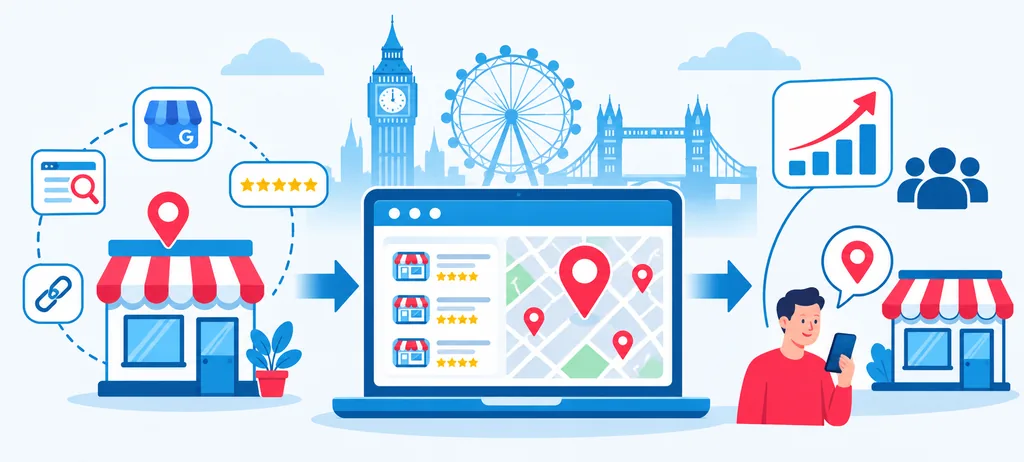
Local SEO helps small businesses appear in search results when people look for products or services in a specific location. It focuses on improving a business's visibility in geographically relevant searches across Google Search and Google Maps. Unlike a general SEO strategy that targets a wider audience, local SEO connects a business with people searching for services in or around its operating area.
For example, when someone searches for "plumber in Stratford", Google needs to identify businesses that provide plumbing services and are relevant to the Stratford area. It considers information such as the business category, location, website content, Google Business Profile, customer reviews, and other signals to determine which results are most useful for that search.
For small businesses in London, local SEO involves more than targeting the keyword "London" across website pages. A business should establish relevance for its actual service locations, maintain consistent business information, optimise its Google Business Profile and build a trustworthy online presence. A restaurant in Camden, a solicitor in Westminster and an electrician serving customers in Croydon will have different local search requirements because their services, customers and geographical coverage are different.
Google uses three main factors to determine local search rankings: relevance, distance and prominence. These factors help its systems understand how closely a business matches a search, how geographically suitable it is, and how well-known it appears to be.
Understanding these factors is important because local SEO is not about getting a business to rank for every location in London. It is about improving its chances of appearing when potential customers search for relevant services in the areas the business genuinely serves.
Let's understand how Google's local search system works and what each part means for small businesses operating in London.
Google local search and traditional organic search both help users discover relevant businesses and websites, but they serve slightly different purposes. Local search prioritises geographical relevance alongside the user's search intent, whereas traditional organic search primarily evaluates how relevant and useful a webpage is for a particular query.
For example, consider two searches:
The difference is the user's immediate requirement. In the first example, the user wants information. In the second, the user is more likely to need a local service provider.
Key differences between local SEO and traditional organic SEO
| Comparison factor | Local SEO | Traditional organic SEO |
| Primary purpose | Connect businesses with customers in relevant geographical areas | Improve website visibility for relevant searches across broader markets |
| Search intent | Often location-based or service-related | Informational, commercial, navigational, or transactional |
| Main visibility areas | Google Local Pack, Google Maps, and local organic results | Standard organic search listings |
| Important signals | Relevance, distance, prominence, and business information | Content relevance, quality, links, technical accessibility and other ranking signals |
| Business information | Google Business Profile, address, phone number, opening hours and service areas | Website pages, business information and relevant structured data |
| Keyword examples | Dentist in Croydon, plumber near Stratford, restaurant in Camden | Best dental treatments, how plumbing systems work, restaurant marketing tips |
| Performance indicators | Calls, direction requests, local impressions, website visits and enquiries | Organic clicks, impressions, keyword visibility, conversions and engagement |
One important distinction is that local SEO and traditional SEO are not separate systems that businesses must choose between. They complement each other.
A well-optimised website can improve its organic visibility while also supporting local search performance. For example, a London-based dental clinic can publish useful content about dental treatments, create service pages explaining its treatments, and maintain an accurate Google Business Profile with its location and contact details.
This provides Google with different types of information about the business. Its website explains what the clinic offers, while its Google Business Profile provides additional business details that help customers find and contact it.
Google also supports LocalBusiness structured data, which allows website owners to provide details such as business hours, departments, and other relevant business information. However, structured data does not guarantee a higher ranking or a rich result. It helps search engines understand the information provided on a website.
For small businesses, the most effective approach is to combine website SEO with local optimisation rather than focusing exclusively on one.
A website ranking in organic search may still miss valuable local customers. Get a local SEO strategy that helps the business appear where nearby customers are actively searching.
Improve Your Local Visibility →Google displays local businesses through different search features, including the Local Pack, Google Maps results and traditional organic listings. The Google Local Pack is a prominent group of local business results shown within Google Search; Google Maps displays businesses geographically, and organic listings show relevant webpages that answer the user's search.
These features give small businesses different opportunities to reach potential customers.
Understanding how they work helps businesses identify where they need to improve their visibility.
1. Google Local Pack
The Google Local Pack is the section of Google Search that displays a selection of local businesses relevant to a location-based search. It commonly appears near the top of the search results and includes business information such as the following:
For example, someone searching for "best Italian restaurant in Camden" may see a selection of restaurants in the Local Pack before reaching the standard organic results.
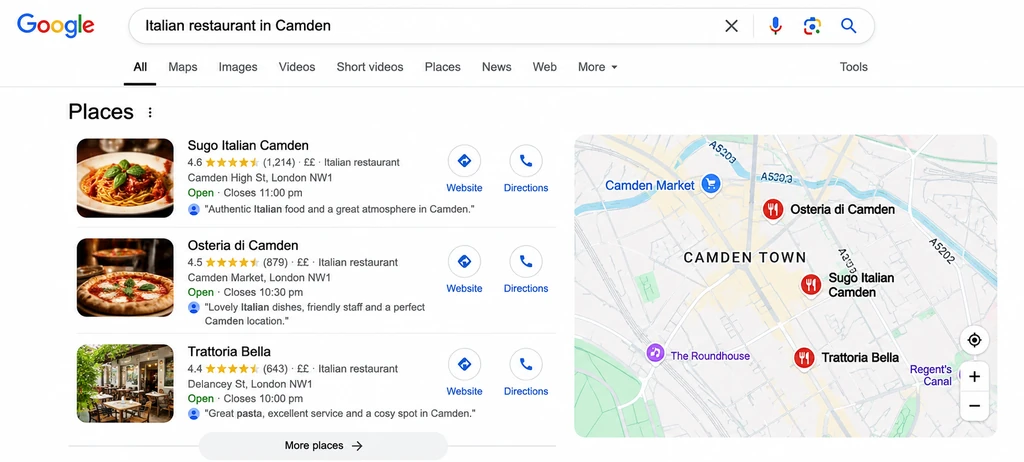
Appearing in this section can help businesses attract attention from people who are actively looking for local products or services. However, Google does not guarantee that every eligible business will appear in the Local Pack.
2. Google Maps
Google Maps provides a geographical view of businesses and places. Users can search for a service, explore nearby options, compare business information, check directions, and visit business websites.
For example, someone searching for "car repair near me" can use Google Maps to identify garages around their current location. They can review available business information, compare ratings, and decide which garage is suitable.
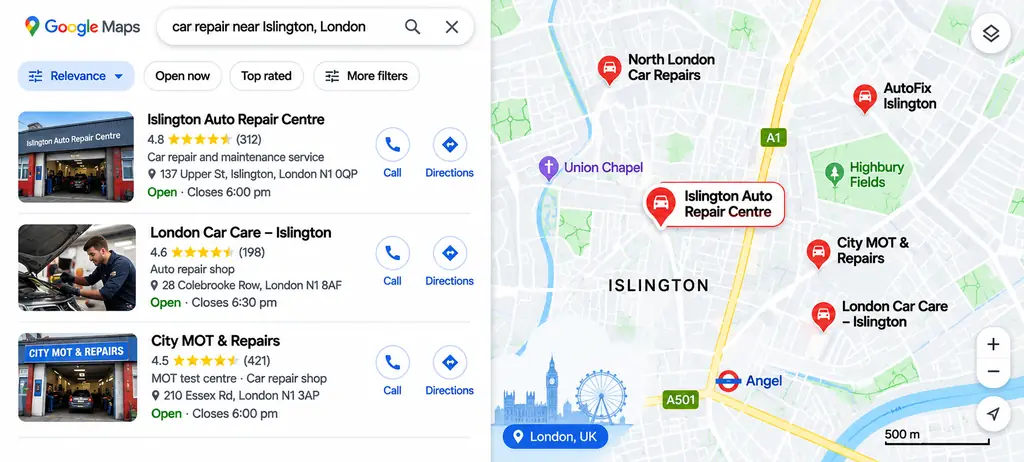
For businesses with a physical location, an accurate and verified Google Business Profile is an important part of appearing correctly on Google Maps.
Service-area businesses can also use Google Business Profile, where they meet Google's eligibility requirements. They should configure their service areas accurately rather than displaying a residential or virtual address as a customer-facing business location.
3. Traditional organic listings
Organic listings are the standard unpaid website results displayed on Google Search. These results generally lead users to specific website pages, such as service pages, location pages, category pages, or informational articles.
For example, when someone searches for "emergency plumbing services in East London", Google may display:
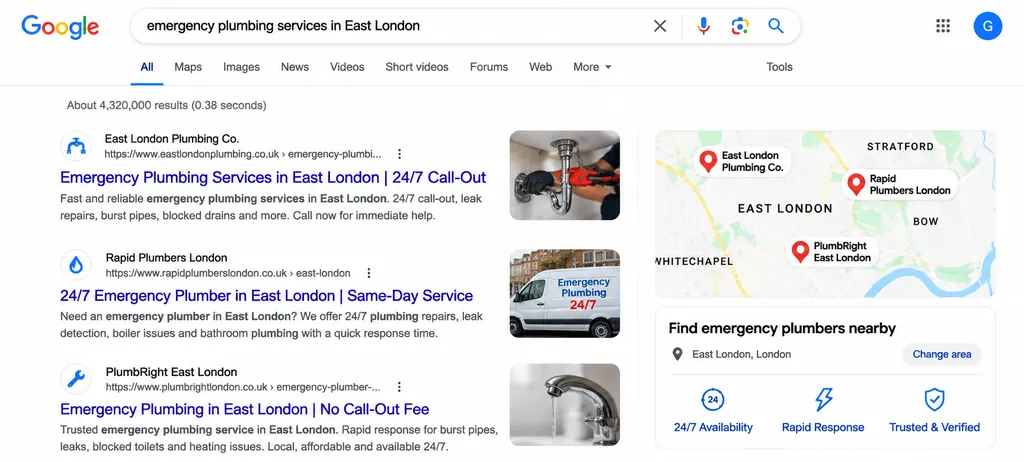
Organic listings are particularly important for businesses that want to attract visitors through detailed service information, useful content, and location-specific landing pages.
Local Pack vs Google Maps vs Organic Listings
| Feature | Google Local Pack | Google Maps | Organic listings |
| Main purpose | Show relevant local businesses in Search | Help users discover businesses geographically | Show relevant website pages |
| Primary information | Business Profile details | Business location and profile information | Website content and page information |
| Location importance | High | High | Depends on search intent |
| Typical user action | Call, visit the website or request directions | Compare nearby businesses and navigate | Read content, explore services or enquire |
| Main optimisation focus | Google Business Profile and local prominence | Accurate business information and local relevance | Content, technical SEO and website authority |
A business does not necessarily need to rank in all three areas to attract customers. However, improving visibility across relevant local and organic search features can create more opportunities for potential customers to discover the business.
For example, a solicitor in Westminster may attract users through a Google Maps listing, a Local Pack result for a relevant legal service, and an organic landing page explaining the firm's services. Each result serves a different discovery route.
The practical takeaway is to optimise both the website and Google Business Profile. Focusing only on the website can leave important local discovery opportunities underdeveloped, while relying exclusively on a business profile can limit the business's ability to attract users searching for detailed service information.
Google primarily uses three factors to determine which businesses appear in local search results: relevance, distance, and prominence. Relevance measures how well a business matches a search, distance considers how far it is from the searcher or relevant location, and prominence reflects how well-known the business is.
Google confirms these three factors in its official guidance on improving local rankings.
Understanding each factor helps small businesses identify which areas of their local SEO strategy need improvement.
1. Relevance: How closely does your business match the search?
Relevance refers to how well a business's information matches what someone is searching for. Google needs to understand what a business offers before it can identify whether that business is suitable for a particular search.
For example, consider a person searching for "private dentist in Islington". Google needs to identify businesses that provide dental services and match the relevant location and search requirements.
A business can improve its relevance by:
For example, a dental practice should have clear website information about treatments such as dental implants, teeth whitening, and general dentistry if these services are genuinely available.
Simply adding "dentist in Islington" repeatedly across website pages will not establish meaningful relevance. The content should explain the actual services, business location, and customer requirements.
2. Distance: How close is the business to the searcher?
Distance refers to how far a business is from the person conducting the search or the location mentioned in their search query. If Google does not have enough information about the searcher's location, it may use other available location signals to estimate it.
For example, imagine two people searching for "coffee shop near me". One person is in Shoreditch, while the other is in Wimbledon.
Google may show different coffee shops because the geographical context of each search is different.
This is particularly important in London because a business located in one borough may not automatically appear prominently for searches taking place across the entire city.
A business based in Camden may have stronger geographical relevance for nearby searches than for someone searching from Bromley. However, the exact results depend on the search query, competition, and other ranking signals.
Businesses should therefore:
One important point is that businesses cannot directly control the searcher's location or force Google to treat a distant location as their primary service area.
3. Prominence: How well-known and established is your business?
Prominence refers to how well-known a business is, both online and in the real world. Google considers information from different sources to understand the business's reputation and presence.
According to Google's guidance, prominence can be influenced by information such as links from other websites and the number of reviews a business receives.
Businesses can work on their prominence through:
For example, a family-run restaurant in Richmond may build local prominence through genuine customer reviews, coverage in a local food publication, partnerships with nearby organisations, and relevant mentions from community websites.
However, receiving more reviews does not automatically guarantee a higher local ranking. Businesses should focus on authentic customer feedback and consistent service quality rather than buying reviews or offering incentives in exchange for positive ratings.
How the three local ranking factors work together
Consider a plumbing company operating in Stratford, East London.
All three factors contribute to Google's assessment of which businesses are suitable for a local search.
There is no guaranteed formula or fixed weighting that businesses can use to manipulate these factors. Google also states that there is no way to request or pay for a better local ranking.
The most sustainable approach is to provide accurate business information, build genuine local recognition, and make it easy for Google and potential customers to understand what the business offers.
Weak local relevance, limited prominence, or an unclear business presence can affect local visibility. Identify the gaps holding back Google Maps and local search performance.
Get Free Local SEO Assessment →Local SEO competition varies across London because each borough has a different mix of businesses, customer demand, service categories, and geographical search patterns. A business competing for customers in Westminster may face different challenges from one targeting Croydon, Camden or Stratford.
For example, restaurants, hotels and professional services often compete with several similar businesses in central London. Meanwhile, plumbers, electricians and other trades may focus on residential neighbourhoods and specific service areas. This means the level of competition depends not only on the borough but also on the industry and services being targeted.
Small businesses should consider three factors when planning their local SEO strategy:
For example, a plumbing company based in Croydon could initially target relevant searches in Croydon and nearby areas before expanding its strategy to other parts of South London. This allows the business to build local relevance instead of targeting every London borough without a clear business reason.
A practical way to approach this is to conduct location-based keyword research, analyse competitors in Google Maps, optimise the Google Business Profile and create useful location-specific website content where appropriate.
Businesses looking to compete across multiple London locations can also explore W3era's Local SEO services in London, which cover borough-level competitor analysis, Google Business Profile optimisation, local keyword targeting and location-focused website optimisation.
The key is to prioritise locations based on actual customer demand, business coverage and competition rather than creating multiple location pages simply to target more keywords.
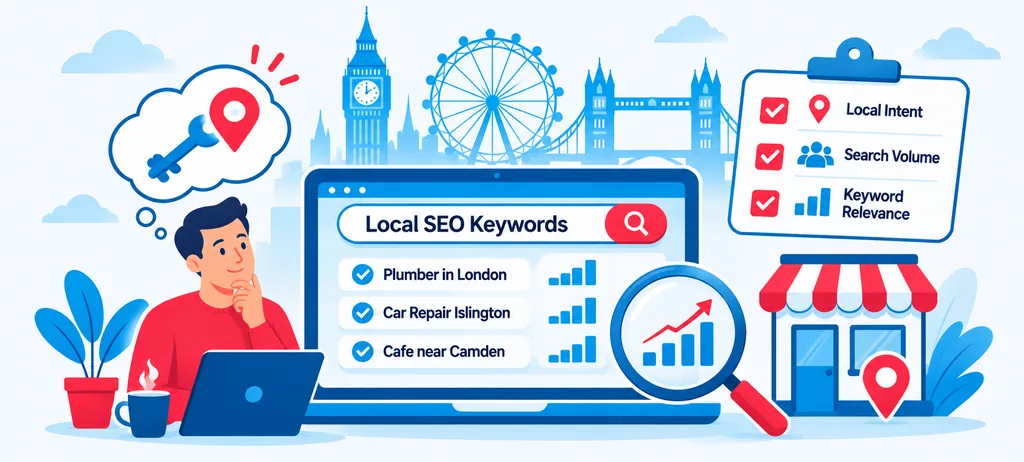
Local keyword research helps businesses understand what potential customers search for, which services they need and where they want to find those services. For a small business in London, this means researching more than keywords containing the word "London". Customers may search using borough names, neighbourhoods, specific services, company types or phrases such as "near me".
For example, someone looking for a search engine marketing agency might search for "search engine marketing company in London", "Google Ads agency in Westminster" or "PPC management services near me". Although these searches relate to digital marketing, they indicate different service requirements and geographical preferences.
The challenge is identifying keywords that match your actual services and target locations rather than targeting every possible variation. A business offering Google Ads management, PPC advertising and SEO services should understand which searches relate to each service and whether customers are looking for an agency, a specific solution or general information.
A well-planned keyword strategy connects three elements: the service your business provides, the location you target and the search intent behind the customer's query. This helps businesses select relevant keywords, organise website pages and attract visitors who are more likely to become enquiries.
For London businesses, the process should cover service identification, geographical keyword research, search intent analysis, keyword clustering and commercial prioritisation.
Start local keyword research by identifying the services your business offers and the locations where you want to attract customers. This creates a keyword foundation based on actual business offerings rather than assumptions about what potential customers might search for.
For example, a search engine marketing agency targeting London businesses may offer:
Each service attracts different search requirements. Someone searching for a Google Ads agency may want help managing paid campaigns, while someone searching for an SEO agency may be interested in improving organic visibility.
These services should be researched individually before being combined with geographical modifiers.
Build a service and location keyword matrix
| Service offered | Customer requirement | Potential local keyword |
| Search engine marketing | Complete search marketing support | Search engine marketing agency in London |
| Google Ads management | Paid search campaign management | Google Ads agency in London |
| PPC advertising | Paid advertising and lead generation | PPC agency in Westminster |
| Local SEO | Improve local search visibility | Local SEO agency in Camden |
| SEO services | Improve organic search performance | SEO company in Croydon |
| Conversion optimisation | Improve landing page conversions | CRO agency in London |
These are keyword ideas for research, not verified search-volume opportunities. Validate them using keyword research tools and actual Google search results before assigning them to pages.
Understand the language your potential customers use
Your agency may describe its offering as integrated search marketing, but potential customers may search for a Google Ads management company or PPC advertising agency.
This difference matters because keyword research should reflect the language customers use when looking for a service.
Use the following sources to discover relevant search terms:
For example, if a London business is researching search engine marketing services, it should compare queries such as "SEM agency London", "Google Ads management London" and "PPC management company London". These may overlap, but they should not automatically be treated as identical keywords.
For a more structured approach, businesses can explore W3era's keyword research services, which cover competitor analysis, search intent, search volumes and keyword opportunities for SEO and paid advertising.
The purpose of this first step is to create a reliable list of services and customer requirements before expanding the research into specific London locations.
After identifying your services, research how potential customers combine those services with geographical information. Service-based keywords describe what customers need, borough-based keywords identify where they want the service, and near-me searches use the searcher's geographical context to find nearby businesses.
For a search engine marketing agency, these three keyword groups can reveal different opportunities.
1. Service-based keywords
Service-based keywords describe the marketing service without necessarily mentioning a location.
Examples include:
These keywords help establish the main commercial topics around which the agency's website should be organised.
For example, a company offering Google Ads management and PPC advertising should research these services separately. A business searching for Google Ads management may need campaign setup, keyword targeting and bid optimisation, while another may need a complete PPC strategy covering multiple advertising channels.
2. Borough-based and neighbourhood-based keywords
Borough-based keywords include geographical names that help identify the location where customers want to find a service.
Examples include:
| London location | Potential search term |
| Westminster | Search engine marketing agency in Westminster |
| Camden | SEO agency in Camden |
| Croydon | Google Ads management in Croydon |
| Hackney | PPC agency in Hackney |
| Kensington | Digital marketing agency in Kensington |
| Stratford | SEO services in Stratford |
| Islington | Google Ads company in Islington |
These variations can help identify geographical keyword opportunities, but businesses should not create a separate landing page for every borough automatically.
A London-based agency should consider whether it has genuine relevance to the target location and whether a dedicated page can provide useful information about its services, experience and customer requirements.
For example, a marketing agency targeting businesses across Westminster and Camden may decide to create location-specific pages if each page can address distinct customer needs and provide meaningful local information.
3. Near-me and proximity-based keywords
Near-me searches are queries in which users ask search engines to identify businesses close to their current location.
Examples include:
These searches can be relevant to agencies that serve local businesses and want to attract nearby clients.
However, businesses do not need to create separate pages containing the phrase "near me" repeatedly. Search engines can interpret geographical context using the searcher's location, query, and other relevance signals.
Instead, focus on accurate business information, relevant service pages, a properly maintained Google Business Profile, and genuine local relevance.
How to validate local keyword opportunities
Before creating a new location page or adding a keyword to your website, check:
For example, an agency may discover searches for "PPC agency in Westminster" and "Google Ads management in Westminster". If both searches have similar intent and lead to comparable search results, one well-developed landing page may be sufficient.
For additional insight into the differences between organic search and paid advertising, read W3era's guide to SEO vs. SEM vs. PPC vs. Google Ads. This helps businesses understand the different search marketing services they may need.
Targeting the wrong keywords can waste valuable SEO opportunities. Discover relevant service-based and location-based search terms that connect the business with potential London customers.
Find My Local Keywords →Local keywords should be evaluated according to the reason behind the search, not just the words used. Informational searches indicate that users want to learn something, commercial investigation searches indicate that they are comparing available options, and transactional searches show a stronger intention to contact or purchase from a business.
Understanding these differences helps a search engine marketing agency create content that matches the customer's decision-making stage.
Consider a London business owner looking for help with online advertising. Their search behaviour may change as they move from understanding paid search to comparing agencies and selecting a service provider.
1. Informational intent: The user wants to understand a topic
Informational searches usually come from people researching a marketing channel, strategy, or business problem.
Examples include:
These queries are suitable for educational blogs, detailed guides, and FAQs.
For example, an article explaining the difference between SEO and PPC can help a business owner understand the advantages, limitations, and use cases of both channels.
The article can naturally link to relevant service pages when readers want to explore professional campaign management.
2. Commercial investigation intent: The user is comparing providers
These searches indicate that potential customers are evaluating agencies, service options, or campaign management approaches.
Examples include:
These queries may be addressed through detailed service pages, case studies, comparison guides, pricing explanations, and evidence of campaign experience.
For example, a London business owner comparing SEM agencies may want to understand which services are included, how keyword research is conducted, whether conversion tracking is available, and how campaign performance is reported.
Content should answer these questions clearly rather than relying on unsupported claims about being the best agency.
3. Transactional intent: The user wants to hire a service provider
Transactional searches generally indicate stronger commercial intent because the user is looking for a specific service or provider.
Examples include:
These searches are generally more suitable for service landing pages.
A relevant landing page should explain the available services, campaign management process, target audience, reporting approach and enquiry options.
For example, a Google Ads service page should explain campaign setup, keyword selection, ad creation, bid management, conversion tracking and ongoing optimisation.
Businesses exploring these solutions can review W3era Google Ads management services to understand the different areas covered by professional paid search management.
Keyword intent and recommended content mapping
| Search query | Intent | Recommended content |
| What is search engine marketing? | Informational | SEM educational guide |
| SEO vs PPC: Which is better? | Informational / commercial | Comparison article |
| How much does Google Ads cost? | Informational / commercial | Pricing guide |
| Best SEM agency in London | Commercial investigation | Agency comparison or service page |
| Google Ads management company | Transactional | Google Ads service page |
| Search engine marketing services | Transactional | SEM service page |
Search intent should also be validated by examining actual Google results. A keyword may appear commercial, but the results can reveal whether Google primarily displays service pages, comparison content, or informational guides.
This distinction prevents businesses from creating a sales landing page for an informational query or publishing a general article when the searcher wants to contact an agency.
Once you have collected and evaluated local keywords, organise them into groups that represent the same customer requirement. This process is called keyword clustering. It helps businesses decide which keywords can be targeted by one page and which need separate landing pages or supporting articles.
The purpose of keyword clustering is to create a clear website structure in which every important page has a distinct topic, search intent, and business objective.
Consider a search engine marketing agency targeting London businesses. Its keyword research may include:
These keywords are related, but they should not all be assigned to the same page.
For example, general SEM service keywords may belong on the main SEM landing page. Google Ads management keywords may require a dedicated service page, while informational searches should be addressed through supporting blog content.
How to create an effective keyword cluster
Step 1: Group keywords by service
Separate keywords based on the actual service being offered, such as SEM, Google Ads management, PPC advertising, and SEO.
Step 2: Compare search intent
Check whether the keywords generate similar Google results. Keywords with different user requirements should not automatically be grouped together.
Step 3: Add geographical relevance
Identify whether a keyword targets London as a whole, a specific borough, or a broader UK audience.
Step 4: Assign keywords to existing URLs
Review your website before creating new pages. Identify whether an existing service page already satisfies the keyword's intent.
Step 5: Identify supporting blog opportunities
Use informational content to answer related questions and connect those articles to the appropriate service pages through contextual internal links.
Example of a keyword-to-URL structure for an SEM agency
| Keyword cluster | Search intent | Recommended page |
| Search engine marketing services | Transactional | Main SEM services page |
| Google Ads management | Transactional | Google Ads services page |
| PPC advertising services | Transactional | PPC service page |
| SEM agency in London | Local commercial | Relevant London SEM landing page, if justified |
| SEO vs SEM | Informational | Supporting comparison blog |
| SEM keyword research | Informational | Keyword research guide |
| Google Ads campaign costs | Informational / commercial | Pricing guide |
This structure gives every page a clear purpose.
For example, an article explaining how SEM keyword research works can link to the main SEM service page. A guide comparing SEO and PPC can link to both organic SEO and Google Ads services. A pricing article can help readers understand the factors involved before visiting the relevant service page.
Prevent unnecessary keyword cannibalisation
Keyword cannibalisation can occur when multiple pages target overlapping search intent and compete for similar search visibility.
For example, creating separate pages titled "Search Engine Marketing Services", "SEM Agency Services" and "Search Marketing Company" without meaningful differences can lead to repetitive content.
Before creating another page, review:
Google recommends creating useful, well-organised content and using descriptive internal links to help users and search engines discover related information.
For further guidance, explore W3era's SEM keyword research strategies, which explain how to identify high-intent paid search keywords, organise ad groups, and improve campaign relevance.
The objective is to build a website structure where informational blogs support commercial landing pages without competing with them for the same search intent.
Ranking for irrelevant searches rarely produces quality leads. Build a search-intent-focused content strategy that attracts visitors who are more likely to need the services.
Build My SEO Content Strategy →Not every local keyword deserves equal attention. Once your keyword clusters are ready, prioritise opportunities according to how closely they match your services, geographical relevance, competition and potential to generate qualified enquiries.
The most valuable local SEO keywords are not necessarily those with the highest search volume. They are the keywords that connect a genuine customer requirement with a service your business can deliver.
For a search engine marketing agency targeting London businesses, five factors should guide keyword prioritisation.
1. Service relevance
Choose keywords that accurately describe your actual services.
For example, an agency providing Google Ads management should prioritise searches related to paid search campaign management, PPC optimisation and Google Ads consultancy.
It should not target unrelated digital marketing services simply because those keywords have higher search volumes.
2. Geographical relevance
Prioritise locations that represent genuine business opportunities.
A company targeting London businesses should assess whether it wants to attract clients across Greater London or focus on specific areas such as Westminster, Camden, Croydon and Hackney.
Do not create location pages merely to include additional borough names. Each page should have a genuine purpose and useful information.
3. Search demand
Review estimated search volumes and related keyword variations using tools such as Google Keyword Planner.
For example, compare:
Search volume provides an indication of potential demand, but it does not guarantee website visits, enquiries or conversions.
4. Competition and ranking opportunity
Analyse the agencies and webpages already appearing for your target keywords.
Evaluate their service relevance, website content, location targeting, Google Business Profiles and overall search presence.
Third-party keyword difficulty scores can support initial research, but they should not replace actual SERP analysis.
For paid advertising, also consider CPC estimates and the level of competition among advertisers. SEO keyword difficulty and Google Ads competition are different measurements and should not be treated as interchangeable.
5. Business value and conversion potential
Consider which services are most important to your revenue and business objectives.
For example, a search engine marketing agency may find that a smaller number of searches for "Google Ads management agency London" are more commercially relevant than a much larger audience searching for general digital marketing information.
This does not mean informational keywords should be ignored. They can attract potential customers earlier in their decision-making process and support the service pages through relevant internal links.
This is an internal planning method, not a Google ranking formula. Actual decisions should also consider search data, SERP analysis, campaign performance, and available business resources.
For businesses looking to turn keyword research into a broader search marketing strategy, w3era’s search engine marketing services combine SEO, Google Ads management, PPC campaigns, and conversion optimisation. Businesses can also explore W3era's SEM packages to understand the different campaign management and optimisation components.
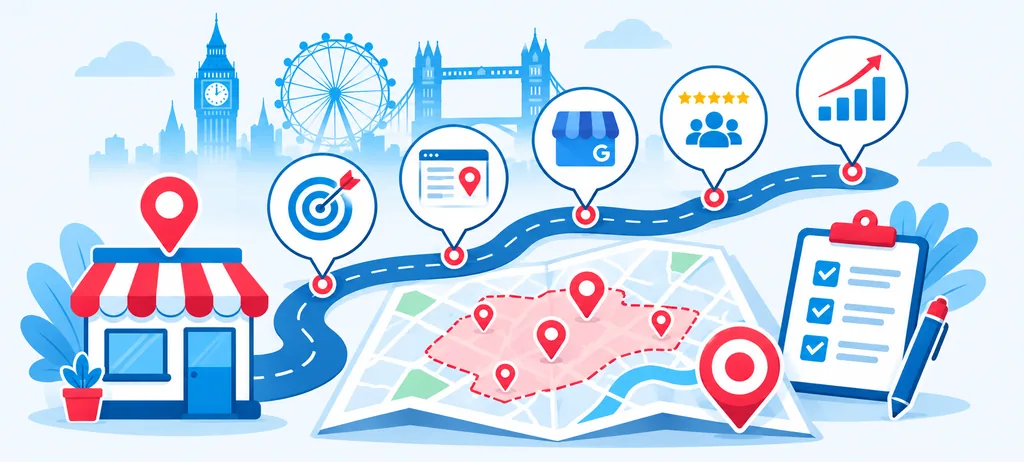
A successful local SEO strategy for a London business should reflect where it operates, which customers it can serve and how people search for its services. Targeting every London borough may appear to increase search visibility, but it can create irrelevant website traffic, weak location pages and inaccurate business information.
London's local search results are also highly location-dependent. Google considers the searcher's location alongside the relevance and prominence of a business. This means a company may appear for searches close to its premises but have limited visibility in areas further away. Adding borough names to website content does not change the physical location of a business or guarantee rankings across London.
For small businesses, the practical approach is to build a local SEO strategy around genuine service coverage. This includes selecting relevant locations, aligning service pages with customer needs, maintaining accurate Google Business Profile information, and publishing location content only when it provides useful information.
A well-planned strategy also helps businesses get more value from local SEO services in London by connecting local keyword research, website optimisation, Google Maps visibility, and relevant internal links.
The first step in local SEO is to establish the geographical areas your business can realistically serve. Your target locations should reflect your operating address, customer access, service delivery arrangements, and the areas where you can consistently fulfil enquiries.
This distinction matters because Google treats businesses differently depending on how they serve customers. A business with a customer-facing premises can display its eligible address on Google Business Profile. A service-area business that visits customers instead should configure its profile accordingly and hide its address when customers are not served there. A hybrid business can display its premises and service area when it meets Google's eligibility requirements.
Before selecting locations, review the following:
Your Google Business Profile service area should accurately reflect your operations. Google allows eligible service-area businesses to specify the areas they serve, but the settings are not a way to create additional business locations or override the importance of proximity in local results.
This is particularly important for businesses targeting searches such as local SEO London, small business SEO London, and location-specific service terms. The website can explain the locations covered, but the business must not imply that it has a physical office in an area where it does not operate.
For a business that wants to improve its visibility across the capital, a structured London SEO strategy should connect its actual operating location with relevant service coverage, local search demand, and website content. This is more useful than selecting boroughs solely to increase the number of location keywords on the website.
London's boroughs do not represent identical local search markets. Search demand, business competition, customer behaviour and the relevance of a service can vary between neighbourhoods. A local SEO strategy should therefore prioritise locations based on business value and genuine customer demand rather than attempting to target every borough.
Start by reviewing your existing customer and enquiry data. Google Analytics 4, Google Search Console, CRM records, booking information and enquiry forms can help identify where visitors and customers are coming from. Where location information is available and collected appropriately, use it to understand which areas generate relevant enquiries and completed business.
Next, review the search results for your priority services and locations. Pay attention to:
This research helps distinguish between locations that have search demand and locations that are commercially relevant to your business. A location may generate impressions but still produce few qualified enquiries if the business cannot meet the customer's requirements there.
The same principle applies to neighbourhood and postcode targeting. Use the geographical terms that customers genuinely use when searching for a service. Borough names, neighbourhood names and postcode districts can all help describe local relevance, but they should not be inserted repeatedly without a clear purpose.
For businesses targeting SEO for small businesses London, the priority should be to connect local search demand with the correct service page and customer journey. A visitor looking for a local SEO agency should reach a relevant service page, while someone researching local search optimisation should find useful guidance before being directed towards a commercial service.
W3era's local SEO services cover the broader optimisation requirements behind local visibility, including Google Business Profile optimisation, local citations and website content. Businesses looking for wider geographical coverage can also review SEO services for UK businesses to understand how local optimisation fits within a broader UK SEO strategy.
Your website should communicate three things clearly: what your business offers, where it operates, and how customers can access its services. These details should remain consistent across your homepage, service pages, contact page, and any dedicated location pages.
A common problem with local SEO websites is that the same location keywords appear across several pages without a clear distinction in purpose. This can make it difficult for visitors and search engines to understand which page is most relevant to a particular search.
Build your website structure around the services you provide first. Each important service should have a dedicated page when it requires its own explanation, pricing information, process, expertise, or customer information. Location references can then be added where they help explain the service's availability and relevance to local customers.
A dedicated location page should only be published when it provides information that is genuinely useful to people in that area. It should not be a copy of another page with the borough name changed.
A useful London location page should address the following:
Your homepage should introduce the business and its main service coverage. Individual service pages should explain what the business provides, while location pages should add geographical information that cannot be adequately covered on the main service page.
Keep your business name, address, telephone number, and opening hours accurate wherever they appear. If your business has a customer-facing premises, the website information should agree with its eligible Google Business Profile details. If you operate as a service-area business, explain the service coverage without publishing a residential or non-customer-facing address as a shopfront.
Internal linking should also reflect this website structure. Link location pages to the relevant parent service page, connect supporting guides to the appropriate service pages, and make sure visitors can move naturally between related information. This helps search engines discover important pages and gives users a clear route from research to enquiry.
For a broader approach to planning this structure, W3era's SEO content strategy services cover keyword mapping, search intent, content clusters, and internal linking. These elements are particularly useful when a website has multiple services and locations but needs to avoid creating overlapping pages.
Generic website content may fail to communicate local relevance and actual service coverage. Create a location-focused SEO strategy that connects the right services with the right London audiences.
Strengthen Your Local SEO →Creating pages for locations that a business cannot genuinely serve is not a sustainable local SEO strategy. It can attract irrelevant visitors, create misleading expectations, and weaken the usefulness of the website.
Google's spam policies identify doorway abuse as a problem. This includes creating multiple pages for similar locations or search queries that funnel users towards the same destination without providing distinct value. Replacing a borough name while keeping almost all the content unchanged does not create a useful local landing page.
The same principle applies to Google Business Profile. Businesses should not create additional profiles using virtual offices, false addresses, or locations where they do not meet Google's eligibility requirements. Incorrect profile information can lead to verification problems or profile restrictions.
Before publishing a new location page or adding an area to your profile, check the following:
If a location does not meet these requirements, do not create a separate page just to target its keywords. Keep the service coverage information on the relevant service page until there is enough genuine information to justify a dedicated location page.
This also helps prevent keyword cannibalisation. When multiple pages target the same service and location intent, they can compete for similar searches instead of providing a clear and useful destination. Review existing page titles, headings, content and internal links before creating additional location pages.
For businesses already targeting several London areas, a regular local SEO audit can identify duplicate location content, inconsistent business information, weak internal links and pages that do not match actual service coverage. The aim should be to improve the quality and usefulness of the existing website rather than continuously increasing the number of location URLs.
A focused approach to local SEO in London gives small businesses a clearer way to build visibility in the areas they can serve. It also creates a stronger foundation for Google Maps optimisation, relevant organic traffic and qualified local enquiries.
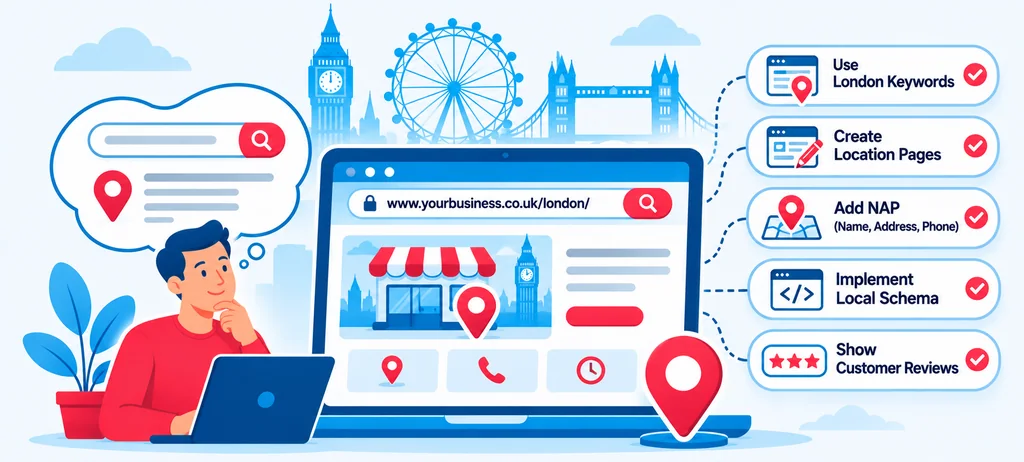
Once you have identified the London areas your business can genuinely serve, the next step is to make your website relevant to the searches customers perform in those locations. This means connecting each service with the right customer needs, using accurate local information and making important pages easy to find.
For local SEO in London, adding borough names to existing content is not enough. Your website needs to explain what you offer, who the service is for, and how customers in your service area can access it. This also helps search engines understand the relationship between your services and the locations you mention.
The following improvements help strengthen local relevance without creating repetitive pages or forcing keywords into every section.
A service page should answer the questions a potential customer needs resolved before contacting your business. Explain the service, what it includes, who it is suitable for, and whether it is available in the customer's area.
For small business SEO London, this means moving beyond a short service description and making each page useful to someone looking for that service locally.
Prioritise these elements:
Keep the main service keyword in the page title, H1, and relevant copy where it reads naturally. Supporting keywords should describe related services or customer needs, not become a reason to create multiple pages targeting the same search.
| Website page | What it should help the visitor understand |
| Main service page | What the service includes and how it works |
| Location page | Whether and how the service is available in that area |
| Contact page | How to reach the business and arrange the service |
| Supporting blog | Answers to questions customers have before choosing the service |
This structure gives each page a distinct purpose and reduces overlap between service and location keywords. For further guidance on selecting the right terms for each URL, see W3era's keyword research services.
Borough names should help customers understand service coverage, not simply increase keyword frequency. Mention a location when it explains where the business operates, how customers can access the service, or which local requirements affect delivery.
For example, a page targeting local SEO services in North London should provide genuine information about the business's North London coverage. It should not imply that the company has an office there unless that is true.
Use geographical references carefully:
A useful test is whether removing the borough name would remove important information from the page. If the content would remain exactly the same, the location reference may not justify a separate page.
This approach supports SEO for small businesses in London because it keeps location information relevant to the visitor rather than treating every borough as another keyword opportunity. Google's guidance on doorway abuse also makes clear why near-identical location pages created to funnel visitors towards the same destination are not a sound strategy.
Local search visitors need to verify that a business is genuine, accessible and capable of delivering the advertised service. Your website should make this information easy to find.
Prioritise the following details:
| Information to include | What to check before publishing |
| Business identity | Correct business name, contact details and operating address |
| Service coverage | Accurate areas served and any geographical restrictions |
| Opening hours | Current hours that match actual business operations |
| Customer reviews | Genuine feedback with no fabricated or altered claims |
| Experience | Verifiable qualifications, completed work, and relevant expertise |
| Contact options | Working telephone number, email, enquiry form, or booking route |
Do not use a virtual office or an address where customers are not received to suggest that you have a local branch. If your business operates as a service-area business, explain how customers receive the service instead of presenting a non-customer-facing address as a shopfront.
Evidence matters as much as business information. Publish genuine project details, photographs, qualifications and customer feedback where they are relevant. Avoid unsupported claims such as being the leading provider in a borough or guaranteeing local rankings.
Keep your website details consistent with your Google Business Profile. If you change your address, telephone number, opening hours, or service coverage, review the relevant website pages and profile information together.
These checks support the wider work involved in local SEO services, where website relevance, business information, and local visibility need to work together.
Internal links should connect pages that help visitors move naturally from one question to the next. They also help search engines discover important URLs and understand how your website content is organised.
For a London small business website, use this linking structure:
Use descriptive anchor text that tells readers what they will find after clicking. For example, a discussion about appearing in Google Maps can naturally link to W3era's guide to ranking on Google Maps.
Avoid linking every mention of London or local SEO to the same commercial page. Repeated exact-match anchors can make navigation feel forced. Choose the destination according to the paragraph's subject and the visitor's likely next question.
For a broader website, review internal links whenever you publish, merge, or update a service or location page. Check for broken links, orphaned URLs, and multiple pages competing for the same search intent. W3era's SEO content strategy services are relevant to planning this relationship between keywords, pages, and supporting content.
Local content should answer questions that matter to customers in the areas you serve. It should not exist simply to add more London-related keywords to your website.
Use real customer enquiries, sales conversations, support requests and Google Search Console queries to identify topics. Then decide whether each question needs a separate article, a section on an existing service page or a short FAQ.
Prioritise content that helps visitors:
For local SEO for small business London, supporting content should strengthen the main article and relevant service pages rather than compete with them. A guide about Google Maps visibility, for instance, can explain the role of a Google Business Profile and link to the relevant service page. It does not need another general article repeating the same local SEO fundamentals.
Before creating a new URL, check whether the topic is already covered. Improve an existing page when it answers the same question, and publish a separate resource only when it provides additional information or addresses a distinct search intent.
Use clear headings, direct answers, and verifiable information. Where a topic involves UK regulations or local authority requirements, refer to the relevant official source and check that the information is current.
This is also the right approach for visibility in AI overviews and generative search. Google recommends helpful, original, people-first content and confirms that the same foundational SEO practices apply to its AI search features. Clear explanations, accessible page content and useful internal links help search engines understand your material, but no keyword, schema or content format guarantees an AI citation.
For businesses following SEO best practices in London, the priority is to make every page useful in its own right. A website with accurate service information, meaningful local context and well-connected supporting content gives both visitors and search engines a clearer understanding of the business.
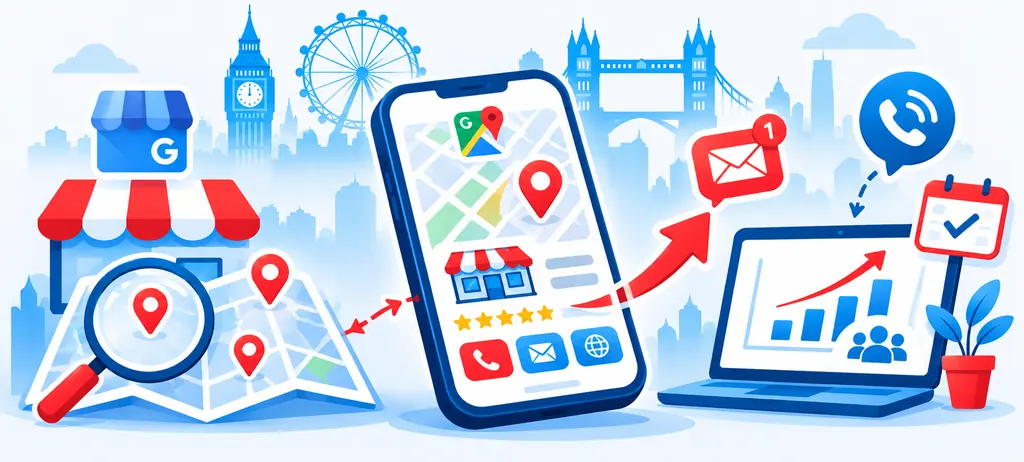
Ranking in Google Maps or the local search results does not automatically generate customers. A business also needs to make it easy for people to verify its details, understand its services, and take the next step. For small businesses targeting local SEO in London, the priority is to connect Google Business Profile visibility with a website experience that turns relevant visitors into enquiries.
The customer journey usually moves from discovering a business in Google Search or Maps to checking its information, visiting its website or contacting it directly. Problems at any stage can result in lost enquiries. Improving this journey requires accurate business information, relevant landing pages, accessible contact options, and proper conversion tracking.
Before contacting a business, customers want to confirm that it offers the service they need and is operating where it claims to be. Your Google Business Profile and website should provide consistent information about your business, services, and availability.
Check these essential details:
Inconsistent contact details can create confusion between your website, Google Business Profile, and external business directories. Review your business name, address, and phone number (NAP) across these sources, especially after changing premises or contact details.
W3era's NAP Consistency Guide explains how to audit and correct these details across your website and business listings. You should also check common Google Business Profile mistakes to identify issues such as incorrect categories, duplicate profiles, outdated hours, and incomplete business information.
For small business SEO London, accurate information is not just an optimisation task. It helps customers establish whether they can trust the listing and contact the right business.
The website link on your Google Business Profile should take visitors to the most relevant page, not automatically to the homepage. Someone searching for a particular service should be able to understand that service without navigating through unrelated sections.
Choose the destination based on the purpose of the listing:
| Business website destination | When to use it |
| Main service page | When customers are looking for a specific service |
| Branch or location page | When the business has a genuine customer-facing location |
| Contact page | When the main purpose is to help customers contact the business |
| Booking or appointment page | When customers can complete a booking directly |
| Product or menu page | When customers need to review specific products or offerings |
For businesses with multiple services, make sure the destination page clearly presents the relevant offering and contact option. Avoid sending visitors to a general page where they must search again for the service mentioned in the listing.
You can also use UTM parameters on your Google Business Profile website link to distinguish profile traffic in Google Analytics 4. This makes it easier to analyse website visits originating from your local listing.
Google Business Profile also supports booking links for eligible businesses and booking providers. Where this functionality is available, use a direct, working destination that allows customers to complete the intended action.
This is an important part of local search optimisation because the quality of the journey after a Maps click affects whether visibility becomes a useful business opportunity. W3era's Google Maps ranking guide covers the wider optimisation factors that help businesses improve their presence in Google Maps and the Local Pack.
Potential customers may discover the business but leave without making contact. Improve the journey from Google Maps to the website with clearer information, stronger calls to action, and easier enquiry options.
Increase Your Customer Enquiries →A local customer should not have to search through several pages to find a telephone number, request directions or submit an enquiry. Your website should make these actions accessible on mobile devices, particularly on important service and location pages.
Focus on four conversion actions:
A mobile conversion review should also check whether the page loads properly, buttons are easy to tap, text is readable, and pop-ups do not obstruct important actions. Google's mobile-first indexing guidance explains why the mobile version of a website matters for crawling and indexing.
For businesses investing in SEO for small businesses London, mobile usability should be reviewed alongside local rankings. A listing may attract a potential customer, but a difficult contact process can prevent that customer from becoming a lead.
A landing page should deliver the information promised by the search result or Google Business Profile. If the listing promotes a particular service, the destination page should explain that service, its availability, and how customers can enquire.
A conversion-focused local landing page should contain:
Avoid using the same generic landing page for every service and borough. A page targeting a specific local service should provide information that genuinely relates to that service and its availability. It should not make unsupported claims about local offices, customer projects or service coverage.
This is also where commercial search intent needs attention. Someone searching for a local SEO agency in London may want to understand its services, expertise, deliverables and reporting process. A useful commercial landing page should address those requirements rather than simply repeat the phrase throughout the content.
For businesses that need broader organic visibility alongside local search optimisation, W3era's UK SEO services explain how keyword research, on-page optimisation, technical SEO and performance tracking work together. This is a relevant next step for readers considering SEO beyond Google Maps visibility.
To understand whether local search is generating useful business opportunities, measure what happens after people discover your listing. Google Business Profile Performance and Google Analytics 4 provide different insights into this journey.
Use the following metrics to identify where improvements are needed:
| Metric | What it measures | What to investigate |
| Business Profile searches | Search terms that display your profile | Whether searches match your services |
| Profile views | Views of your business profile | Whether the listing is reaching relevant searchers |
| Website clicks | Clicks from the profile to your website | Whether the destination page meets search intent |
| Call clicks | Clicks on the profile's call button | Whether calls are answered and handled properly |
| Direction requests | Requests for directions to your business | Whether address and visit information are accurate |
| Booking completions | Bookings recorded through an eligible provider | Whether the booking process works |
| Form submissions | Enquiries successfully submitted on your website | Whether the form and follow-up process work |
These metrics should not be treated as equivalent to completed sales. A call click does not confirm that a conversation took place, and a direction request does not prove that someone visited the premises. Track actual enquiries separately wherever possible.
In Google Analytics 4, configure relevant events for form submissions, booking completions and other important actions. Use UTM-tagged links to identify visits from your Google Business Profile. If telephone enquiries are important, use an appropriate call-tracking process while keeping your displayed business information accurate.
When performance drops between two stages, investigate that specific part of the journey:
A website and conversion audit can help identify technical issues, weak calls to action, broken forms and usability problems that affect lead generation. W3era's SEO audit services cover technical performance, mobile usability, website structure and conversion barriers.
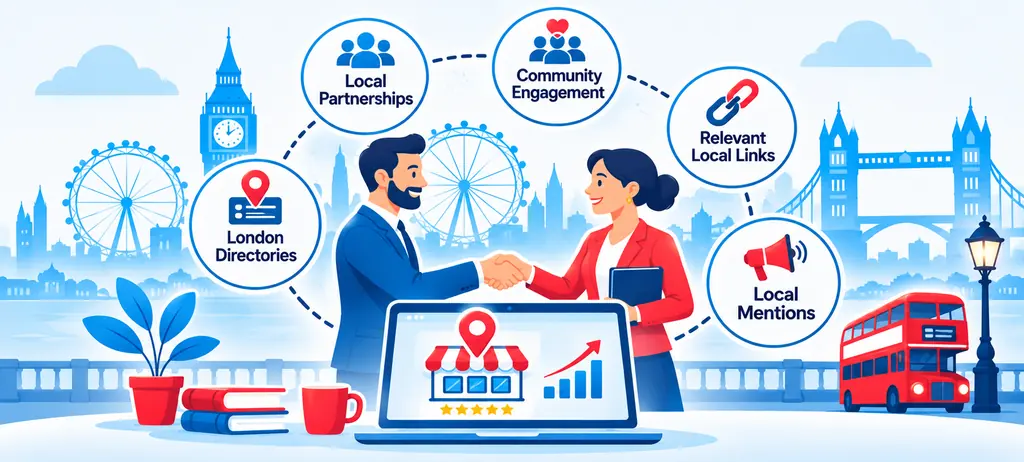
Local authority is not built simply by adding a business to more directories or collecting links from unrelated websites. For a small business in London, stronger opportunities often come from being recognised by organisations, suppliers, professional groups and publications that are genuinely connected to its work or the communities it serves.
These relationships can lead to relevant website mentions, editorial links, referrals and opportunities to demonstrate industry knowledge. They can also help potential customers discover a business through sources they already trust.
For example, a London-based property maintenance company may have a natural connection with local property management firms, housing-related organisations, trade associations and suppliers. A specialist clinic may be better suited to professional networks, community health initiatives and relevant local publications. The value comes from the relationship itself, not simply from whether a website provides a backlink.
A practical local link-building strategy should therefore focus on relevance, genuine participation and editorial value. This helps small businesses strengthen their presence across the London market without relying on artificial link-building tactics.
London has a wide network of business organisations, chambers of commerce, trade associations, borough-level business groups and Business Improvement Districts (BIDs). These organisations bring together businesses operating in particular industries or local areas. Becoming involved can create opportunities for introductions, referrals, event participation and online mentions.
Start by identifying organisations that match your business type and the areas you serve. A company operating in Camden, for instance, may find more relevant opportunities through organisations serving Camden and nearby business communities than through a general directory with no clear local connection.
Potential sources include:
A business profile on an organisation's website can provide a useful local reference, but membership should not be purchased solely for the purpose of obtaining a backlink. Before joining, assess whether the organisation offers meaningful benefits such as networking, industry support, local representation or access to potential customers.
Where a member listing or event contribution includes a website link, make sure the business details are accurate, and the link points to an appropriate page. A mention from a relevant London organisation can be useful even when it does not provide a following backlink.
Some of the most natural local link opportunities come from businesses that already work with you. Suppliers, service partners, contractors and complementary businesses may have a legitimate reason to mention your company on their websites, particularly when you collaborate on projects or provide services to the same customer groups.
The aim is to create a useful professional relationship rather than arrange a routine link exchange.
For example, a London-based interior design business may collaborate with local furniture suppliers, electricians, decorators and property professionals. A financial adviser may work alongside accountants, solicitors or business consultants. These connections can create opportunities for joint resources, expert contributions, project features and customer referrals.
Consider the following activities:
A website mention should reflect the actual relationship. If a partner publishes a case study, for instance, it can identify the businesses involved and link to their relevant websites, which helps readers understand the project.
Avoid creating partner pages that exist only to exchange backlinks. Google identifies excessive reciprocal linking and partner pages created primarily for cross-linking as examples of link spam. The relationship should make sense to customers even if no search engine value is involved.
Weak local connections can limit opportunities to earn relevant business mentions and editorial links. Develop a sustainable local authority strategy through genuine industry relationships and relevant partnerships.
Build My Local Authority →Local publications can provide another route to building recognition in London. Depending on the industry, these may include borough news websites, specialist trade publications, neighbourhood magazines, business journals, community platforms and relevant online publications.
However, contributing an article should not mean sending the same generic guest post to dozens of websites. Editors and readers need information that is relevant to their audience, supported by genuine expertise and different from content they can find elsewhere.
Start by researching publications that cover your industry or the London communities you serve. Review their existing articles, audience, editorial standards, and contribution guidelines before approaching an editor.
Useful contributions could include:
The subject should match your actual knowledge and professional experience. Do not claim expertise in areas outside your qualifications simply to secure a publication opportunity.
When pitching an article, explain what readers will learn, why the subject is relevant to the publication's audience, and what makes your contribution useful. If the editor accepts the article, a short author biography or contextual reference to your business may be appropriate. Any link should support the reader rather than interrupt the article with promotional anchor text.
For businesses developing a wider content-led approach, W3era's SEO content strategy services provide a relevant next step for planning content around audience needs, business expertise and search intent.
Not every website mentioned has the same value. A link from a relevant professional organisation or a publication read by your potential customers may be more useful than several links from unrelated websites.
Before investing time or money in an opportunity, assess it against practical criteria.
| Evaluation factor | What to check |
| Local relevance | Does the organisation serve London businesses, residents, or the specific areas connected to your work? |
| Industry relevance | Does the website cover your industry or a closely related subject? |
| Audience quality | Are its readers potential customers, professional contacts or useful referral sources? |
| Editorial standards | Does it review contributions and publish content that genuinely informs its audience? |
| Business credibility | Is the organisation identifiable, active and transparent about its purpose? |
| Link context | Would a link to your website help readers understand a service, project or expert contribution? |
| Referral potential | Could the mention generate relevant visits, enquiries, introductions or business opportunities? |
It is also important to distinguish between a website mention and a backlink. A publication may mention your business without linking to it, while another may provide a contextual link to a relevant service or resource. Both can have business value, but they should be evaluated differently.
Do not judge an opportunity solely by domain authority scores or other third-party SEO metrics. These figures can help with initial research, but they do not establish whether a website is trusted by your target audience or whether its visitors are relevant to your business.
You should also review the destination of each backlink. A contextual link to a useful service page, relevant case study, or supporting resource is generally more helpful to readers than a link pointing to the homepage without a clear reason.
For a broader explanation of how links contribute to SEO, see W3era's guide to what link juice means and how it works. Use link analysis as one part of your evaluation rather than treating any single metric as proof of link quality.
A common mistake in local SEO is assuming that more backlinks automatically lead to stronger rankings. This can encourage businesses to submit their websites to hundreds of directories, purchase packages of backlinks, or participate in reciprocal linking arrangements that have little connection to their industry or location.
These shortcuts can waste marketing budgets and create risks under Google's spam policies.
Google specifically identifies low-quality directory and bookmark site links, paid links intended to manipulate rankings, excessive link exchanges, and automated link-building programmes as examples of link spam. Its guidance also explains that paid advertising and sponsorship links should be appropriately qualified with rel="sponsored" or rel="nofollow" where applicable.
Be cautious of the following practices:
A directory listing is not automatically harmful. A genuine industry directory, professional register or established local business platform can help customers find and verify a business. The important distinction is whether the listing serves a real audience and has a legitimate purpose.
When reviewing an existing backlink profile, prioritise links that are clearly irrelevant, manipulative, or part of a known link scheme. Do not assume that every low-authority link requires removal or disavowal. Investigate the source and context before taking action.
Ultimately, local authority should reflect the business's real position in its market. Relevant relationships, useful contributions and credible mentions are more sustainable foundations than a backlink count built through shortcuts.
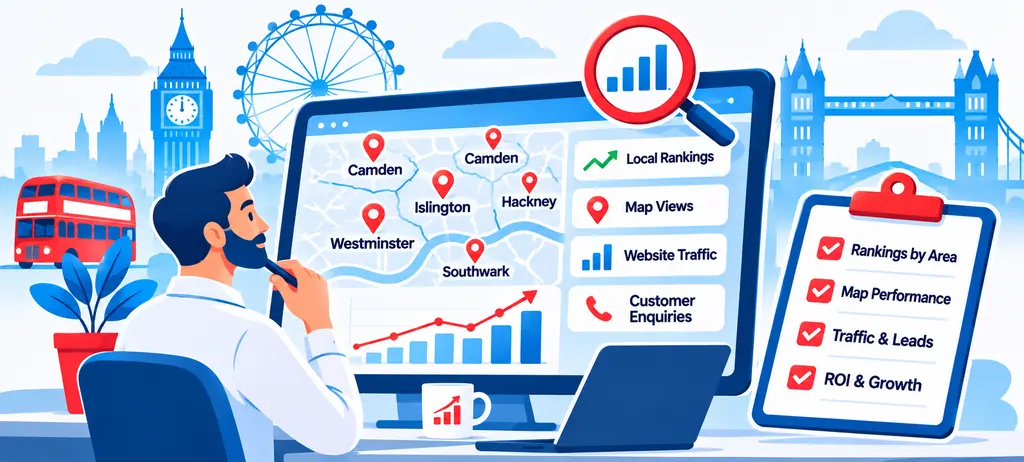
A local SEO campaign should be measured by more than the number of keywords appearing in Google's search results. For a small business in London, meaningful progress means reaching people in the areas it serves, attracting relevant visits and generating enquiries that can become customers.
A business targeting customers in North London, for example, needs to understand whether its visibility is improving in the locations that matter to its services. An increase in overall website traffic may look positive, but it does not necessarily mean the campaign is reaching the right audience.
A reliable measurement process combines Google Search Console, Google Business Profile Performance, Google Analytics 4 (GA4), call and enquiry records, and location-specific ranking checks. Each source provides a different part of the picture.
The objective is to connect local search visibility with actual business outcomes. This makes it easier to identify which London areas are generating opportunities, which pages need attention, and where the local SEO strategy should be adjusted.
Google Search Console (GSC) is a useful starting point for understanding how people discover your website through Google Search. Its performance report shows the queries generating impressions and clicks, the pages appearing in search results, average click-through rate (CTR) and average position.
For a small business targeting London, these insights help reveal whether its website is gaining visibility for relevant local searches.
Start by reviewing queries that include your service, business type, and location. Depending on your industry, these may include phrases such as:
These are examples of search patterns to investigate, not guaranteed search terms or evidence of current rankings. Your actual query data will depend on your services, website visibility and the way customers search.
Use the following process to review performance:
One limitation is important when analysing London local SEO: Search Console's standard Performance report does not provide precise borough-level or postcode-level organic ranking data. Its country filter can help isolate UK performance, while query and page filters provide further insight into search visibility. You will need additional location-based checks to compare rankings across individual London areas.
Google explains how to review queries, pages, clicks, impressions, and CTR in its Search Console Performance reporting guidance.
For businesses with an eligible Google Business Profile, the performance report provides information about how customers discover and interact with a listing on Google Search and Maps.
This is particularly useful for measuring local visibility because a customer may find a business through Google Maps without visiting its website first.
Depending on the profile and available reporting features, you can review metrics such as:
Review these metrics over consistent periods rather than judging performance from a single week. For example, an increase in website clicks may indicate stronger interest, while a rise in calls may show that more people are considering contacting the business directly.
However, interactions should be interpreted in context. A direction request does not confirm that someone visited the premises, and a call-button click does not necessarily mean a conversation took place or a sale was completed.
Also, Google notes that Business Profile performance can include activity from organic results and Google Ads. Where paid campaigns are running, keep this distinction in mind when evaluating the contribution of local SEO.
For a clearer assessment, compare profile interactions with your actual call records, bookings, and customer enquiries. You can also review the Google Business Profile performance documentation for metric definitions and reporting limitations.
Search visibility and website traffic are useful indicators, but they do not show the full commercial value of a local SEO campaign. A business ultimately needs to understand whether local visitors are contacting it, requesting quotations, booking appointments or making purchases.
This is where conversion tracking becomes important.
Set up Google Analytics 4 (GA4) to record meaningful actions on your website. Depending on your business model, these may include:
Not every interaction should automatically be counted as a lead. For example, clicking a telephone number is an indication of intent, but it does not confirm that a call is connected. Similarly, a form submission may be a spam enquiry or an existing customer request rather than a new sales opportunity.
Use separate tracking events for important actions and, where possible, connect them with your CRM or enquiry management system. This helps distinguish between initial interactions and enquiries that meet your business's customer criteria.
A practical measurement framework could look like this:
| Business outcome | What to measure | Why it matters |
| Organic enquiries | Valid form submissions from organic search | Shows whether search visitors are contacting the business |
| Phone enquiries | Calls attributed to organic or local search activity | Helps assess direct customer interest |
| Bookings | Completed appointments or reservations | Measures actions that move customers towards purchasing |
| Qualified leads | Enquiries matching your service, location and customer requirements | Shows the quality of generated opportunities |
| Sales | Customers or revenue attributed to tracked enquiries | Connects local SEO activity with business results |
For telephone tracking, use a consistent method that respects user privacy and does not interfere with the accuracy of your business contact details. Where possible, use call tracking with appropriate source attribution and maintain your genuine business number across important listings.
In GA4, meaningful actions can be configured and marked as key events. Google provides guidance on measuring lead form submissions, including how to create a specific event for a particular form rather than treating every form interaction as a successful lead.
The most useful reporting outcome is not simply the number of conversions. It is understanding which organic landing pages, search queries, and local discovery channels contribute to qualified enquiries and completed business.
London is a large and competitive market. A business serving several boroughs should not assume that strong visibility in one area means it is performing equally well across its entire service area.
A company may attract customers from Islington and Camden but receive limited enquiries from Hackney or Westminster. Another business may perform well around its physical premises but struggle to reach customers in neighbouring areas.
To understand these differences, create a location-level performance framework based on the areas you genuinely serve.
Start by grouping your target locations into meaningful segments. These could be boroughs, neighbourhoods, postcode districts or practical service zones. The choice should reflect your business operations rather than an attempt to create a separate SEO target for every London location.
For example:
| Location group | What to evaluate | Possible action |
| North London | Relevant search visibility, landing-page traffic and enquiries | Improve pages where service relevance or customer information is incomplete. |
| South London | Organic visits, qualified leads and customer demand | Review whether the service offering and local content match search intent. |
| East London | Search queries, Google Maps interactions and lead quality | Identify gaps in relevant local information and business visibility. |
| West London | Local search visibility and enquiry sources | Review competition and the relevance of existing service-area content. |
| Central London | Customer enquiries, service coverage and conversion quality | Check whether the business can realistically serve the locations being targeted. |
These groups are a reporting framework, not a claim that Google Search Console can identify performance at the borough level.
For a more detailed comparison, combine several data sources:
There is also a difference between a business's physical location and its service area. A service-area business should not create misleading location pages or claim to have a physical office in every borough it targets. Each location page needs a genuine purpose, accurate service information, and useful content for customers in that area.
When comparing performance, look beyond rankings. A location generating fewer organic visits may still produce more valuable enquiries if its visitors have stronger purchase intent. The right priority is the area that offers a realistic opportunity for relevant business growth.
Overall website traffic cannot reveal which locations deliver valuable customers. Measure local search visibility, Google Maps interactions, and qualified enquiries to identify where the next SEO improvements should focus.
Analyse Your Local SEO Performance →Once the performance data has been collected, the next step is to identify what needs attention. Reporting is only useful when it leads to practical decisions.
Avoid changing every part of your local SEO strategy at once. Instead, identify the weakest point in the customer journey and prioritise improvements based on business impact.
Use the following diagnostic framework:
| Performance observation | What it may indicate | What to investigate |
| High impressions but low CTR | Search listings may not match user expectations or attract clicks | Review titles, meta descriptions, search intent, and competing results |
| Relevant queries but low average positions | The page may lack relevance, useful information, or competitive strength | Review content quality, internal links, technical accessibility and competitor coverage |
| More website visits but few enquiries | Visitors may not find the information or contact options they need | Check landing-page relevance, mobile experience, forms and calls to action |
| More Business Profile views but few interactions | The listing may not provide enough confidence or useful information | Review categories, services, photos, reviews, opening hours and contact details |
| Strong performance in one London area but weak results elsewhere | Visibility or customer demand may vary across the service area | Compare location-specific pages, competition, search demand and service coverage |
| Enquiries increase, but qualified leads do not | The campaign may be attracting visitors outside the intended customer group | Review keyword intent, service descriptions, location targeting and enquiry quality |
Prioritise improvements according to their likely impact and the evidence available. For example, if a service page receives relevant organic traffic but generates very few enquiries, improving the page's clarity, contact options and mobile experience may be more useful than publishing another location article.
If several important pages are losing visibility, review their technical health, indexing status, content relevance, and internal linking. A structured SEO audit can help identify issues that are difficult to spot through keyword reports alone.
It is also worth maintaining a simple monthly performance record. Include:
Compare results over suitable periods and allow enough time for implemented changes to be evaluated. Local search performance can fluctuate because of competition, customer demand, seasonality, and changes in search results.
For businesses targeting the wider UK market as well as London, measurement should also connect local performance with the wider organic search strategy. W3era's UK SEO services can be explored for support with improving search visibility across relevant UK markets.
The purpose of measuring local SEO performance is not to produce a report full of rankings and traffic figures. It is to understand where your business is becoming easier to find, which locations are producing valuable enquiries, and what needs to improve next. That is how small businesses can make better decisions and build a more accountable local search strategy.
Building strong local search visibility takes more than optimising a Google Business Profile or adding location-based keywords to your website. A successful local SEO strategy for small businesses in London combines relevant local content, accurate business information, genuine relationships, quality backlinks and consistent performance tracking. Focus on the London areas you genuinely serve, understand what your customers are searching for, and turn relevant search visibility into qualified enquiries. With continuous improvements, your business can build lasting local authority and reach more potential customers.
Local SEO is the process of improving a business's visibility in location-based Google Search and Google Maps results. It helps small businesses in London reach nearby customers searching for relevant products or services. A well-planned local SEO strategy can increase relevant website visits, customer enquiries, phone calls and opportunities to attract local customers.
To improve Google Maps visibility, create and verify an eligible Google Business Profile, select accurate business categories, maintain complete business information, collect genuine customer reviews and keep your website relevant to your services. Google primarily considers relevance, distance and prominence when determining local rankings, so businesses cannot guarantee a particular position by making one change.
Google identifies relevance, distance and prominence as the main factors influencing local search rankings. Relevance measures how well a business matches a search, distance considers how far it is from the searcher, and prominence reflects how well-known the business is. Accurate Business Profile information, reviews and relevant website references can support local visibility.
No. Create separate location pages only when your business genuinely serves those areas and can provide useful, location-specific information. Each page should explain relevant services, coverage, customer requirements and other details that help visitors. Creating multiple pages that only replace one borough name with another can result in thin or doorway-style content.
Build genuine relationships with relevant London business organisations, suppliers, professional associations and local publications. You can earn relevant mentions through useful contributions, joint projects, community activities and expert articles. Prioritise websites with a genuine audience and editorial standards rather than purchasing bulk backlinks or participating in artificial link exchanges.
Measure local SEO using organic clicks and impressions in Google Search Console, customer interactions in Google Business Profile, and website conversions in Google Analytics 4. Also track calls, bookings, qualified enquiries and sales. Compare performance across the London areas you genuinely serve to identify which locations and services are generating valuable business opportunities.
Start with your main services and combine them with relevant London locations, neighbourhoods and customer search terms. For example, a business might research phrases such as "SEO services in North London" or "accountant in Camden". Use Google Search Console, keyword research tools, customer enquiries and Google search suggestions to identify relevant terms and map them to suitable website pages.
Customer reviews help potential customers assess a business's reputation and make informed decisions. Google also identifies review quantity and positive ratings as signals associated with prominence in local results. Encourage genuine customers to leave honest feedback and respond professionally to reviews. Never buy reviews or offer incentives in exchange for positive ratings.
Local citations are online mentions of a business's details, such as its name, address, telephone number and website. They can appear in relevant business directories, professional associations, local organisations and industry websites. Accurate listings help customers verify business information and discover services. Keep your business details consistent across important platforms and correct outdated information.
Local SEO does not have a guaranteed timeframe. Results depend on factors such as your website's existing condition, local competition, business location, search demand and the improvements implemented. Monitor Google Search Console, Google Business Profile interactions and qualified enquiries regularly to assess progress. Evaluate meaningful trends over time instead of expecting immediate ranking changes.
More Related Blogs:
Loading Footer Banner...
Discover How We Can Help Your Business Grow.

Discover How We Can Help Your Business Grow.