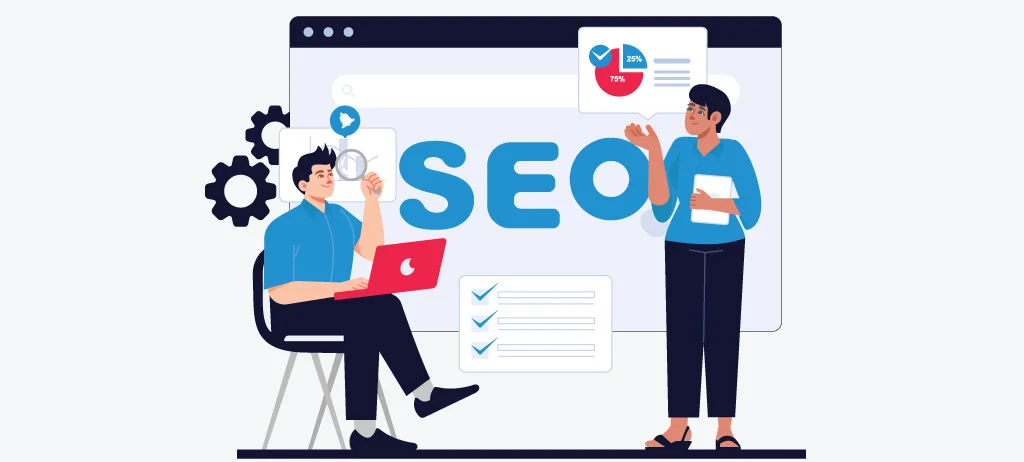
Search intent optimization is the practice of matching your page's content format, depth, and angle to what Google's top-ranking results reveal about what users actually want for a given query. In 2026, intent alignment is the most common reason technically sound pages fail to rank and the fastest fix available. The four intent types are: informational (learn something), navigational (find a specific site), commercial (compare options), and transactional (take action). Identifying intent correctly requires SERP analysis, not assumption. A page targeting a commercial-intent keyword with informational content will never rank, regardless of keyword optimisation or backlinks.
Hundreds of technically optimised pages with strong backlinks fail to rank for one reason: they are the wrong content type for the query. A service page targeting 'how to' keywords, or a blog post targeting 'buy' keywords, both are intent mismatches that no amount of technical SEO can fix. Search intent optimization is the discipline of reading the SERP to understand what Google is actually rewarding for each query, then building exactly that. It is the most impactful on-page fix available in 2026.
Key Takeaways
- Intent mismatch is the most common reason technically strong pages fail to rank and the fastest fix available.
- SERP analysis (reading the top 5 results) is the only reliable method for identifying true search intent; never assume.
- The 4 intent types (informational, navigational, commercial, transactional) each require a different content format, depth, and CTA.
- Informational intent requires educational content service pages targeting informational queries will not rank.
- Commercial intent (comparison, best-of) requires evaluation of content pros/cons, comparisons, and recommendations to outperform pure information.
- Transactional intent requires friction-free conversion pages; long-form educational content hurts conversion and rankings for transactional queries.
- AI Overviews appear almost exclusively for informational intent queries, optimize informational content for AI extraction as a separate priority.
What Is Search Intent and Why Does It Determine Rankings
Search intent is the "why" behind a search query. It's the real goal a user is trying to accomplish before they even click a result.
Google defines it clearly in its Search Quality Evaluator Guidelines: understanding user intent is critical for ranking well. But what does that mean in practice?
It means that Google no longer just matches your keywords to a search; it matches your page to a purpose. If your content doesn't satisfy the purpose behind a query, Google filters it out of the top rankings, no matter how technically optimised your page is.
Search intent optimization is the process of aligning your content, its format, depth, and structure with that underlying purpose. Get it right, and your rankings and engagement improve together. Get it wrong, and you'll watch pages with great content and solid links underperform for years without understanding why.
Here's a real example of what a mismatch looks like: imagine your team publishes a detailed guide on "CRM software pricing." It's comprehensive and well-written. But when you check the SERP, every top result is a comparison page because users searching that phrase want to compare CRM tools, not read a breakdown of one company's pricing tiers. The content is great; the intent match is wrong. That's the failure mode that intent optimization is designed to prevent.
The 4 Types of Search Intent With Examples
Every query on Google falls into one of four intent categories. Your content format, structure, and CTA must match the category, or you're building for the wrong audience.
The user wants to learn something. They are not ready to buy yet — they are researching, exploring, or trying to solve a problem.
- Example queries: "what is search intent," "how to do keyword research complete guide," "why is my website not ranking"
- SERP signals: Featured snippets, People Also Ask boxes, long-form guides
- Content format: Blog posts, how-to guides, tutorials, explainers
- Conversion expectation: Low, but highly valuable for building top-of-funnel trust
2. Navigational Intent
The user already knows where they want to go and is simply using Google to get there faster.
- Example queries: "Ahrefs login," "Google Search Console," "Semrush pricing page"
- SERP signals: Brand homepages dominate; sitelinks appear
- Content format: Brand pages, login portals, dedicated landing pages
- Conversion expectation: High if someone is searching your brand, they already have you in mind
3. Commercial Investigation Intent
The user is close to making a decision but is still comparing options. They need a little more proof before they commit.
- Example queries: "best SEO tools 2026," "Ahrefs vs Semrush," "top email marketing platforms"
- SERP signals: Listicles, comparison articles, review roundups
- Content format: Best-of lists, buying guides, comparison tables, case studies
- Conversion expectation: Medium to high this is where buying decisions take shape
4. Transactional Intent
The user is ready to act. They want to buy, sign up, download, or book — right now.
How to Identify Search Intent: The SERP Analysis Method
- Example queries: "buy Ahrefs plan," "Semrush free trial," "hire SEO consultant"
- SERP signals: Product pages, shopping ads, pricing tables
- Content format: Service pages, product pages, conversion-focused landing pages
- Conversion expectation: Very high cut the friction and make it easy to convert
The fastest and most reliable way to identify intent is also completely free: just search the keyword and read the results. Google has already done the analysis the top results show you exactly what the algorithm believes users want.
Here's a simple five-step process you can use before writing any piece of content:
Step 1: Search your target keyword in incognito mode. This removes personalisation bias so you see what most users see.
Step 2: Look at the top 5 results. What type of page dominates blog posts, product pages, comparison articles, or landing pages? That dominant type is your format signal.
Step 3: Identify the content format. Are the top pages detailed long-form guides? Quick listicles? Tool-driven calculators? Tables? Format follows intent. If you don't match it, you're fighting the algorithm.
Step 4: Identify the content angle. What's the specific framing of the top pages? Are they targeting "beginners," "budget options," "enterprise teams," or "2026 updates"? This tells you the angle users expect.
Step 5: Assess content depth. Are ranking pages 500 words or 3,000? Do they cover sub-topics in detail or give quick answers? Match the depth to the intent. Transactional pages are concise and action-driven; informational guides tend to be comprehensive.
Apply this process before writing a single word. It takes 10 minutes and prevents months of wasted effort.
Informational content holds a content strategy together. It meets users early in their journey, earns their trust, and — when put together the right way — shows up in featured snippets and AI Overviews.
To write informational content that actually ranks and keeps readers satisfied:
- Answer the primary question in the first 100–150 words. This improves your chances of being pulled into featured snippets and AI Overviews.
- Use clear, question-based headings. Structure your H2S and H3S around what users are actually asking, pull from "People Also Ask" for inspiration.This becomes even more effective when combined with a strong long-tail keyword strategy 2026 approach focused on intent-driven variations.
- Go beyond surface-level information. Comprehensive, well-researched guides outperform thin content. Include examples, data, and visuals.
- Add internal links to commercial content. Guide readers who are ready to move from learning to deciding.
- Implement FAQPage schema. This increases your eligibility for rich results and makes your content easier for Google's AI systems to extract and cite.
The point of informational intent is not just to attract traffic. It helps businesses build topical authority, strengthen internal linking, and establish trust around important SEO topics. These foundational activities also support SEO services in USA, where understanding search intent helps create content that aligns with user needs while improving long-term organic visibility.
This principle is especially important for search intent optimization for financial SEO, where users often seek highly specific answers related to investments, banking, insurance, taxes, or financial planning. Aligning content with the correct intent helps financial websites build trust, improve engagement, and rank for queries that influence critical financial decisions.
Commercial Intent Comparison and Evaluation Content
Commercial investigation is where buying decisions are made. Users at this stage are actively comparing options, and your job is to help them choose ideally in your direction.
The best formats for commercial use are:
- Best-of lists containing explicit and distinct recommendations for each item.
- In addition to comparing features side-by-side, there are pages that display comparisons of the various features and pricing.
- Alternative pages that target users looking for alternatives to a competitor.
- Consulting with buying guides who can guide you through the process of what to look for before buying
Organize these pages truthfully with a pros and cons section, a section with real testimonials, links to third-party reviews, opinions of experts, and a clear call to action. Don't force users to purchase, instead encourage them to take the next action, such as a free trial, a product demo or a further product page. The shift from evaluation to action shouldn't be difficult.
Transactional Intent Conversion-Optimised Pages
When a user arrives on your page with transactional intent, they've already decided to act. Your only job is to remove every obstacle between them and that action.
Effective intent-based SEO for transactional pages means:
Navigational Intent Brand SEO
- Lead with the CTA above the fold. Don't make users scroll to find the "Buy" or "Get Started" button.
- Place social proof immediately after the headline. A star rating, client logo strip, or a single powerful testimonial builds confidence fast.
- Eliminate friction. Minimise form fields, clarify pricing, and make delivery or refund policies visible.
- Optimise page speed. A one-second delay in load time can reduce conversions by up to 7%. Transactional users have the lowest patience for slow pages.
- Use transactional language in title tags and meta descriptions. Words like "buy," "pricing," "free trial," and "order" signal to both users and search engines that this page is built to convert.
Navigational intent may seem simple, but failing at it is surprisingly common, especially for growing brands.
When users search your brand name, your homepage must appear first. If a competitor's review page, a negative Reddit thread, or an outdated directory listing ranks above you for your brand name, that's a serious navigational-intent failure.
To strengthen your brand search signals:
- Ensure your homepage is fully optimised for your brand name and primary product keywords
- Use clear, descriptive URLs and breadcrumb navigation
- Build branded anchor text through PR and content partnerships
- Monitor branded keyword performance in Google Search Console weekly
Brand SEO is a trust signal. Owning your navigational searches tells Google and users that you are the authoritative source for your name.
How to Fix Intent Mismatches on Existing Pages
A majority of sites will have a few pages that have poor intent ranking. How to locate and correct them.
Step 1: Pull your top pages from Google Search Console. Filter by impressions and average position. These are your highest-stakes pages.
Step 2: For each page, search the primary query in incognito. Compare your page format to the top 3 results. If they're comparison pages and yours is a product page or vice versa, you have a mismatch.
Step 3: Decide: rewrite, restructure, or redirect.
- Rewrite if the intent is right, but the format or depth is wrong
- Restructure if the core content is solid, but it's buried or poorly organised for the user's goal
- Redirect if the page is targeting an intent that a different existing page already serves better
First up, some quick wins: Make sure your title tag and meta description accurately show intent signals. Proper formatting, internal structure, and optimisation principles from this on-page SEO complete guide can further improve intent alignment and CTR. This is enough to boost CTR and minimize bounce rate while you focus on greater improvements.
The big changes in 2026 are that AI Overviews are appearing for a large percentage of informational queries, and that organic CTR on those queries has plummeted by up to 61% in some studies.
This doesn't mean informational content is less valuable; it means the game has shifted. Instead of optimising purely for a click, you now need to optimise to be cited inside the AI Overview itself.
To make your informational content AI-extractable:
- Put a direct, clear answer near the top of the page: within the first two paragraphs
- Use bullet points, numbered lists, and data tables: AI systems favor structured, scannable content
- Add FAQPage schema markup: This increases machine readability and eligibility for rich results
- Demonstrate E-E-A-T: (Experience, Expertise, Authoritativeness, Trustworthiness) AI models prioritize credible, traceable sources
- Include original data or expert insights: AI Overviews favor first-party evidence over generic summaries
Being featured in an AI Overview is a powerful brand visibility signal, even when it doesn't generate a direct click. It builds recognition and drives assisted conversions over time.
Conclusion
Search intent optimisation isn't a tactic, it's a mindset. Every page you build should start with one question: What does this user actually want? Match your content format, depth, and structure to that answer, and rankings follow naturally. Ignore it, and even your best content will underperform. In 2026, intent alignment is what separates pages that rank from pages that sit on page two forever.