NAP consistency means having your business Name, Address, and Phone Number listed identically across every online directory, citation, and platform. In local SEO, inconsistent NAP signals confuse Google about your business's legitimacy and location, lowering your chances of appearing in the Local Pack and "near me" searches. This guide covers what NAP is, why it directly impacts your local rankings, how to run a full NAP audit, and how to fix every type of inconsistency — including duplicate listings, outdated addresses, and formatting mismatches.
Today, Google is full of "near me searches" and the most deserving businesses like yours are still missing out. Do you know the reason behind this gap?
Clearly, this is another trick of NAP SEO. Search engine optimization often comes as an umbrella, and its various elements boost every possible type of search on search engines.
This time, it is about Local SEO. Imagine someone living 10 minutes away from your bakery, and searches for "best bakeries near me", but Google or any search engine doesn't show your name in the list. Doesn't it sound too frustrating, as a business owner?
If yes, then you are at the right place. This guide covers everything — what NAP is, why consistency matters, how to run a proper audit, and exactly how to fix every type of inconsistency you find. Let's get started.
What is NAP in SEO?
To be precise, NAP stands for -
N- Name of your business
A- Address of your business
P- Phone number of your business
However, you need to ensure that these three pieces of information are not the only things you have to inculcate — they also include additional information such as email address, photos of your physical showroom, website URL, location, etc. Simply, putting all the information online in the form of a directory is called NAP SEO.
Another thing that pops up in the discussion is that to let your business flaunt itself in users' search engines, it is important to create a balance between both NAP as well as SEO. Where NAP brings focus to online directories for seamless navigation to potential customers, there comes SEO that focuses on elements like quality content, keywords, etc.
Overall, the role of NAP in SEO is crucial, as without NAP, even if the customer wants to reach up to your business willingly, they would not be able to navigate any way to contact you or knock on the door of your shop.
NAP vs. NAPW vs. NAPU — What's the Difference?
As local SEO has evolved, the concept of NAP has expanded:
NAPW (Name, Address, Phone, Website) — Many directories and citation tools now include your website URL as a fourth consistency element. Mismatched or missing URLs across listings reduce the link equity your citations pass to your site.
NAPU (Name, Address, Phone, URL) — Same concept, slightly different terminology. In both cases, the URL you list must be consistent — don't list your homepage on some directories and a specific landing page on others unless there's a specific local strategy behind it.
For most businesses in 2026, NAP consistency should be treated as NAPW consistency — name, address, phone number, and website URL, identical everywhere.
Why Is NAP Consistency Important to Google?
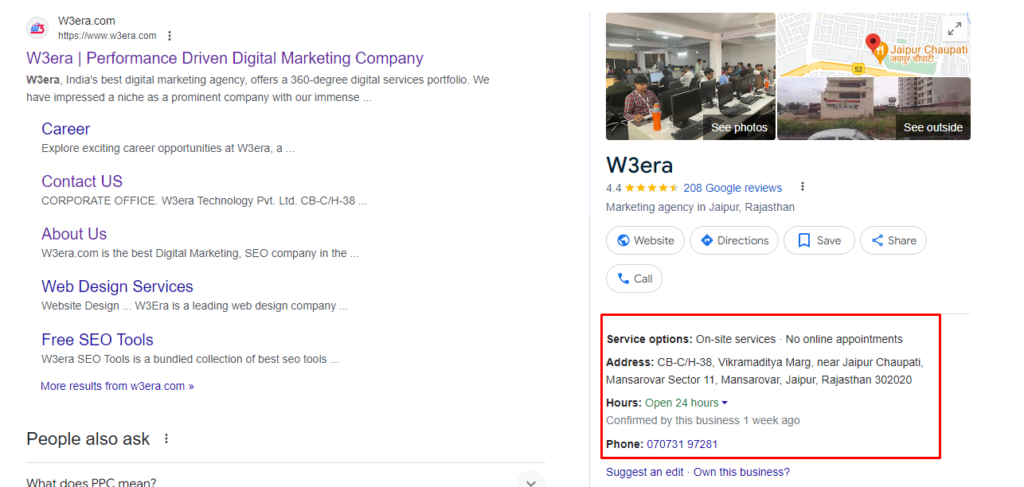
NAP Consistency is the practice of maintaining consistency in NAP SEO. In simple terms, a business usually has a lot of phone numbers and category pages, but they should ensure that at every site and location the same directory information has been provided. Read below to find how NAP consistency is important to Google and even other search engines:
1. Incorrect Citations Tend to Harm Search Engine Presence
NAP consistency also draws your attention towards accurate citations. No matter how much effort you have put in for your SEO, a small mistake in your NAP citations can let all your search engine rankings go in vain. And no sooner, you have to start from zero again.
Also, once users have invested their time, and ended up only knowing that the NAP citations are wrong, it can lead to damaged goodwill and decreased customer trust.
Hence, maintaining consistency and quality in the NAP SEO can bring you to the forefront, but a little mistake can also draw all your SEO success in a matter of seconds.
2. Inconsistent NAP Can Even Reduce Voice-Search Visibility
Inconsistent NAP SEO is a sign of unawareness or a less responsible SEO team, even if they are not. Imagine you are on various platforms like Skype, GMB account, and other related platforms and all three platforms contain different email addresses or web page citations. This will obviously lead to pushed-down voice-search visibility and several other damages which won't leave your brand reputation the same.
Gradually and unfortunately, visitors will start feeling frustrated with this inconsistency. And not only users but Google itself, after analyzing such inaccuracies, does not push your business to the top of voice-search results.
In 2026, this problem has grown beyond voice search. AI assistants like ChatGPT, Perplexity, and Google's AI Overviews pull business information from multiple sources when answering local queries. If your NAP data conflicts across those sources, AI-generated answers may surface inaccurate information about your business — or skip you entirely in favor of a competitor with clean, consistent data.
3. NAP SEO efforts can bring in a great amount of customers
Did you know? 77% of consumers use Google if they are seeking local business information. And guess what, you are just a few efforts away from getting in touch with these seekers. All you have to do is put consistent NAP citations in your SEO checklist and make your business a magnet to all the localities seeking the services that you provide.
Bonus read: If you are going for organic search engine marketing, then having an expert by your side is important. They can blend their years of experience into your marketing journey and guide you about important aspects like Local SEO, the role of NAP in SEO, Google map SEO services, accurate NAP citations as well as how to rank better through local SEO.
One such guide to your SEO journey can be W3Era.
4. NAP SEO Brings Better Referrals
NAP SEO has always been the backbone of the business for getting better voice search and local engine visibility. It contains the power to quickly push the customers to enter the funnel. Hence, it can be counted as a reliable source to gain a great volume of referral traffic for businesses. Also, as per the Google algorithms, it is proved that the level of consistency you can achieve from your efforts of putting citations to your business profile is directly proportionate to the consumer's trust and reliability.
5. NAP Consistency Directly Influences Local Pack Rankings
Google's Local Pack — the three-business map result shown at the top of local searches — is determined by three factors: relevance, distance, and prominence. NAP consistency contributes to all three.
Relevance improves when your business category and description match what searchers are looking for — and consistent citations reinforce what your business does across the web. Prominence is directly boosted by the number and quality of consistent citations pointing to your business. Distance relies on accurate address data — if your address is listed differently across directories, Google cannot confidently determine your precise location.
A business with 50 consistent, accurate citations will consistently outperform a business with 150 inconsistent ones in Local Pack results. Quality and consistency of citations beats sheer volume every time.
How to Audit Your NAP Consistency
Before you can fix NAP problems, you need to know exactly where they exist. A proper NAP audit covers three layers: your own website, your Google Business Profile, and every third-party directory where your business is listed.
Step 1: Define Your Master NAP Record
Before auditing anything, establish what your correct NAP information actually is. Write it down exactly as it should appear — including the precise format for every element.
Create a master record like this:
| Element |
Correct Format |
| Business Name |
W3Era (exact — no "W3Era SEO" or "W3Era Agency") |
| Address |
123 Main Street, Suite 4, Dallas, TX 75201 |
| Phone |
+1 (972) 555-0100 |
| Website |
https://www.w3era.com/ |
Every decision you make during this process should be checked against this master record. If you have multiple locations, create a separate master record for each.
Critical formatting decisions to make upfront:
- "Street" vs "St." — pick one and stick to it everywhere
- "Suite" vs "Ste." vs "#" — pick one format
- Local phone number vs toll-free number — use the same one everywhere
- "www" vs no "www" in your URL — pick one
- Your legal business name vs your trading name — decide which to use everywhere
Step 2: Audit Your Own Website First
Your website is the authoritative source for your NAP data. Every other listing should match what's on your site — so before auditing directories, make sure your website is correct.
Check every page where your NAP appears:
- Footer (appears on every page — most important)
- Contact page
- About page
- Location pages (if multi-location)
- Embedded Google Maps (check the pin matches your address)
- Schema markup — LocalBusiness structured data should include your NAP in JSON-LD format
If your website NAP is inconsistent or incorrect, fix it first before touching any external listings.
Step 3: Audit Your Google Business Profile
Log into your Google Business Profile and verify every NAP element against your master record:
- Business name (no keyword additions)
- Full address with correct suite/unit number and postal code
- Primary phone number
- Website URL
Also check your GBP pin on Google Maps — drag it to confirm it sits on your actual location, not a nearby street.
Step 4: Search for Your Business Across Major Directories
Search for your business name, phone number, and address across the major directories where citations commonly exist. Use both your current and any previous business names, addresses, or phone numbers — old listings from previous locations or rebrandings are a frequent source of inconsistency.
Search across:
Tier 1 — Must be correct:
- Google Business Profile
- Bing Places
- Apple Maps
- Yelp
- Facebook Business
- Yellow Pages (YP.com)
- BBB (Better Business Bureau)
Tier 2 — High-priority:
- Foursquare
- Manta
- Hotfrog
- Citysearch
- Superpages
- MapQuest
Tier 3 — Industry and niche directories:
Any directory specific to your industry — legal, medical, restaurant, hospitality, etc.
For a complete list of US directories where your NAP must be consistent, see our free business listing sites USA guide and local SEO citations USA guide.
Manual searching finds obvious inconsistencies but misses listings you don't know exist. Use one of the following tools to surface every citation your business has across the web:
- BrightLocal Citation Tracker — The most comprehensive tool for finding and monitoring citations. Scans 1,400+ directories and gives you a full inconsistency report. Paid but worth it for a full audit.
- Whitespark Local Citation Finder — Excellent for finding competitor citations and identifying directories your business is missing from. Pair with their Citation Audit service for a full cleanup.
- Semrush Listing Management — Built into Semrush, scans major directories and flags inconsistencies. Good starting point if you're already using Semrush for broader SEO.
- Moz Local — Syncs your NAP data to major aggregators and monitors for changes over time. Strong for ongoing monitoring after the initial fix.
- Yext — Enterprise-level listing management that pushes your correct NAP to 200+ directories simultaneously. Higher cost but fast at scale, especially for multi-location businesses.
Step 6: Log Every Inconsistency You Find
As you audit, build a spreadsheet with the following columns:
| Directory |
Current Name |
Current Address |
Current Phone |
Current URL |
Issues Found |
Priority |
| Yelp |
W3Era SEO |
123 Main St (missing Suite) |
Correct |
Correct |
Name + Address |
High |
| YellowPages |
W3era |
Correct |
Old number |
Missing |
Name + Phone + URL |
High |
Prioritize by directory authority — Tier 1 directories should be fixed first regardless of how minor the inconsistency.
How to Fix NAP Inconsistencies
Finding inconsistencies is half the job. Here's exactly how to fix each type.
Fix 1: Claim and Correct Unclaimed Listings
Many directory listings are auto-generated from data aggregators — they exist whether you created them or not, and they may contain outdated or incorrect information. If a listing is unclaimed, anyone can edit it.
For every directory where you find an incorrect listing, claim it first — this gives you control — then update it to match your master NAP record. The claim process typically involves verifying your identity via phone, email, or postcard.
Priority order: Google Business Profile → Bing Places → Apple Maps → Yelp → Facebook → BBB → YP.com.
These are the most common and most overlooked inconsistencies. "St." versus "Street," "Suite 4" versus "#4," "W3Era" versus "W3era" — small formatting differences that seem trivial but signal inconsistency to Google's algorithms.
Go through every listing and standardize formatting to match your master record exactly. No exceptions. The algorithm doesn't overlook "minor" differences.
Outdated listings from previous addresses, phone numbers, or business names are among the most damaging NAP issues. Google may be pulling and surfacing this old information in Local Pack results without you knowing.
For outdated listings:
- If you have login access, update directly
- If the listing is unclaimed, claim it and update
- If you can't claim it (some directories don't allow this), use their contact or report form to request a correction
- As a last resort, use Yext or BrightLocal's managed update services to push corrections to aggregators that feed many smaller directories simultaneously
Fix 4: Remove or Merge Duplicate Listings
Duplicate listings — two separate GBP or directory entries for the same business — split your review count, dilute your citation strength, and confuse Google. They must be removed, not just corrected.
For duplicate Google Business Profiles: Log in to GBP, find the duplicate, and request removal through the "Suggest an edit" function, or contact GBP support directly if you own both listings. Do not simply abandon a duplicate — report it for removal.
For duplicate directory listings: Most directories have a "Report a duplicate" or "Merge listings" function. Use it. If not available, contact their support team directly.
For listings you can't remove: Use the contact/report feature to flag the listing as closed or incorrect. Google and major directories will eventually deprecate listings that are reported and have no engagement.
Fix 5: Prevent Future Inconsistencies
Once your NAP is clean, keep it clean:
- Document your master NAP record in a shared team file and make it mandatory to reference before creating any new listing
- Set up Google Alerts for your business name and address to catch new incorrect listings as they appear
- Assign one team member quarterly responsibility to re-audit the top 20 directories
- When your business moves, changes its phone number, or rebrands — update all listings within the same week, not gradually over months
- Use Moz Local or BrightLocal ongoing monitoring to catch changes made by third parties to your listings
Best Practices for NAP in Local SEO
The significance of NAP in local SEO can be understood through the fact that 96% of the local users get to know about the business near them through Google. But a fact that remains unrevealed is to leverage NAP and local SEO, you need to be mindful and follow the following practices before making your SEO efforts go live.
Maintain Consistency Across All Platforms
One of the basic practices that every NAP SEO enthusiast must follow is to keep NAP consistency across all the platforms. As discussed earlier, NAP consistency brings a sense of trust to the customer's perspective of your business. Hence, you must ensure that all your profiles contain the same NAP citations.
For example, if you are using your company's name as 'Kevin Bakery and Co.', then it must be the same for all the other platforms too. You can not mold it into 'Kevin Bakery' or something unidentical. This behavior can confuse your potential customers and compel the algorithms to skip you.
Claim Your Google Business Profile Listing
After improving your existing NAP SEO citations, the very first platform you have to put your hands on is Google My Business. Set up your GBP profile with NAP SEO-friendly descriptions and NAP citations. Doing so brings in an opportunity for you to rank on relevant Google searches.
When it comes to local searches users perform, having a GBP account can prove itself as a really useful asset. Also, one thing to make sure of is that your profile must include appropriate listings, otherwise, it can get suspended by Google.
Regularly Update and Record All Business Listings
One thing you must ensure is to keep an eye on all your listings regularly. It might be possible that your business might go under minor changes, hence you have to ensure all the changes are updated on every platform.
Otherwise, later it will become more complex and time-consuming to change all the listings altogether. Hence, maintaining it regularly becomes crucial for both ends.
Carefully Manage Multiple Locations
If your business consists of multiple locations, then this practice is for you. Holding multiple locations can be a bit tedious, as it requires more attention and effort than having a single location. Here's how to handle it:
- Independent Audits: Audit each location's NAP listings independently
- Transparent Listings: Maintain independent, consistent listings for each location. Ensure following the same format for all listings (e.g., "Co." for "Company")
- Regular Updates: Update NAP details regularly
- Optimize Google My Business: Craft separate listings for every location with accurate and relevant details
- Directory & Social Media: Ensure up-to-date listings on directories and social media platforms
- Employee Training: Educate staff about the significance of accurate NAP citations
Add LocalBusiness Schema Markup to Your Website
One of the most impactful and underused NAP practices is embedding your NAP information in structured data (JSON-LD schema) on your website. LocalBusiness schema tells Google exactly what your NAP is in a machine-readable format — reducing any ambiguity between your website data and what appears in third-party directories.
Add LocalBusiness schema to your homepage and any location-specific pages. Include name, address, telephone, and URL at minimum. If you have multiple locations, each location page should have its own schema block with the correct data for that location.
This structured data doesn't guarantee rankings, but it gives Google a clean, authoritative reference point for your NAP data that can resolve conflicts it finds across citations.
| Tool |
Best For |
Cost |
| BrightLocal |
Full citation audit, ongoing monitoring, multi-location |
Paid (from $39/mo) |
| Whitespark |
Finding missing citations, competitor citation gaps |
Free + Paid |
| Moz Local |
Syncing NAP to aggregators, monitoring changes |
Paid (from $14/mo) |
| Yext |
Large-scale or multi-location NAP management |
Paid (enterprise) |
| Semrush Listing Management |
NAP audit if already using Semrush |
Included in paid plans |
| Google Search |
Manual search for citations using your business name + phone |
Free |
For small businesses auditing for the first time, start with a manual Google search and Whitespark's free citation finder. For agencies managing multiple client locations, BrightLocal or Moz Local is the most efficient ongoing solution.
Conclusion
"The best SEO is to focus on customers."
No matter what your business is and how much you are investing in its marketing, if it's not reaching the customers who want to use your products/services and are accessible to your physical store, it's of no use.
To prevent it from happening, ensure you utilize NAP SEO in your SEO process. Being an asset for local SEO, it ensures that your business does not only rank in "near me searches" but also excels in bringing the customers into trust.
The process is straightforward: define your master NAP record, audit every directory where your business appears, fix every inconsistency you find, and monitor for new problems quarterly. Businesses that maintain clean, consistent NAP data across the web consistently outperform those that don't — in Local Pack rankings, in Google Maps visibility, and increasingly in AI-generated local search answers.
Hence, leverage NAP SEO by ensuring consistency and accuracy in your citations and follow the best practices provided in this guide.
Need help running a full NAP audit or managing citations across multiple locations? W3Era's local SEO services cover citation building, audit, and ongoing management for businesses across the US.