SEO (Search engine optimization) is a comprehensive strategy that drives your website towards top search results. It helps you enhance your user traction from your websites and get better conversions and sales. Keywords, more specifically, SEO keywords, are a key component of your website that helps generate higher visibility for your target audience. A website's content containing high-intent and relevant SEO keywords gets a 45% higher click-through rate (CTR) than others.
Learn what are SEO keywords and how to use them with this blog. Here we guide you on how to choose the right SEO keywords for your blog, building a clear understanding of SEO keywords for content writing and search ranking optimization.
Key Takeaways
- SEO keywords are specific terms that link user mindsets to your content, improving both search presence and ranking position.
- Short-term, long-term, and Latent Semantic Indexing (LSI) keywords should be combined to target search intents across different user behaviors.
- Your keyword strategy must follow search intent patterns ranging from informational, commercial, navigational, and transactional.
- Your keyword research must analyse search volume and keyword difficulty ratings, followed by competitor data to discover high-value opportunities.
- Your SEO performance is enhanced by placing keywords in the correct positions within titles, headings, meta tags, and the main body of your content.
What Are SEO Keywords?
Content is what the search engines use to fulfill the search intent. Keywords are the words or phrases we use to match that search intent. What are SEO keywords? SEO keywords refer to the specific words and phrases that we use in our search queries.
A strategic placement of these keywords ensures better search engine rankings. For example, a keyword like
Running shoes (short tail) signals Google that a user intends to find running shoes online, and the search engine results are filtered accordingly.
While a keyword like - " Best running shoes for flat feet men 2025 " (long-tail) tells Google that the user is finding the best running shoes for flat feet men.
If you sell running shoes online and the intent behind these keywords matches your products, strategically placing these keywords in your content helps you rank at the top of the search results whenever a user searches for these queries.
Why SEO Keywords Matter
The importance of SEO keywords lies in how you use these keywords to optimize your website content to improve search engine rankings. These words and phrases help you understand what people search for and how it connects with your business.
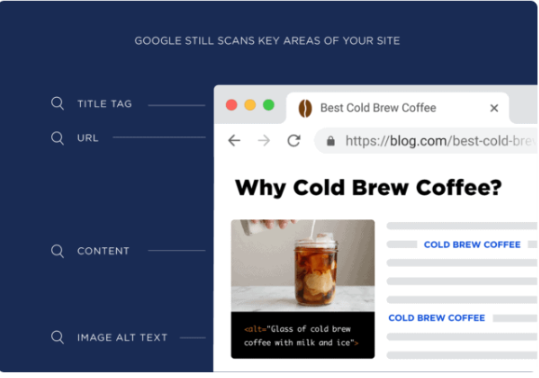
Image source by - https://backlinko.com
A correct placement of relevant keywords helps you be visible right when the customer searches to purchase your products or services. This visibility further drives more targeted traffic to your website. It's organically as it aligns your content with the intent of the user search.
How? Google algorithms are designed to match search queries with relevant content online. These keywords act as the bridge between your content and what users search for.
Integrating relevant keywords into your content hints to Google that it matches what the user searched. This way, keywords drive your content matching with search intent and hence influence your search engine rankings.
SEO keywords help us understand the intent behind a user’s search query. For instance, a search query- buy a mens shirt online drives a commercial intent where ‘buy’ clarifies that the user wants to make a purchase and a men's shirt is what he wants to purchase.
Another is how to start blogging in 2025, where ‘how to’ notifies that the user is seeking knowledge and understanding, and further phrase defines that it's blogging in 2025 that he wants to learn.
Using these queries or related keywords that people frequently use in their search queries in your content not only ensures better ranking but also lets Google trust the relevance and quality of your content.
Types of SEO Keywords
Every keyword has its purpose, intent, relevance, and focus, which we must understand to strategically identify and place them into our content for better search results. Here are the types of SEO keywords classified based on length, intent, and focus, presenting when and how they become relevant to your content and search queries:
1. Long-tail keywords
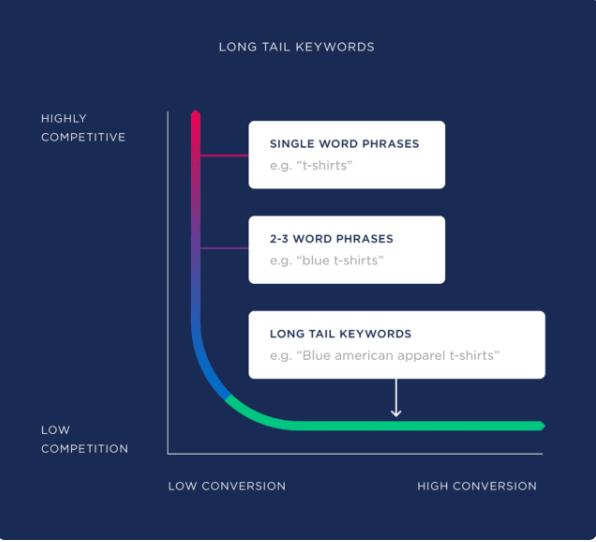
Image source by - https://backlinko.com/
A keyword can be as short as one to two words or as long as more than 3 words. Based on this length, the keywords are classified as short-tail and long-tail.
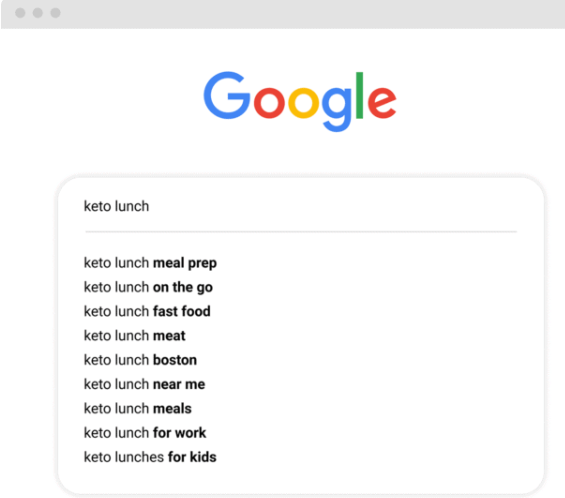
But when you type keto lunch into Google, you get a list of long tail keyword suggestions
Short-tail keywords, as the name suggests, are short and have high search volumes and competitiveness. For example, coffee is the most searched short-tailed keyword, yet it is highly competitive and has less specificity regarding the actual user intent.
A long tail keywords, on the contrary, is more like a phrase that targets specific intent and drives qualified traffic. Taking an example, best coffee near me is a less searched yet more intent-driven keyword. It defines that the user is searching for coffee close to his current location.
2. Branded vs. Non-branded Keywords
Your SEO keywords can also be classified based on whether they have a brand focus or not. Such keywords are categorised as branded and non-branded keywords.
Branded keywords are those that include brand names, like buy "Nike Air Force shoes". Here the user justifies that he wants the Air Force range of shoes from the Nike brand.
Non-branded keywords are those without a brand name. For example, Best smartphones in 2025 shows users searching for the best smartphones available in the market in 2025, yet it does not mention which brand they prefer.
3. Intent Keywords
A user search query can have different intent or purpose, like purchase or information. Keywords play a vital role in identifying the purpose behind search queries and hence are categorized as:
- Informational
- Navigational
- Commercial
- Transactional
Informative keywords are aligned with a knowledge or information-seeking search intent. Users search for queries including these keywords when they want to learn something.
For example, how SEO works is an informational keyword where the user wants to know how SEO as a concept or strategy works.
A navigational keyword is used when a user wants to move towards a specific website or page. "For example, Facebook Login" is a navigational keyword that drives users to the Facebook account login page.
Transactional keywords drive the intent of making a purchase or completing an action. These keywords are used to engage individuals to take action on your website or content.
For instance, booking flight tickets is the keyword you use when you want users to take action on your flight booking website.
Last but not least in this list are commercial intent. These keywords demonstrate a product or service-based intent.
For example, a keyword, "best smart phones under 30000", has commercial intent where the user wants to "buy a smartphone under 30000".
4. Latent Semantic Indexing (LSI) Keywords
Latent Semantic Indexing or LSI keywords are those semantically related to your original or primary keywords. These keywords establish a contextual meaning in your content for search engines.
LSI keywords help enhance relevance and minimize the risk of forced keyword integration. For an original keyword like "pizza near me", you can use an LSI version, "best pizza places nearby".
These keywords maintain the intent of the original keyword as it is and provide clear context without using the same keyword again.
How to Find the Right SEO Keywords
Finding the right keywords that match user intent and are relevant to your business is vital. Yet, most of the websites lack a strategic approach to keyword research. Here is the step-by-step guide on how to find SEO keywords for your content and website:
Step 1: Brainstorming and understanding your audience
Your first step in finding relevant and high-intent keywords must be understanding your audience. Create a list of topics or ideas relevant to your business or industry. Then identify and analyse the topics to find the questions and problems the target audience wants to solve.
Step 2: Identify Search Intent
After you are clear about what your target audience may ask Google and other search engines, validate your thoughts with thorough research and evaluation to explore the search intent. Identify why a user may search or is searching for a specific query, understanding the types of keywords to be identified based on intent.
After you are aware of the clear user intent, it's time to find and use the best SEO keyword research tools. There are various keyword research tools, including Google Keyword Planner, Semrush, AnswerThePublic.com, and W3era Keyword Research Tool.
Once you choose your tool, navigate and search using the intent-based queries identified in the previous steps, and these tools will offer you a list of relevant keywords matching those queries.
Step 4: Analyse Keyword Metrics
When searching for keywords in your chosen tools, the results offer a list of keywords with some metrics. These metrics include keyword difficulty, volume, and more, for which you have analyzed relevant keywords based on search volume but low difficulty. For example - “SEO tips”.
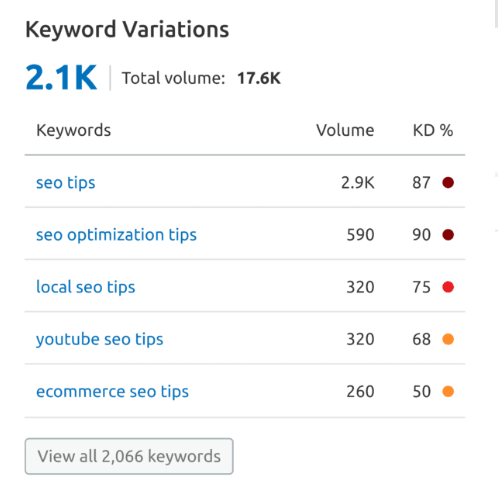
A search volume measures how frequently the keyword appears in search queries. While a keyword difficulty measures the difficulty level of ranking on a specific keyword. You should choose a keyword with high search volume and low difficulty.
Step 5: Consider Competitor Analysis
A competitor analysis is required to identify the keyword gap. Here, you need to examine the keywords your competitors are targeting for the same intent. Your keyword gap analysis should identify the keywords relevant to your business and intent but left untargated by competitors.
Step 6: Analyse Search Engine Page Results
SEPR evaluation provides better clarity on how these keywords are integrated into the actual search queries. You can use a short-tail keyword that matches your intent to find real queries asked by users.
Look for them in SERP features, including People May Also Ask and Related Searches. The analysis will help finalise the most intent-driven and relevant keyword list for you.
Also Read:- How To Improve SERP Rankings
Step 7: Choose Primary and Secondary keywords
Finally, identify the primary and secondary keywords. The primary keyword is the main keyword that matches directly with user intent. To develop contextual understanding, the long-tail keywords with the ranking potential for specific queries should be considered secondary. This classification of keywords within your list of keywords completes the research process.
How to Use SEO Keywords Effectively
Keyword research is the first step towards developing or optimizing your website content for better rankings. To get targeted traffic and visibility to your website, you need a solid keyword strategy for SEO. Here are the detailed best practices you must follow for strategic placement and achieving the benefits of SEO keywords:
1. Strategic Keyword Placement
A strategic keyword plan begins with where and how to place your primary keyword into your content, URL, meta tags, description, and title. A primary keyword should be placed in the URL, meta title, and description only once. The first or title heading of both your webpage and blog should include the primary keyword. The secondary keywords can then be integrated naturally into your content.
2. Keyword Density
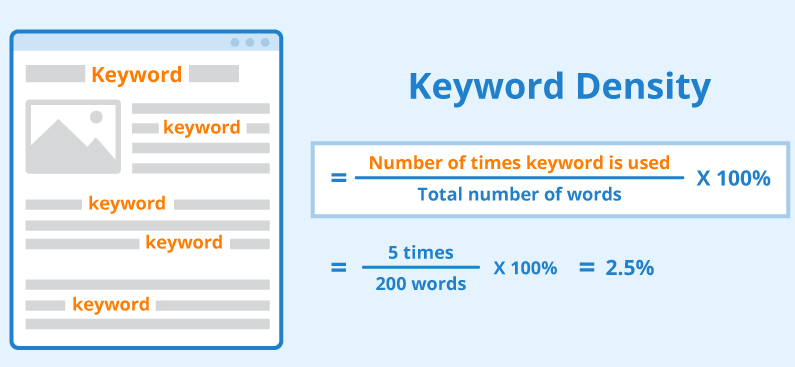
As Google is now more focused on user intent than keyword density, only 1-1.5% of your content should be dedicated to keywords. Here, the primary keyword must repeat more like in headings, main content sections, introduction, and conclusion, following a natural flow.
3. Content Alignment
Content and keyword alignment should focus on targeting intent rather than just keyword insertion. Try creating content around the keywords with core intent. Using log-tail yet query-based keywords in developing content structure is suggested. The body content should prioritize relevance, specifically when placing the secondary keywords. Naturally, integrate these keywords into your body text. Use LSI keywords instead of primary ones to avoid keyword spam or stuffing.
4. Common Mistakes to Avoid
SEO Keywords planning and placement is not a complex task. Yet, we often make some mistakes, hurting website ranking and performance. These mistakes occur when we unintentionally ignore key components of keyword strategy. Here are a few common mistakes we must avoid:
5. Ignoring Search Intent
Ignoring search intent is a common yet major mistake we make when planning and strategizing SEO keywords. User intent allows us to focus on what people need over what we want to offer. Google prioritizes user intent to offer personalized and more relevant search results.
How to Avoid: Aligning your keyword strategy with user intent allows search engines to rank your content before others. Before searching for keywords, identify user intent first and then drive your keyword research with your results. Find niche-specific keywords to bring your intent closer to user intent.
6. Overusing or Underusing Keywords
People who don't understand content and keyword connections either over or underutilize the keywords. It either stems from misinterpreting the keyword’s importance or a lack of SEO understanding.
How to avoid: Focus more on context and user needs to place keywords throughout your content naturally. Use keywords for titles and headings, and then distribute them based on the context and reader focus to ensure quality and consistency in your content without under or overusing keywords. You can also use keywords for alt-text for images and meta tags.
7. Focusing only on High-Volume Keywords
Search volume is indeed a valuable metric for keyword research, yet focusing only on volumes may not drive you to top search results. Instead, both search volume and keyword difficulty (competitiveness) must be prioritized to ensure a strategic identification and placement of keywords into your content.
How to Avoid: The best way is to find the balance between the two metrics. Identify and analyse keywords that have high volumes yet a balanced level of competition. Focusing more on semantically related and long-tail keywords helps minimize competition. Keyword gap analysis is hence a must-have approach for your SEO Strategy.
Conclusion
Every content strategy relies on a solid SEO keyword strategy. Well-planned keyword techniques lead to better search visibility, guiding readers toward your content while targeting specific audiences and increasing your search engine rankings. Your strategy should include the right combination of short-tail, long-tail, LSI, and intent-based keywords, and you should steer clear of both keyword stuffing and user intent disregard. The true essence of SEO requires matching search engine-related content to actual human search behaviors rather than pursuing search engine algorithms. Your keyword strategy serves as a direction system to drive users to your content.