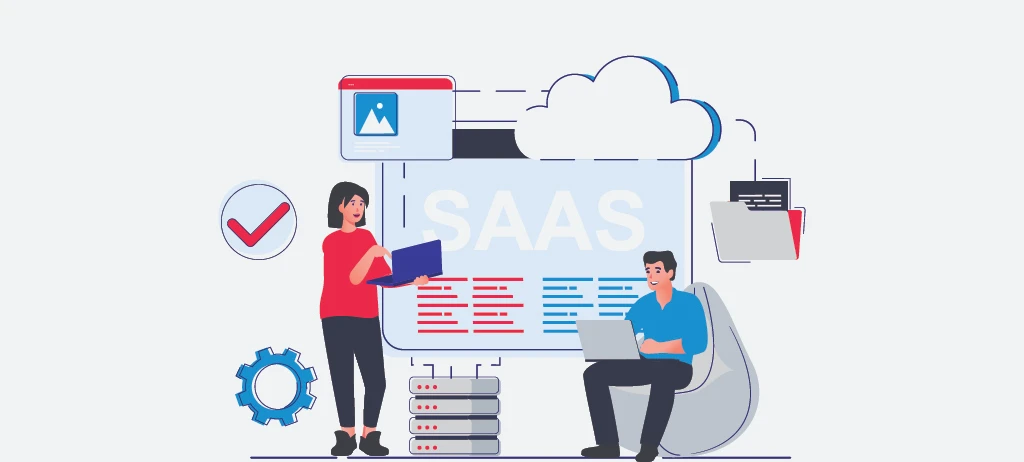
SaaS SEO is the process of growing a software product's organic search visibility to drive free trial signups, demo requests, and product-led revenue. Unlike standard SEO, SaaS SEO targets three keyword types simultaneously: bottom-of-funnel commercial terms like "[competitor] alternative" and "best [category] software," middle-funnel comparison and use-case terms, and top-of-funnel educational content that builds topical authority. In 2026, AI Overviews and zero-click searches make BOFU keyword targeting and product-led content more valuable than traffic-focused blogging alone.
Most SaaS companies start SEO the wrong way. They publish educational blog posts, accumulate traffic, and then wonder why signups don't follow. The problem is not the content — it's the intent. A user reading "what is project management" is not ready to buy project management software. A user searching "Asana alternative for remote teams" is ready right now.
SaaS SEO in 2026 is not about traffic volume. It is about capturing users at the exact moment they are evaluating software, comparing options, or searching for a solution to a problem your product solves. The companies dominating SaaS organic search — HubSpot, Notion, Monday.com, Ahrefs, Semrush — all follow the same core architecture: topical depth, BOFU precision, product-led content, and technical excellence.
This SaaS SEO Complete Guide 2026 covers every layer of that architecture — from keyword research and content strategy to technical SEO, link building, and AI-era optimisation — with a practical framework you can apply to any SaaS product at any stage.
Key Takeaways
- SaaS SEO differs from standard SEO because the conversion goal is a free trial or demo, not a purchase — which changes which keywords and pages matter most
- Bottom-of-funnel keywords ("best [software category]", "[competitor] alternative", "[product] pricing") drive signups directly and should be built first, not last
- Product-led content — free tools, templates, calculators — earns the highest-authority backlinks in SaaS and compounds traffic with zero ongoing spend
- Comparison and alternative pages convert at 3-5x the rate of educational blog posts because they reach users who are already in active evaluation mode
- Technical SEO for SaaS requires server-side rendering for marketing pages, clean crawl architecture separate from the app, and Core Web Vitals compliance
- Topical authority compounds — sites that cover a topic cluster deeply rank new content faster, making early cluster investment the highest-ROI SEO decision in SaaS
Why SaaS SEO Is Different From Standard SEO
Standard SEO optimises for traffic and ranking. SaaS SEO optimises for product-qualified traffic — users who have a problem your software solves and are searching for a solution right now.
Three structural differences make SaaS SEO its own discipline:
The conversion goal is a trial or demo, not a transaction. A user who signs up for a free trial may become a $10,000/year customer. A user who bounces from a slow page may never return. The stakes per visitor are much higher in SaaS than in most e-commerce or content publishing contexts, which means conversion rate optimisation is baked into SaaS SEO from the start.
The buyer journey is longer and more research-intensive. B2B SaaS buyers read reviews, compare alternatives, consult colleagues, watch demos, and evaluate integrations before deciding. This journey leaves a detailed search footprint — and every stage of it is an SEO opportunity.
Competition comes from multiple page types, not just ranked articles. In SaaS, your organic competitors include G2, Capterra, Trustpilot, TechRadar, Product Hunt, and category-specific review sites — not just other software companies. Winning organic share means ranking alongside and above these aggregators for commercial queries.
The SaaS Keyword Framework — Four Buckets That Drive Revenue
Keyword research for SaaS should be organised by funnel stage, not just search volume. The following framework maps keyword types to conversion probability and the correct page format.
| Keyword Bucket |
Example Keywords |
Search Intent |
Conversion Probability |
Best Page Type |
| Bottom of Funnel (BOFU) |
"best CRM for small business"
"[competitor] alternative"
"[product] pricing"
"[product] vs [competitor]" |
Decision |
Very High |
Comparison page, alternative page, pricing page |
| Middle of Funnel (MOFU) |
"[software] for [industry]"
"how to manage remote teams with software"
"project management for agencies" |
Consideration |
Medium |
Use-case page, integration page, industry page |
| Top of Funnel (TOFU) |
"what is [category]"
"how to [solve problem]"
"best practices for [workflow]" |
Informational |
Low |
Blog post, guide, educational resource |
| Product-Adjacent |
"free [tool type]"
"[task] template"
"[calculation] calculator"
"[format] generator" |
Tool/Utility |
Medium-High |
Free tool page, template page |
The mistake most SaaS companies make: They build TOFU content first because it's easier to write. Then they wonder why SEO doesn't drive trials. BOFU pages are harder to create — they require honest competitive positioning — but they drive trials directly. Build BOFU first, then MOFU, then TOFU as topical authority grows.
Bottom-of-Funnel SEO — The Highest-ROI SaaS Content
BOFU keywords are the highest-conversion, lowest-traffic queries in SaaS SEO. Users searching "[competitor] alternative" or "best [category] software 2026" are actively evaluating options. They have a credit card nearby. They will sign up today if you show them the right page.
Alternative Pages
Alternative pages target users who are unhappy with a competitor and actively searching for a replacement. Format: "[Competitor Name] Alternatives: The [X] Best Options in 2026."
Every alternative page must:
- Be honest about the competitor's strengths — users researching alternatives have already used the product and will distrust promotional language
- Lead with the strongest differentiator your product has vs the competitor
- Include a comparison table with specific feature differences
- Include genuine user testimonials that reference switching from that competitor
- Have a clear trial CTA above the fold
Comparison Pages
Comparison pages target the "[Product A] vs [Product B]" query — one of the highest-intent searches in SaaS. Users searching "[Your Product] vs [Competitor]" are in final evaluation.
Structure that converts:
- Quick verdict table (under the H1 — answers the comparison immediately)
- When to choose [Your Product]
- When to choose [Competitor]
- Feature-by-feature breakdown
- Pricing comparison
- Integration differences
- Customer reviews citing the comparison
- CTA with trial offer
Being honest in the "when to choose the competitor" section actually increases conversion — it demonstrates confidence and filters for users who are a genuine fit.
Best-Of Roundup Pages
"Best [software category] 2026" pages are dominated by G2, Capterra, and TechRadar — but that doesn't mean SaaS companies shouldn't create them. A well-optimised roundup that includes your own product (positioned correctly) can rank alongside these aggregators and capture users who trust vendor-created comparison content.
Key: your product should not be #1 on your own list unless it genuinely is the best for the specific use case the page targets. Credibility matters more than positioning.
Product-Led Content — The SaaS Link Magnet
Product-led content is the most powerful organic growth strategy available to SaaS companies in 2026. It works by giving users something valuable for free — a tool, a template, a calculator — and capturing email, trial signups, or brand awareness in return.
The SEO benefit is compounding. Free tools earn backlinks naturally because other sites reference them in their content. A well-built free tool can earn hundreds of backlinks without any active outreach, creating permanent domain authority that benefits the entire site.
Free Tool Pages
Free tool pages target "[tool type] free" and "[task] tool" queries. Examples:
- HubSpot's Website Grader — targets "website grader", "website analysis tool"
- CoSchedule's Headline Analyzer — targets "headline analyzer"
- Ahrefs' Backlink Checker — targets "free backlink checker"
W3Era's own free SEO tools follow this model — the keyword position checker, backlink checker, and website SEO analyzer generate organic traffic and authority simultaneously.
For SaaS companies, the tool should connect to the core product. A project management tool can offer a free project timeline generator. A CRM can offer a free email deliverability checker. The tool creates a natural on-ramp to the paid product.
Template Pages
Template pages target "[use case] template" queries. These rank well because they match a specific, actionable intent — the user wants to start something now, not read about it.
Format: offer the template for free download or direct use, explain each section of the template, answer FAQ questions about the use case, and connect to the product that uses the template natively.
Calculator Pages
Calculator pages target "[metric] calculator" queries. Examples: "customer lifetime value calculator", "SaaS churn rate calculator", "SEO ROI calculator". These pages attract both backlinks and repeat visitors — a combination that compounds authority efficiently.
Integration and Use-Case SEO Pages
Integration pages and use-case pages are two of the most underused MOFU opportunities in SaaS SEO. Both target users who know they need software but are searching for confirmation that it works for their specific situation.
Integration Pages
Format: "[Your Product] + [Integration Partner] Integration" Target queries: "does [product] integrate with Salesforce", "[product] Zapier integration", "[product] Slack integration"
Every integration page should:
- Be indexed and not hidden behind a login wall
- Explain specifically what the integration does
- Show a step-by-step setup guide
- Include use cases that benefit from the integration
- Link to the integration partner's documentation
Integration pages earn backlinks from partner companies who link to integration documentation — making them dual-purpose SEO and partnership assets.
Use-Case and Industry Pages
Format: "[Your Product] for [Industry/Role/Team Size]" Examples: "CRM for real estate agents", "project management for creative agencies", "accounting software for freelancers"
These pages target buyers who search by their role or industry rather than by generic software category. They convert well because the page speaks directly to the user's professional identity.
A use-case page for an SEO agency might be: "W3Era SEO Services for SaaS Companies" — connecting the service to the specific buyer type rather than offering a generic service description.
SaaS Content Strategy — Building Topical Authority at Scale
Topical authority is the compounding advantage of SaaS SEO. Sites that cover a topic cluster deeply — pillar page plus 10-15 cluster articles — rank new content faster than sites publishing scattered standalone articles.
The SaaS Topic Cluster Model
Following the topic cluster model, each SaaS content strategy should have:
Pillar pages (2,500-4,000 words): "Complete Guide to [Category]" — targets broad head term, links to all cluster articles
Cluster articles (1,500-2,500 words): Each covers one specific subtopic, links back to the pillar
Example cluster for a CRM SaaS:
| Pillar |
Cluster Articles
|
|
CRM Complete Guide 2026
|
What is CRM software, CRM for small business, CRM integration with email, CRM vs spreadsheets, best CRM features, CRM onboarding best practices, CRM reporting guide, CRM for sales teams, CRM mobile apps, how to migrate CRM data
|
Content Cadence for SaaS
Content cadence matters because Google rewards consistent publishing with faster indexing of new content.
|
Company Stage
|
Recommended Cadence
|
Focus |
|
Early Stage (Pre-PMF)
|
2 articles/week
|
BOFU only — alternative and comparison pages
|
|
Growth Stage
|
4 articles/week
|
BOFU + MOFU use-case and integration pages
|
|
Scale Stage
|
6-8 articles/week
|
Full funnel — TOFU authority content at scale
|
| Enterprise |
Daily |
Topical dominance across all related categories |
The temptation at early stage is to publish TOFU because it's easier. Resist it. Two BOFU articles per week will drive more trials in months 1-6 than 10 TOFU articles.Many SaaS companies eventually combine industry-specific content strategies with broader professional SEO services in USA to strengthen technical foundations, improve topical authority, and scale organic acquisition across multiple customer segments. Early-stage SaaS brands with limited resources often accelerate growth faster by using SEO Services for Startups that prioritize BOFU pages, technical setup, and faster organic traction.
Technical SEO for SaaS Websites
SaaS products have unique technical SEO challenges because the marketing website and the application often live on the same domain — or should. Getting the architecture right from the start prevents compounding technical debt. For deeper implementation strategies, review this technical SEO complete guide before restructuring your SaaS architecture.
Server-Side Rendering for Marketing Pages
Most SaaS products are built on React, Vue, or Angular — JavaScript frameworks that render in the browser by default. Browser-rendered pages are harder for Googlebot to crawl reliably. The solution is server-side rendering (SSR) or static site generation (SSG) for all marketing pages.
Rule: the homepage, service pages, blog, landing pages, pricing page, and comparison pages must all render server-side. The application (behind login) can remain client-side because Google doesn't need to crawl it.
Marketing Site Architecture
| Page Type |
URL Pattern |
Priority |
| Homepage |
yoursaas.com/ |
Highest |
| Feature Pages |
yoursaas.com/features/[feature] |
High |
| Pricing Page |
yoursaas.com/pricing/ |
High |
| Comparison Pages |
yoursaas.com/compare/[competitor] |
High |
| Alternative Pages |
yoursaas.com/alternatives/[competitor] |
High |
| Blog/Resources |
yoursaas.com/blog/ |
Medium |
| Integration Pages |
yoursaas.com/integrations/[partner] |
Medium |
| Use-Case Pages |
yoursaas.com/for/[industry] |
Medium |
| Free Tool Pages |
yoursaas.com/tools/[tool-name] |
Medium-High |
Core Web Vitals for SaaS
Google's Core Web Vitals are confirmed ranking signals. For SaaS marketing pages:
| Metric |
Target |
Common SaaS Issue |
| LCP (Largest Contentful Paint) |
Under 2.5 seconds |
Heavy hero images, unoptimized fonts |
| CLS (Cumulative Layout Shift) |
Under 0.1 |
Late-loading elements shifting layout |
| INP (Interaction to Next Paint) |
Under 200ms |
Heavy JavaScript blocking interaction |
Marketing pages should be audited monthly using Google PageSpeed Insights and Google Search Console's Core Web Vitals report. Teams improving page speed can use this Core Web Vitals guide to fix performance issues faster. Regular technical SEO audits help identify crawlability issues, indexing problems, Core Web Vitals failures, and site architecture weaknesses before they impact organic growth and product acquisition.
Schema for SaaS
| Schema Type |
Use Case |
| SoftwareApplication |
Product pages — include operatingSystem, applicationCategory, offers |
| FAQPage |
All FAQ sections — improves AI Overview citation probability |
| Organization |
Homepage — includes name, URL, logo, sameAs social profiles |
| BreadcrumbList |
All pages — improves SERP appearance |
| Review / AggregateRating |
Where verified reviews exist — G2, Capterra integration |
Related Tool: W3Era website SEO analyzer
Link Building for SaaS Companies
SaaS link building works differently from standard link building because the highest-value tactics leverage the product itself rather than outreach alone. If you're building a scalable backlink acquisition strategy, this link building complete guide explains foundational strategies in more detail.
Tier 1 — Product-Led Link Building
Free tool links: Build a genuinely useful free tool. When other bloggers and journalists write about the topic your tool covers, they reference it. HubSpot's tools have earned thousands of backlinks this way.
Original research and data: Publish a SaaS industry survey or study. Data gets cited in articles, referenced in reports, and linked from industry publications. Ahrefs and Semrush publish annual studies that earn hundreds of links each.
Template libraries: A curated, high-quality template library earns links from "best [use case] templates" roundup articles consistently.
Tier 2 — Content-Led Link Building
Guest posting on SaaS and tech publications: Target sites like HackerNoon (DA 78), SaaStr (DA 82), ChartMogul (DA 71), and Product Hunt (DA 90). See the tech guest post sites guide for a full list of technology publications accepting contributor content.
Broken link building: Identify broken links on SaaS resource pages and offer your content as a replacement. The broken link building complete playbook covers this strategy in full.
Digital PR: Position founders and product leaders as expert sources for tech journalists. HARO alternatives like Connectively and Featured.com connect sources with journalists writing about SaaS topics.
Tier 3 — Directory and Listing Links
| Directory |
DA |
Priority |
| G2 |
91 |
Essential |
| Capterra |
90 |
Essential |
| Product Hunt |
90 |
Essential |
| Trustpilot |
93 |
High |
| GetApp |
87 |
High |
| Software Advice |
83 |
Medium |
| AlternativeTo |
84 |
Medium |
SaaS SEO in the AI Era — AI Overviews and Zero-Click Search
Google's AI Overviews have fundamentally changed how software discovery happens. A user searching "best CRM for small business" may now see a synthesised answer before any organic result. This affects TOFU content most severely — educational content that previously drove traffic now often gets absorbed into AI answers.
What Has Changed
- TOFU blog traffic is declining on informational queries where AI Overviews appear
- BOFU commercial queries (comparison, alternative, pricing) are less affected because AI Overviews are less likely to appear on transactional searches
- Brand queries and review-seeking searches still drive clicks
- Featured snippet optimisation remains relevant for queries not yet covered by AI Overviews
How to Adapt
Optimise for AI Overview citation: Add AEO quick answer blocks at the top of every article. Answers should be 50-100 words, direct, and use structured language that matches the query format. When Google's AI system cites your content in an AI Overview, your brand still gets visibility even without a direct click.
Prioritise BOFU over TOFU: Shift content investment toward comparison pages, alternative pages, and pricing content — these query types drive direct action and are less susceptible to AI Overview absorption.
Build brand search: When users see your product mentioned in an AI Overview, they may search your brand name directly. Brand search is zero-click-proof — users searching "[Your Product] review" or "[Your Product] pricing" are already brand-aware. Strengthen brand search by maximising G2 reviews, Capterra listings, and social proof.
Use structured data: FAQPage schema, HowTo schema, and SoftwareApplication schema help Google understand your content structure and increase the probability of AI Overview citation.
Measuring SaaS SEO requires going beyond rankings and traffic. The metrics that matter are the ones connected to product growth.
| Metric |
What It Measures |
Tool |
| Organic Trial Signups |
Direct SEO revenue contribution |
GA4 + CRM integration |
| Organic Demo Requests |
Mid-market and enterprise pipeline from SEO |
GA4 conversions |
| Organic MRR |
Monthly recurring revenue attributed to organic |
CRM + attribution model |
| Organic CAC |
Cost per acquired customer via SEO vs paid |
Financial model |
| Keyword Position by BOFU Page |
Rankings for highest-conversion queries |
GSC + rank tracker |
| Branded Search Volume |
Brand awareness growth from SEO content |
GSC queries tab |
| Trial-to-Paid Conversion from Organic |
Quality of SEO traffic |
CRM reporting |
| Organic Share of All Signups |
SEO contribution vs paid and other channels |
GA4 channel attribution |
Teams tracking commercial keyword movement can use a keyword position checker to monitor rankings for BOFU pages
The most important metric most SaaS SEO teams ignore: organic CAC vs paid CAC. If paid acquisition costs $800 per customer and organic costs $120 per customer, the SEO investment case is already made. Calculating this number and reporting it monthly is what elevates SEO from a marketing function to a growth function.
Conclusion
SaaS SEO in 2026 is not a content volume game. It is a precision targeting system that captures users at the exact moment they are evaluating, comparing, or switching software. The companies winning organic growth in SaaS — HubSpot, Notion, Ahrefs, Monday.com — all share the same foundation: BOFU-first keyword strategy, genuine product-led content, topical cluster architecture, technical excellence, and a measurement framework that connects organic traffic to revenue.
Start with your three highest-value competitor alternative pages. Build a free tool that connects to your core product. Create one topic cluster around your primary software category. Get the technical foundation right. Then publish consistently and measure what matters — trials, demos, and organic MRR.
For SaaS companies expanding into high-value regional markets, combining product-led SEO with geo-targeted strategies like Seattle local SEO for SaaS companies can unlock additional demand from tech-driven cities and enterprise hubs.
For SaaS companies looking for a specialist partner, W3Era's SaaS SEO services cover keyword strategy, content production, technical SEO, and link building — connecting organic growth to product revenue from day one.