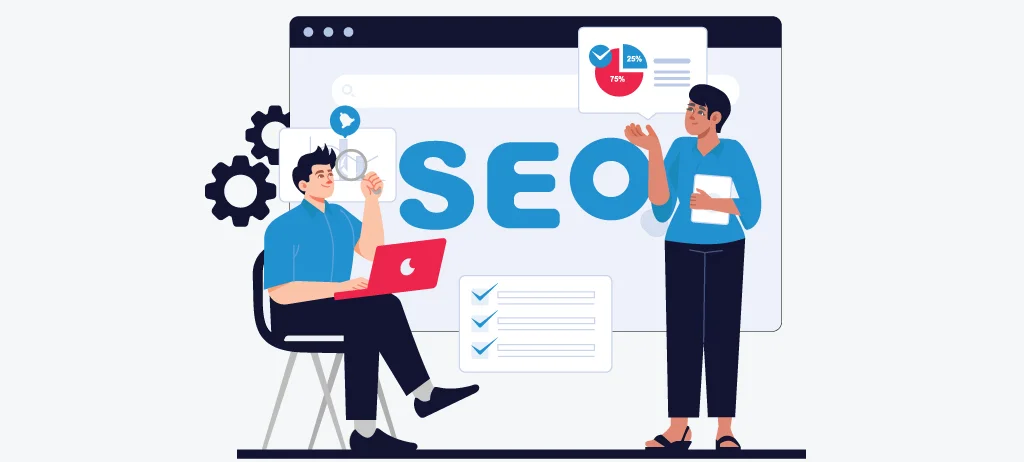
Knowledge graph SEO is the process of helping search engines and AI systems understand your brand, people, products, services, and topics as clear entities with trusted relationships. It uses entity optimisation, structured data, consistent brand facts, internal links, and third-party corroboration to improve how your business is interpreted in search.
Search is no longer only about matching keywords to web pages. Google, AI answer engines, and LLM-powered search systems increasingly need to understand entities: who your brand is, what it offers, where it operates, which topics it is connected to, and which sources confirm those facts. That is where knowledge graph SEO becomes important.
Google describes its Knowledge Graph as a database of facts about people, places, and things, and Knowledge Panels are one visible way those facts appear in search results. Google’s newer AI experiences also rely on broader retrieval systems, including query fan-out and supporting links, to answer complex questions.
In this guide, you will learn how Knowledge Graph SEO works, why it matters for semantic SEO and AI search, how to strengthen brand entity signals, which schema types to use, what mistakes to avoid, and how to build a practical entity optimisation workflow.
Key Takeaways
- Knowledge Graph SEO focuses on entities and relationships, not just keywords.
- Google says Knowledge Graph facts come from public sources, licensed data, and information from content owners.
- Structured data gives Google explicit clues about page meaning and can help Google understand people, organisations, products, and other entities.
- Organisation schema can help Google disambiguate a business and may influence visual elements such as logos and Knowledge Panels.
- Google says there are no special technical requirements for AI Overviews or AI Mode beyond being indexed, eligible for snippets, and following SEO fundamentals.
- Knowledge Graph SEO supports GEO, AEO, semantic SEO, and AI SEO by making your content easier to extract, verify, and cite.
- You cannot guarantee a Knowledge Panel or AI citation, but you can improve the clarity, consistency, and trustworthiness of your entity signals.
What Is the Google Knowledge Graph?
The Google Knowledge Graph is Google’s system for understanding factual information about entities such as people, organisations, places, things, and concepts. Google says this information helps Search answer factual questions and surface publicly known facts when useful.
Think of it as a relationship map:
| Entity |
Relationship |
Connected Entity |
| W3era |
provides |
SEO services |
| W3era |
specializes in |
Semantic SEO |
| Knowledge Graph SEO |
uses |
Entity optimisation |
| Organisation schema |
supports |
Brand disambiguation |
This is different from traditional keyword SEO. Keyword SEO asks, “Which phrase should this page rank for?” Knowledge Graph SEO asks, “Does Google understand what this brand, service, author, and topic actually are?”
Knowledge Graph vs Knowledge Panel vs Structured Data
| Concept |
What it means |
SEO role |
| Knowledge Graph |
Google’s database of facts and relationships about entities |
Helps Google understand entities and context |
| Knowledge Panel |
A visible search result box about an entity |
A possible SERP output, not the database itself |
| Structured Data |
Machine-readable markup added to pages |
Gives explicit clues about page and entity meaning |
| Entity SEO |
Optimisation of people, organisations, products, services, and concepts |
Builds clarity, confidence, and disambiguation |
| Semantic SEO |
SEO based on meaning, topical relationships, and intent |
Connects content to broader topic and entity networks |
Google says Knowledge Panels are generated automatically when enough information is available on the open web, and verified representatives can claim panels and suggest changes.
Why Knowledge Graph SEO Matters Now
Knowledge Graph SEO matters because search has become more answer-led, entity-led, and AI-assisted.
Google’s AI Mode can answer nuanced, multi-part questions and uses a query fan-out technique across subtopics and data sources. Google also says AI Mode can tap into sources such as the Knowledge Graph, real-world information, and shopping data.
Zero-click behaviour also makes entity visibility more important. SparkToro’s 2024 study found that 58.5% of U.S. Google searches and 59.7% of EU Google searches ended without a click. This means brands need to think beyond ranking alone. Visibility inside SERP features, answers, panels, and AI-generated responses can influence awareness even when clicks are lower.
How Knowledge Graph SEO Works
Knowledge Graph SEO improves the confidence search systems have in your entity. That confidence usually comes from five signal groups.
1. Entity Home
Your entity home is the most authoritative page about your brand. For most companies, this is the homepage or About page. It should clearly state:
· Official brand name
· Brand description
· Services
· Locations served
· Founders or leadership, if relevant
· Contact details
· Social profiles
· Awards, certifications, and verified proof points
2. Consistent Brand Facts
Your name, address, phone number, logo, founding year, social profiles, and description should match across your website, Google Business Profile, directories, review platforms, social profiles, and industry listings.
Inconsistent data creates ambiguity. For example, if your LinkedIn says one business category, your homepage says another, and your schema has a third, search engines may struggle to resolve the entity.
3. Schema Markup
Google says structured data is a standardised format that helps classify page content and provide explicit clues about meaning. For Knowledge Graph SEO, use schema to clarify the entity behind the page.
Recommended schema types:
| Page type |
Schema to use |
| Blog article |
Article or BlogPosting |
| Brand homepage |
Organisation or LocalBusiness, where applicable |
| Author profile |
Person |
| FAQ section |
FAQPage, only if FAQs are visible |
| Process section |
HowTo, only if true step-by-step instructions are visible |
| Service pages |
Service, Organisation, WebPage |
| Breadcrumbs |
BreadcrumbList |
4. sameAs and Disambiguation
The sameAs property identifies URLs that unambiguously refer to the same entity, such as an official website, Wikipedia page, Wikidata entry, or official social profile.
For W3era, sameAs should include verified social profiles and other authoritative brand profiles. Avoid adding low-quality directory links simply to inflate schema. Use only pages that clearly confirm the same brand identity.
5. Third-Party Corroboration
Google says Knowledge Graph facts come from multiple sources, including public sources, licensed data, and direct information from content owners. For brands, this means your own site is not enough. You need credible external references that confirm your entity.
Examples include:
· Industry directories
· Partner pages
· Case studies
· Press mentions
· Podcast appearances
· Author profiles
· Review platforms
· Conference speaker pages
· Social profiles
· Business listings
Knowledge Graph SEO Example
A SaaS company wants to be understood as a “customer support automation platform.”
Weak entity signals:
· Homepage says “AI productivity tool”
· LinkedIn says “software company”
· Schema says “Organisation” only
· Blog posts target random AI keywords
· No author bios or third-party mentions
Improved entity signals:
· Homepage defines the company as a “customer support automation platform”
· Service pages target related entities: chatbot automation, ticket routing, helpdesk AI, customer experience
· Organisation schema includes logo, URL, founders, sameAs, contactPoint, and service area
· Blog cluster supports the core entity with comparison pages, guides, FAQs, and case studies
· External profiles repeat the same brand description
· Author bios show customer support and AI operations expertise
The result is not a guaranteed Knowledge Panel or AI Overview citation. The result is a clearer entity profile that search engines and AI systems can interpret with less ambiguity.
Data, Research, and Insights
Google’s 2020 official Knowledge Graph post said the system had amassed over 500 billion facts about five billion entities. Search Engine Land later reported that, as of May 2024, Google had more than 1.6 trillion facts about 54 billion entities.
Google also reports that structured data can help Search understand page content and gather information about the web and world. Its structured data documentation includes case studies where rich-result enhancements correlated with higher CTR, visits, time on page, or interaction rates.
The practical interpretation: Knowledge Graph SEO is not a shortcut. It is an information-quality system. The more clearly your site defines entities, relationships, authorship, citations, and structured data, the easier it becomes for search systems to understand your role in a topic.
GEO Optimisation: How Knowledge Graph SEO Supports Generative Engine Optimisation
Generative Engine Optimisation focuses on making content easier for AI systems to retrieve, understand, summarize, and cite.
Knowledge Graph SEO supports GEO because generative engines need:
· Clear entity names
· Concise definitions
· Evidence-backed claims
· Structured relationships
· Sourceable facts
· Updated information
· Author and organisation trust signals
To make this page GEO-ready:
· Add answer-first blocks after major headings.
· Use tables to clarify comparisons.
· Cite official sources for factual claims.
· Include original frameworks and checklists.
· Keep entity names consistent.
· Add schema that matches visible content.
· Link to related W3era service and guide pages.
AEO Optimisation: How Knowledge Graph SEO Supports Answer Engine Optimisation
Answer Engine Optimisation helps content appear in featured snippets, People Also Ask, voice-style answers, and AI-generated responses.
For this page, use question-led headings such as:
· What is Knowledge Graph SEO?
· How does Google use the Knowledge Graph?
· How do I optimise my brand for the Knowledge Graph?
· What schema helps with Knowledge Graph SEO?
· Is a Knowledge Panel the same as the Knowledge Graph?
Best AEO formats:
| Search feature |
Best content format |
| Featured snippet |
40–60 word definition |
| People Also Ask |
Question H2/H3 + 45–75 word answer |
| Voice search |
Direct, conversational answer |
| AI answer extraction |
Short answer + supporting detail + citation |
| Checklist result |
Step-by-step bullets |
Semantic SEO Optimisation
Knowledge Graph SEO is a subtopic of semantic SEO because it focuses on meaning, entity relationships, and context.
Important entities for this page:
· Knowledge Graph
· Google Knowledge Graph
· Google Knowledge Panel
· Entities
· Entity SEO
· Semantic SEO
· Structured data
· Schema.org
· Organisation schema
· sameAs
· Disambiguation
· Brand entity
· Topical authority
· AI Overviews
· AI Mode
· Generative Engine Optimisation
· Answer Engine Optimisation
Internal linking opportunities:
· Link “semantic SEO” to W3era’s Semantic SEO Services page.
· Link “AI SEO” to W3era’s AI SEO Services page.
· Link “Google Knowledge Panel” to W3era’s Knowledge Panel guide.
· Link “schema markup” to a Schema Markup Services page.
· Link “entity optimisation” to Entity SEO Services.
W3era already has a Semantic SEO Services page focused on entities, topical clusters, and structured data, which makes it a strong supporting internal link for this blog.
AI SEO Optimisation
Google says the same SEO fundamentals apply to AI Overviews and AI Mode, and that there are no additional technical requirements beyond being indexed, eligible for snippets, and following Google’s policies.
For AI SEO readiness:
· Keep important information in visible text.
· Use structured data that matches the page.
· Add concise answer blocks.
· Cite sources.
· Use author and reviewer bios.
· Build a connected topic cluster.
· Add internal links to relevant service pages.
· Avoid manipulative “AI citation” tactics.
· Refresh the page when Google AI features or Knowledge Graph behaviour changes.
Google’s guidance on generative AI content also warns that using AI tools to generate many low-value pages may violate scaled content abuse policies.
W3era K-GRAPH Framework for Knowledge Graph SEO
Use this 7-step framework to optimise a brand for Knowledge Graph SEO.
| Step |
Action |
Output |
| K — Know the entity |
Define the primary entity: brand, person, product, service, or topic |
Entity inventory |
| G — Ground the entity home |
Choose the canonical page that explains the entity |
Homepage/About/service page |
| R — Resolve ambiguity |
Add consistent name, description, logo, location, category, and sameAs |
Entity clarity |
| A — Add structured data |
Use Organisation, Article, FAQPage, BreadcrumbList, Person, and Service schema where relevant |
Machine-readable context |
| P — Prove authority |
Add case studies, citations, reviews, expert bios, and third-party mentions |
Trust signals |
| H — Help answer engines |
Use FAQs, answer blocks, tables, and step-by-step sections |
AEO/GEO readiness |
| Monitor |
Track Knowledge Panel, branded SERP, AI answers, schema errors, and entity mentions |
Optimisation roadmap |
Tables and Comparison Blocks
Traditional SEO vs Knowledge Graph SEO
| Area |
Traditional SEO |
Knowledge Graph SEO |
| Core focus |
Keywords and pages |
Entities and relationships |
| Optimisation unit |
URL |
Brand, person, service, topic, product |
| Key asset |
Ranking page |
Entity home + corroborating sources |
| Technical layer |
Metadata, crawlability, links |
Schema, sameAs, internal entity graph |
| Success signal |
Ranking and traffic |
Accurate entity understanding, SERP features, AI visibility signals |
| Risk |
Keyword stuffing |
Entity inconsistency |
GEO vs AEO vs Semantic SEO vs AI SEO
| Discipline |
Main goal |
Knowledge Graph SEO role |
| GEO |
Improve visibility in generative answers |
Makes brand facts extractable and source-worthy |
| AEO |
Answer questions directly |
Uses concise answer blocks and FAQs |
| Semantic SEO |
Build meaning and topical depth |
Maps entities, intent, and relationships |
| AI SEO |
Prepare content for AI-assisted discovery |
Improves clarity, structure, trust, and source signals |
Common Mistakes to Avoid
| Mistake |
Why it hurts |
Fix |
| Confusing Knowledge Graph with Knowledge Panel |
You may chase a visible feature instead of building entity understanding |
Optimise the entity first; treat the panel as a possible output |
| No clear entity home |
Google may not know which page is the source of truth |
Use homepage or About page as canonical entity home |
| Inconsistent brand descriptions |
Creates ambiguity across sources |
Standardize brand name, category, logo, and description |
| Adding fake or irrelevant sameAs links |
Weakens trust and may look manipulative |
Use only authoritative identity-confirming URLs |
| Schema does not match visible content |
Violates structured data best practices |
Keep schema aligned with what users can see |
| Relying only on Wikipedia |
Not every brand qualifies for Wikipedia |
Build proof through directories, PR, case studies, reviews, and industry profiles |
| Ignoring internal links |
Entity relationships remain weak |
Link pillar, service, blog, and FAQ pages semantically |
| Publishing generic AI content at scale |
May create low-value pages |
Add expert review, original examples, and verified sources |
| No monitoring process |
Entity data can become outdated |
Review branded SERPs, Knowledge Panels, schema, and AI answers quarterly |
W3era Expert Tips
· Write a one-sentence entity definition for your brand and reuse it consistently across your site, schema, profiles, and media kit.
· Use Organisation schema on the homepage with logo, URL, sameAs, contactPoint, and founding details where available.
· Create entity support pages for core services, founders, locations, and topic clusters.
· Add “last updated” and expert reviewer details to show freshness and accountability.
· Use citations for factual claims, especially when writing about Google, AI search, schema, or industry data.
· Link this blog to W3era’s Knowledge Panel guide, because Knowledge Panels are a key visible outcome of strong entity signals. W3era’s existing guide already covers Knowledge Panels, verification, structured data, and Knowledge Graph basics.
· Measure entity visibility, not just rankings: track branded SERPs, Knowledge Panel changes, AI answer mentions, schema validity, and topical cluster growth.
Conclusion
Knowledge Graph SEO is not about tricking Google into showing a Knowledge Panel. It is about making your brand, services, authors, content, and proof points easier for search engines and AI systems to understand. When your entity signals are clear, consistent, structured, and supported by credible sources, your website becomes more useful for semantic search, AI Overviews, AI Mode, answer engines, and LLM-powered discovery.
For businesses, the value is practical: stronger brand clarity, better topical relevance, cleaner internal linking, more trustworthy content, and improved readiness for zero-click and AI-led search experiences.
W3era helps brands build this foundation through semantic SEO, AI SEO, structured data, content optimisation, and entity-first search strategies. To strengthen your visibility in Google and AI search, talk to W3era’s SEO experts or request a free AI SEO audit.