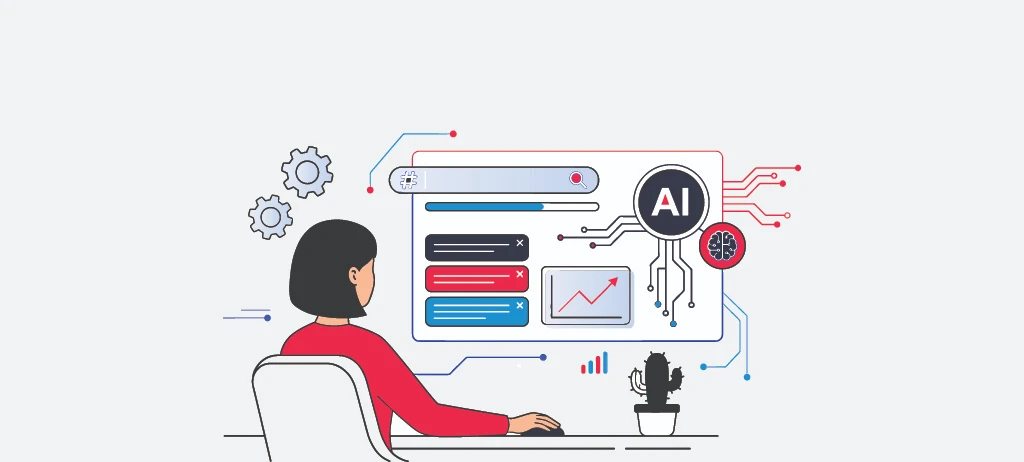
AI SEO vs traditional SEO compares two connected search strategies. Traditional SEO focuses on ranking web pages in search engines through technical optimisation, content, keywords, links, and user experience. AI SEO expands that approach by optimising content for AI Overviews, AI Mode, ChatGPT, Perplexity, and answer engines that summarise, interpret, and cite sources.
Search visibility is no longer limited to blue links, keyword rankings, and organic snippets. Businesses now compete for visibility across Google Search, AI Overviews, Google AI Mode, ChatGPT Search, Perplexity, Gemini-style search experiences, and other LLM-powered answer engines. That shift has made AI SEO vs traditional SEO an important question for SEO managers, founders, CMOs, and content teams.
Traditional SEO still matters because search engines need crawlable pages, useful content, internal links, authority signals, and technical quality. But AI SEO adds another layer: your content must be easy for AI systems to interpret, summarise, cite, and connect to related entities. Google says its AI search features still rely on core SEO best practices, while AI Mode can use query fan-out to explore more complex questions and subtopics. (Google for Developers)
This guide explains the key differences, where both approaches overlap, and how to build a practical search strategy for organic rankings, AI search visibility, featured snippets, answer engines, and semantic SEO.
Key Takeaways
- Traditional SEO is not dead. It remains the foundation for crawlability, indexation, rankings, internal links, content quality, and technical performance.
- AI SEO expands traditional SEO. It adds answer-first formatting, entity clarity, source credibility, structured data, and LLM-friendly content architecture.
- Google does not require special AI-only markup for AI Overviews or AI Mode, but content must be crawlable, indexable, eligible for snippets, and useful to people. (Google for Developers)
- AI search rewards clarity and evidence. Pages with direct answers, original examples, clear sourcing, expert review, and topical depth are easier for answer engines to interpret.
- GEO, AEO, semantic SEO, and AI SEO are connected but not identical. GEO focuses on generative engines, AEO focuses on answer formats, semantic SEO focuses on meaning and entity relationships, and AI SEO combines all of them.
- Measurement must evolve. Businesses should track rankings, traffic, conversions, featured snippets, AI Overview appearances, brand mentions, citations, and assisted discovery from AI platforms.
- The best strategy is hybrid. Use traditional SEO to build visibility and authority, then layer AI SEO to improve answer readiness and generative search discoverability.
Main Blog Content
AI SEO vs Traditional SEO: The Core Difference
Traditional SEO helps a page rank in search engine results. AI SEO helps a brand become visible when AI-powered search systems generate answers, summaries, recommendations, and citations.
That does not mean AI SEO replaces traditional SEO. Google’s own AI search guidance says SEO best practices remain relevant, and there are no additional technical requirements for appearing in AI Overviews or AI Mode beyond being indexed and eligible for snippets. (Google for Developers)
The difference is in how visibility is earned.
Traditional SEO usually asks:
· Can Google crawl, index, understand, and rank this page?
· Does this page satisfy the keyword intent?
· Does this page have authority, links, content quality, and technical strength?
· Does this page earn clicks from search results?
· AI SEO adds new questions:
· Can AI systems extract a clear answer from this content?
· Is the content structured around entities, context, and related questions?
· Does the page include trustworthy evidence, sources, examples, and expert signals?
· Can the brand be cited, mentioned, or summarised accurately in AI-generated responses?
What Is Traditional SEO?
Traditional SEO is the process of optimising a website so search engines can crawl, index, rank, and display its pages for relevant queries.
It includes:
· Keyword research
· On-page SEO
· Technical SEO
· Content SEO
· Internal linking
· Link building
· Local SEO, where relevant
· User experience improvements
· Structured data for eligible rich results
· Performance measurement through rankings, traffic, and conversions
· Traditional SEO is still essential because AI search systems often depend on the same web ecosystem: crawlable pages, accessible content, credible sources, and strong topical authority. Google’s helpful content guidance also emphasizes original information, complete explanations, clear sourcing, expertise, and people-first content. (Google for Developers)
What Is AI SEO?
AI SEO is the process of optimising a brand’s content, website, entity signals, and authority for AI-assisted search experiences.
It includes optimisation for:
- Google AI Overviews
- Google AI Mode
- ChatGPT Search
- Perplexity
- Gemini-style answer experiences
- LLM-powered search assistants
- Voice-style answers
- Zero-click summaries
- AI-generated comparison responses
- Citation-based answer engines
AI SEO focuses on making content easier to retrieve, understand, summarise, trust, and cite. OpenAI explains that ChatGPT Search can provide timely answers with links to relevant web sources, while Perplexity’s API documentation describes web-grounded answers with citations and real-time search results. (OpenAI; Perplexity)
Traditional SEO vs AI SEO: Comparison Table
| Area |
Traditional SEO |
AI SEO |
What Businesses Should Do |
| Main goal |
Rank web pages in organic search results |
Improve visibility in AI-generated answers, summaries, and citations |
Build pages that rank and can be summarised accurately |
| Search behaviour |
Shorter keyword queries, navigational searches, commercial searches |
Longer prompts, conversational queries, comparisons, multi-step questions |
Map keywords plus natural-language questions |
| Content structure |
H1, H2s, body copy, metadata, internal links |
Answer blocks, entity-rich sections, FAQs, examples, source-backed claims |
Use answer-first writing and clear headings |
| Optimisation focus |
Keywords, technical SEO, backlinks, content quality |
Entities, topical coverage, citations, retrieval readiness, authority |
Combine keyword research with entity mapping |
| Measurement |
Rankings, clicks, impressions, CTR, conversions |
AI mentions, citations, answer inclusion, referral quality, assisted conversions |
Track both SEO and AI visibility signals |
| Technical needs |
Crawlability, indexation, speed, mobile UX, canonicalisation |
Same foundation plus clean content extraction and snippet eligibility |
Keep pages indexable and technically clean |
| Authority signals |
Backlinks, brand reputation, topical authority |
Credible sources, expert review, original data, entity consistency |
Add EEAT signals and verified proof points |
| Risk |
Keyword stuffing, thin content, technical errors |
AI-spam tactics, unsupported claims, generic AI content |
Avoid manipulative scaled content and low-value automation |
Google’s spam policies now explicitly apply to attempts to manipulate rankings or generative AI responses in Google Search, so AI SEO must be built on useful content rather than shortcuts. (Google for Developers)
Why Traditional SEO Still Matters in an AI Search World
Traditional SEO remains the foundation because AI systems still need reliable web content to retrieve, interpret, and reference.
Crawlability and Indexation Still Come First
If a page cannot be crawled or indexed, it is unlikely to perform well in traditional search or AI-enhanced Google search experiences. Google says pages need to be indexed and eligible to show a snippet to be eligible for AI search features. (Google for Developers)
Practical checklist:
· Allow important pages to be crawled
· Avoid accidental noindex tags
· Use canonical tags correctly
· Make primary content visible in HTML
· Fix broken internal links
· Keep XML sitemaps updated
· Avoid blocking important resources
Helpful Content Still Wins
Google’s people-first content guidance asks whether content provides original information, complete explanations, useful analysis, and a satisfying experience. It also highlights expertise, sourcing, factual accuracy, and trust. (Google for Developers)
For W3era’s target audience, this means content should not stop at “AI SEO is new.” It should explain what businesses must change, which SEO fundamentals remain unchanged, how to measure performance, and how to avoid risky AI-search shortcuts.
Links and Authority Still Matter
Traditional backlinks are not the only authority signal, but authority still matters. AI answer engines often favor content that is clear, credible, consistent, and supported by external references or recognized brand authority.
Strong AI SEO pages should include:
· Internal links to relevant service and guide pages
· External citations to official sources
· Author and reviewer credentials
· Updated date
· Examples and screenshots
· Case studies or verified results, when available
AI systems perform better when content is easy to parse. That means technical SEO now has a second benefit: it helps search engines and AI systems understand page structure.
Important technical signals include:
· Clean heading hierarchy
· Descriptive title tags
· Logical internal links
· Structured data
· Fast page loading
· Mobile-friendly design
· Accessible images with alt text
· Clear separation between main content, ads, and navigation
What Changes With AI SEO?
AI SEO changes the optimisation target from “rank this page for this keyword” to “make this page useful, trustworthy, and easy to extract for many related questions.”
Search Queries Are Becoming More Conversational
Google has stated that AI Mode helps users ask longer, more complex, and multimodal questions. It also uses query fan-out, which breaks complex questions into subtopics and issues multiple related searches. (blog.google)
Example:
A traditional query may be:
“best SEO agency”
An AI-style query may be:
“Which SEO agency is best for a SaaS company that needs technical SEO, AI SEO, schema markup, and content strategy across the US and India?”
The second query requires content that covers entities, services, use cases, evaluation criteria, industries, and decision factors.
Content Must Be Answer-Ready
AI search systems often need compact, extractable answers. That does not mean every paragraph should be short or shallow. It means each section should make its main point clearly before expanding.
Better format:
· Direct answer
· Explanation
· Evidence
· Practical action
· Weak format:
· Long introduction
· Vague claims
· No examples
· No sources
· No clear answer
Entity Clarity Matters More
AI systems need to understand who or what a page is about.
For this topic, important entities include:
- Google AI Overviews
- Google AI Mode
- ChatGPT Search
- Perplexity
- Gemini
- Generative Engine Optimisation
- Answer Engine Optimisation
- Semantic SEO
- Structured data
- Entity salience
- Topical relevance
- Query intent
- EEAT
A strong page should define these entities, explain relationships between them, and link to supporting W3era service pages.
Source Credibility Becomes a Competitive Advantage
AI search experiences often synthesize information. To be considered a reliable source, content should include verifiable facts, clear sourcing, expert authorship, and original insight.
Google’s AI content guidance says AI-assisted content is not automatically against guidelines, but using automation mainly to manipulate rankings violates spam policies. The focus should remain on original, helpful, people-first content with EEAT. (Google for Developers)
Data, Research, and Search Behaviour Insights
Google Search Is Still Massive
Google has stated that people use Google for more than 5 trillion searches annually. That means traditional search visibility remains a major business channel even as AI-assisted search grows. (blog.google)
Business implication: Do not abandon traditional SEO. Use AI SEO to strengthen visibility across new answer surfaces while maintaining organic rankings.
AI Search Usage Is Growing, but Traditional Search Still Dominates
A Wall Street Journal report citing Datos and Semrush data said AI-powered large language models captured 5.6% of U.S. desktop search traffic in June 2025, up from 2.48% in June 2024, while traditional search still accounted for the majority. (The Wall Street Journal)
Business implication: AI search is growing fast, but it is not yet a full replacement for organic search. The practical strategy is not “SEO or AI SEO.” It is “SEO plus AI SEO.”
Google AI Features Are Changing Query Behaviour
Google said AI Overviews drove more than a 10% increase in usage for the query types where AI Overviews were shown in the U.S. and India. Google also described AI Mode as useful for complex exploration and reasoning-style questions. (blog.google)
Business implication: Pages should cover not only head terms, but also follow-up questions, comparisons, decision criteria, and subtopics.
AI Overview Source Behaviour Is Still Evolving
A 2026 academic preprint analysing Google AI Overviews across trending queries found AI Overview activation varied by query type and that some cited domains did not appear on the first page of traditional organic results. This suggests AI visibility may overlap with organic visibility but is not always identical. (arXiv)
Business implication: Ranking well remains important, but brands should also improve source clarity, topical depth, entity alignment, and answer extraction.
Industry Forecasts Expect AI Search Traffic to Keep Rising
Semrush has projected that LLM traffic could surpass traditional organic search traffic in 2028, while also noting that traditional SEO factors continue to influence LLM visibility. Treat this as an industry forecast, not a guarantee. (Semrush)
Business implication: Companies should begin tracking AI visibility now, while continuing to invest in proven SEO fundamentals.
Google AI Overviews and Google AI Mode: What SEO Teams Need to Know
Google AI Overviews
Google AI Overviews provide AI-generated summaries with links to relevant sources when Google determines that generative AI can be helpful. Google’s help documentation notes that AI responses may make mistakes, which is why source clarity and factual accuracy matter. (Google Help)
For SEO teams, this means content should be:
· Clear enough to summarise
· Supported by reliable sources
· Structured around direct answers
· Updated regularly
· Written with expert review
· Connected to related topics through internal links
Google AI Mode
Google AI Mode is designed for more complex, exploratory, and reasoning-heavy searches. Google says AI Mode can use query fan-out, where the system breaks a question into subtopics and runs multiple related searches. (blog.google)
For W3era’s blog, this means the page should answer related sub-questions such as:
· Is traditional SEO still useful?
· How does AI SEO work?
· What is the difference between GEO and AEO?
· How do AI Overviews choose sources?
· How should businesses measure AI SEO?
· What content format works best for AI answers?
· What schema should be used?
· What mistakes should be avoided?
ChatGPT, Perplexity, and LLM-Powered Search Visibility
AI SEO is not only about Google. Users now ask questions inside AI assistants and answer engines.
ChatGPT Search
OpenAI says ChatGPT Search can provide timely answers with links to relevant web sources, and ChatGPT can search automatically when a question benefits from current web information. (OpenAI)
Optimisation implications:
· Write source-backed explanations
· Use clear headings and answer blocks
· Keep pages updated
· Publish original insights
· Build brand authority around important entities
· Make claims easy to verify
Perplexity
Perplexity describes its Sonar API as providing web-grounded AI responses with citations, while its search API can return real-time web results from a refreshed index. (Perplexity)
Optimisation implications:
· Make pages citation-worthy
· Include concise definitions
· Use factual, verifiable statements
· Add data, examples, and sources
· Avoid vague marketing language
· Build topical authority across related pages
SEO vs GEO vs AEO vs Semantic SEO vs AI SEO
| Discipline |
Main Purpose |
Best Use Case |
Example Optimisation |
| Traditional SEO |
Rank pages in organic search |
Google rankings, organic traffic, conversions |
Keyword research, title tags, technical SEO, backlinks |
| Semantic SEO |
Help search systems understand meaning and relationships |
Topic clusters, entity relevance, topical authority |
Entity mapping, related concepts, internal links |
| AEO |
Optimise for direct answers |
Featured snippets, People Also Ask, voice answers |
FAQ blocks, concise definitions, question headings |
| GEO |
Optimise for generative engines |
AI-generated summaries and citations |
Citation-worthy content, source-backed answers, clear entities |
| AI SEO |
Combine SEO, semantic SEO, AEO, GEO, and EEAT for AI-search visibility |
Google AI Overviews, AI Mode, ChatGPT, Perplexity |
Answer-first content, structured data, expert review, AI visibility tracking |
Practical Workflow: How to Optimise One Page for Both Traditional SEO and AI SEO
Step 1: Map the Search Intent
For this page, the intent is commercial investigation. Readers are not only looking for definitions. They are comparing two SEO approaches before deciding what strategy or service they need.
Search intent map:
| Intent Layer |
Reader Question |
Content Needed |
| Definition |
What is AI SEO vs traditional SEO? |
Clear answer block |
| Comparison |
What are the differences? |
Comparison table |
| Business decision |
Which strategy should we use? |
Hybrid recommendation |
| Implementation |
How do we optimise for both? |
Workflow/checklist |
| Risk reduction |
What mistakes should we avoid? |
Mistakes and fixes |
| Vendor evaluation |
Can W3era help? |
Service CTAs and internal links |
Step 2: Build an Entity Map
A strong AI SEO page should cover the primary entity and related entities.
Primary entity:
AI SEO vs traditional SEO
Supporting entities:
- Google AI Overviews
- Google AI Mode
- ChatGPT Search
- Perplexity
- Generative Engine Optimisation
- Answer Engine Optimisation
- Semantic SEO
- Structured data
- EEAT
- Internal linking
- Entity salience
- Topical authority
- Query intent
Step 3: Create Answer-First Sections
Each major section should start with a direct answer, then expand.
Example:
Weak heading: “More About AI”
Better heading: “How Does AI SEO Change Keyword Research?”
Direct answer:
AI SEO changes keyword research by expanding it from keyword lists to intent clusters, conversational prompts, related entities, and subtopics that AI systems may retrieve when answering complex questions.
Step 4: Add Evidence and Sources
Pages optimised for AI search should not make unsupported claims. Add:
· Official documentation
· Reputable research
· Original examples
· Screenshots
· Case studies
· Expert quotes
· Author/reviewer details
Step 5: Add Structured Data
Structured data is not a shortcut to AI visibility. Google says structured data is not required for generative AI search features, but it remains useful for eligible rich results and clearer page understanding. (Google for Developers)
Use:
· Article or BlogPosting
· BreadcrumbList
· FAQPage, if FAQs are visible
· Organisation
· Person, if author/reviewer is shown
· WebPage
Step 6: Build Internal Links
Internal links help users and search engines understand how this page fits inside W3era’s AI SEO cluster.
Recommended links:
Step 7: Measure Traditional and AI Search Visibility
Track:
· Organic rankings
· Organic clicks
· Impressions
· CTR
· Conversions
· Featured snippets
· People Also Ask visibility
· AI Overview appearances
· ChatGPT/Perplexity brand mentions
· Referral traffic from AI platforms
· Assisted conversions from informational pages
GEO Optimisation: How This Page Supports Generative Engine Optimisation
Generative Engine Optimisation focuses on improving how content appears in AI-generated answers, summaries, and citations.
How Generative Engines May Interpret This Topic
A generative engine may interpret “AI SEO vs traditional SEO” as a comparison query. It may look for:
· Definitions
· Difference tables
· Examples
· Current AI search platforms
· Business recommendations
· Risks and limitations
· FAQs
· Credible sources
· Expert-backed conclusions
How to Structure Content for AI-Generated Answers
Use:
· Direct definitions
· Clear H2/H3 structure
· Tables
· Step-by-step workflows
· Question-based headings
· Short answer blocks
· External citations
· Original frameworks
· Author/reviewer details
How Brands Can Improve Source Visibility
To make content more citation-worthy:
· Publish unique insights, not generic summaries
· Include verified data and sources
· Use clear claims that can be extracted accurately
· Add examples from real SEO workflows
· Maintain updated content
· Build topical authority through related pages
· Avoid exaggerated claims about guaranteed AI visibility
GEO Checklist
| GEO Element |
Recommendation |
| Clear topic definition |
Add a 40–60 word answer block near the top |
| Citation-worthy claims |
Link to Google, OpenAI, Perplexity, Schema.org, and research sources |
| Entity consistency |
Use consistent terminology for AI SEO, GEO, AEO, and semantic SEO |
| Original value |
Add W3era’s framework, checklists, and expert tips |
| Trust signals |
Add author, reviewer, updated date, sources, and methodology |
| Retrieval-ready formatting |
Use short sections, tables, and question headings |
AEO Optimisation: How This Page Supports Answer Engine Optimisation
Answer Engine Optimisation focuses on making content suitable for direct answers, featured snippets, People Also Ask, and voice-style queries.
| Query Type |
Best Format |
Example |
| What is AI SEO? |
Definition paragraph |
45–60 word answer |
| AI SEO vs traditional SEO |
Comparison table |
Side-by-side differences |
| Is traditional SEO dead? |
Direct answer + explanation |
No, but it is evolving |
| How to optimise for AI SEO? |
Step-by-step list |
7-step workflow |
| GEO vs AEO vs SEO |
Comparison table |
Discipline breakdown |
| What mistakes should I avoid? |
Mistake/fix table |
Practical remediation |
People Also Ask Opportunities
Target these questions:
· What is the difference between AI SEO and traditional SEO?
· Is traditional SEO still relevant?
· How do I optimise for AI Overviews?
· What is GEO in SEO?
· What is AEO in SEO?
· Can AI-generated content rank on Google?
· Does schema markup help AI SEO?
· How do AI search engines choose sources?
AEO Writing Rules
· Start sections with the answer
· Use question-based headings
· Keep answer blocks concise
· Add examples after definitions
· Avoid vague marketing language
· Use tables where comparisons are needed
· Add FAQ schema only when FAQs are visible on the page
Semantic SEO Optimisation
Semantic SEO helps search engines and AI systems understand meaning, context, and topical relationships.
Important Entities to Include
| Entity |
Why It Matters |
| Main topic and commercial service category |
Traditional SEO |
| Comparison baseline |
Google AI Overviews |
| AI search visibility surface |
Google AI Mode |
| Advanced AI search behaviour and query fan-out |
ChatGPT Search |
| LLM-powered search channel |
Perplexity |
| Citation-based answer engine |
GEO |
| Generative search optimisation discipline |
AEO |
| Answer-focused optimisation discipline |
Semantic SEO |
| Entity and topical relevance discipline |
Structured data |
| Helps eligible rich results and machine understanding |
EEAT |
· Entity salience
· Topical relevance
· Query intent
· Answer blocks
· Structured data
· Citations
· Internal linking
· Topical authority
· Source credibility
· AI search visibility
· Helpful content
· Snippet eligibility
Internal Linking Opportunities
Use internal links to connect this page to:
· AI SEO pillar page
· AI SEO Services page
· Semantic SEO Services page
· GEO Services page
· AEO Services page
· Schema Markup Services page
· Technical SEO Services page
· SEO Consulting Services page
Knowledge Graph Relevance
A well-structured page can strengthen W3era’s topical identity around AI SEO. Use consistent brand, service, author, and organisation schema to help search systems understand W3era as an entity connected to SEO, AI SEO, semantic SEO, GEO, AEO, and digital marketing.
AI SEO Optimisation
AI SEO combines traditional SEO, semantic SEO, AEO, GEO, and EEAT into one modern optimisation approach.
How to Optimise for Google AI Overviews
Focus on:
· Crawlable, indexable pages
· Snippet eligibility
· People-first content
· Clear answers
· Strong sources
· Original examples
· Expert review
· Updated content
· Strong internal links
· Google says there are no additional technical requirements for AI Overviews beyond normal Search eligibility, but helpful, reliable content remains the foundation. (Google for Developers)
How to Optimise for Google AI Mode
AI Mode is more likely to support longer, exploratory, and multi-step queries. Optimise by covering:
· Subtopics
· Comparisons
· Decision criteria
· Use cases
· Follow-up questions
· Related entities
· Supporting evidence
· Because Google describes AI Mode as using query fan-out, content should cover a topic comprehensively instead of targeting only one exact-match keyword. (blog.google)
How to Improve LLM Visibility
To improve readiness for LLM-powered search:
· Use clear definitions
· Include evidence and citations
· Publish original frameworks
· Avoid unsupported claims
· Add author and reviewer details
· Build service-specific topical clusters
· Maintain consistent brand/entity information
· Track mentions in AI search tools manually and with monitoring tools
How to Make Content AI-Answer Ready
Use this pattern:
· Direct answer
· Short explanation
· Evidence/source
· Practical action
· Internal link
· FAQ follow-up
W3era AI-READY Framework
W3era can use this original framework across AI SEO content and audits.
The 7-Step AI-READY Framework
| Step |
Meaning |
Action |
| A — Audit technical eligibility |
Check whether pages can be crawled, indexed, and shown as snippets |
Review robots.txt, noindex, canonicals, internal links, and structured data |
| I — Identify intent layers |
Map keyword intent, AI prompts, follow-up questions, and commercial decision criteria |
Build an intent map for each target page |
| R — Reinforce entities |
Make key entities clear and connected |
Add definitions, related terms, internal links, and schema |
| E — Explain with evidence |
Support claims with sources, examples, screenshots, and expert review |
Add official documentation and credible research |
| A — Answer first |
Make sections easy for answer engines to extract |
Use concise answer blocks and question headings |
| D — Develop topical authority |
Connect the page to a larger content cluster |
Link to AI SEO, Semantic SEO, GEO, AEO, and technical SEO pages |
| Y — Yield measurable signals |
Track both SEO and AI visibility |
Measure rankings, snippets, AI mentions, citations, traffic, and conversions |
AI-READY Page Checklist
· Is the page indexed?
· Is the page eligible for snippets?
· Does the H1 include the primary keyword naturally?
· Does the intro mention the primary keyword?
· Is there a concise answer block near the top?
· Are comparison tables included?
· Are AI SEO, GEO, AEO, and Semantic SEO clearly defined?
· Are claims supported by credible sources?
· Are author and reviewer details visible?
· Are internal links added to relevant W3era services?
· Is FAQ schema added only if FAQs are visible?
· Are outdated claims reviewed and updated?
· Are AI visibility metrics tracked?
Search Intent Mapping Table
| Search Query |
Intent |
Recommended Content Format |
W3era Opportunity |
| AI SEO vs traditional SEO |
Commercial investigation |
Comparison guide |
Main target page |
| traditional SEO vs AI SEO |
Commercial investigation |
Difference table |
Secondary keyword support |
| AI SEO differences |
Informational/commercial |
Definition + examples |
Add answer block and examples |
| is traditional SEO dead |
Informational |
Direct answer + explanation |
Reassure readers that SEO is evolving |
| how to optimise for AI Overviews |
Tactical |
Step-by-step checklist |
Link to AI Overviews Optimisation Services |
| GEO vs AEO |
Informational |
Comparison table |
Link to GEO and AEO service pages |
| AI SEO services |
Commercial |
Service CTA |
Link to AI SEO Services |
| semantic SEO services |
Commercial |
Service CTA |
Link to Semantic SEO Services |
19. Common Mistakes to Avoid
| Mistake |
Why It Hurts |
How to Fix It |
| Treating AI SEO as a replacement for SEO |
AI search still depends on crawlable, useful, authoritative web content |
Keep technical SEO, content SEO, and internal linking strong |
| Publishing generic AI-written content |
Generic content adds little value and may fail helpful-content expectations |
Add original examples, expert review, and brand-specific insight |
| Overpromising AI Overview visibility |
No SEO provider can guarantee AI citations or AI Overview inclusion |
Set realistic KPIs and track visibility trends |
| Ignoring entity relationships |
AI systems need context, not isolated keywords |
Build entity maps and topic clusters |
| Using structured data as a magic fix |
Structured data helps eligible rich results but is not required for Google AI features |
Use schema correctly, but prioritize content quality |
| Forgetting source credibility |
Unsupported claims reduce trust |
Link to official sources and reputable research |
| Optimising only for head keywords |
AI search often uses longer, conversational prompts |
Add follow-up questions, FAQs, and subtopic coverage |
| Ignoring technical crawl issues |
AI and search systems need accessible content |
Audit indexation, internal links, JavaScript rendering, and canonical tags |
| Not measuring AI visibility |
Organic ranking reports alone miss AI answer exposure |
Track AI mentions, citations, snippets, and assisted conversions |
| Manipulating AI search systems |
Google spam policies apply to attempts to manipulate generative AI responses |
Build useful content instead of spam tactics (Google for Developers) |
W3era Expert Tips
Build Hybrid Search Pages
Do not create separate thin pages for “SEO,” “AI SEO,” “GEO,” and “AEO” unless each page has a unique purpose. Build a connected cluster where each page answers a specific search intent and links to the others.
Add a Direct Answer Within the First 300 Words
AI systems and featured snippets need extractable answers. Add a concise definition block near the top, then expand with context, data, examples, and tables.
Use Entity Mapping Before Writing
Before drafting content, list the entities Google and AI systems must understand. For this page, that includes AI SEO, traditional SEO, Google AI Overviews, Google AI Mode, ChatGPT, Perplexity, semantic SEO, GEO, AEO, structured data, and EEAT.
Cite Official Sources for Platform Claims
When discussing Google AI Overviews, AI Mode, ChatGPT Search, or Perplexity, link to official documentation where possible. This improves trust and reduces the risk of outdated or exaggerated claims.
Make Comparisons Decision-Oriented
A comparison page should not only define both sides. It should help the reader decide what to do next. Include decision tables, audit steps, examples, and CTAs.
Add Human Expertise to AI-Assisted Content
AI can assist with research and drafting, but final content should include expert review, real examples, original analysis, and business-specific recommendations. Google says content quality matters more than how content is produced, but automation used mainly to manipulate rankings violates spam policies. (Google for Developers)
Measure Beyond Rankings
Track rankings and traffic, but also track AI Overview appearances, featured snippets, People Also Ask visibility, AI answer mentions, citation patterns, referral traffic from AI tools, and conversions.
Conclusion
AI SEO vs traditional SEO is not a choice between old and new. It is a shift from page ranking alone to broader search visibility across organic results, AI Overviews, AI Mode, ChatGPT, Perplexity, featured snippets, and answer engines. Traditional SEO gives your website the foundation: crawlability, technical quality, useful content, internal links, authority, and conversions. AI SEO adds the next layer: answer-ready formatting, entity clarity, source credibility, semantic depth, GEO, AEO, and LLM visibility.
For businesses, the winning strategy is hybrid. Keep optimising for Google rankings, but also structure your content so AI systems can understand, summarise, and reference it accurately. W3era helps businesses build that modern search strategy through AI SEO, semantic SEO, technical SEO, content optimisation, schema markup, and AI-search visibility audits.
CTA: Talk to W3era’s SEO experts to get a free AI SEO audit or request a strategy review for your website.