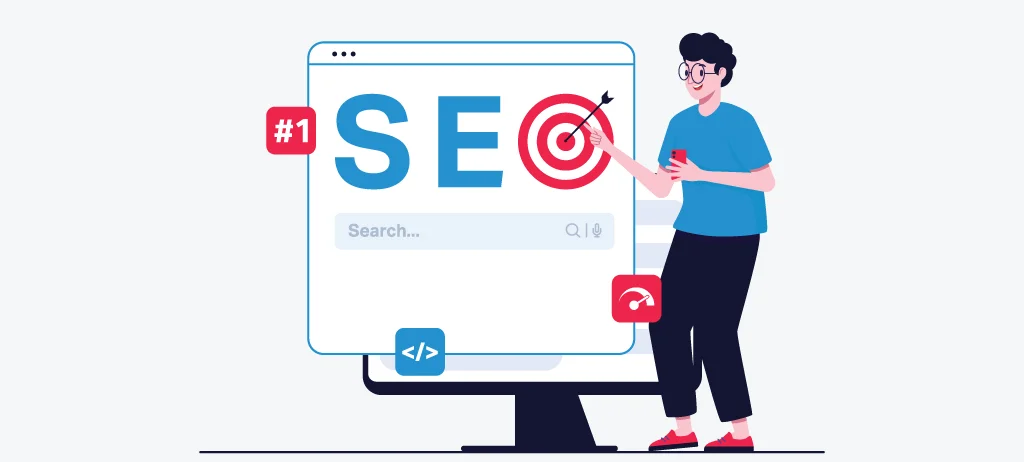
77% of patients search online before booking a dental appointment. Dental SEO involves ranking your practice for searches like "dentist near me," "teeth whitening [city]," and "emergency dentist [city]" — the exact queries your ideal new patients type into Google. The core components are Google Business Profile optimisation, local keyword targeting across your service pages, a structured review acquisition strategy across Google and Healthgrades, and E-E-A-T signals that tell Google your content comes from a real, credentialled dental professional.
Dental patients do not choose a practice the way they used to. They do not ask a neighbour, check the Yellow Pages, or call the first number they find. They open Google, search "dentist near me" or "dental implants Tampa" or "emergency dentist open Saturday," scroll past the ads, look at the star ratings, read two or three reviews, and book.
77% of patients search online before booking a healthcare appointment. For dental practices, that number is likely higher — because almost all elective dental procedures involve research before commitment.
The practices showing up at the top of those searches are not there by accident. They have done specific, repeatable things to earn those positions. This guide walks through exactly what those things are — specific to dental, not generic SEO advice with a dental example bolted on.
Why Dental SEO Is Different From General Local SEO
Before the tactics, it helps to understand why dental practices face specific SEO challenges that a plumber or a restaurant does not.
YMYL and E-E-A-T requirements are stricter for healthcare content.
Google classifies dental and medical content as YMYL — Your Money or Your Life — meaning content that could affect the reader's health, safety, or financial decisions. For YMYL pages, Google holds content to a higher standard of E-E-A-T: Experience, Expertise, Authoritativeness, and Trust. A blog post about teeth whitening published anonymously on a generic dental website is evaluated very differently from the same content published under the name of a real dentist with their credentials, license number, and professional photo attached.
Review platforms are more fragmented than most local industries.
A restaurant lives or dies on Yelp and Google. A dental practice is evaluated across Google, Healthgrades, WebMD Find a Doctor, Zocdoc, RateMDs, and Yelp simultaneously. Patients check multiple platforms before booking — and a practice with 87 Google reviews but no presence on Healthgrades looks incomplete to a careful researcher.
Emergency and elective keywords require completely different strategies.
A patient searching "emergency dentist near me on a Sunday" is ready to book within minutes. A patient searching "dental implants cost" is three to six months from a decision. Your SEO strategy needs to address both types of query — with different page types, different content, and different conversion goals for each.
Step 1 — Google Business Profile: The Dentist's Single Most Important SEO Asset
For most dental practices, the Google Business Profile is the primary source of new patient enquiries from search. The local map pack — the three practices shown with star ratings, phone numbers, and directions buttons before the organic results — is where most dental searches convert.
Appearing in that map pack depends almost entirely on your GBP. Here is what distinguishes a GBP that appears from one that does not.
Category selection matters more than most practices know.
Your primary category should be "Dentist" — not "Dental Clinic," not "Dental Office," not a specialty category unless that specialty is your primary practice type. Google weights the primary category heavily for "dentist near me" and "dentist [city]" searches.
Add secondary categories for every service you offer that has its own search volume: Cosmetic Dentist, Orthodontist, Dental Implants Periodontist, Emergency Dental Service, Pediatric Dentist, and Teeth Whitening Service are all valid secondary categories. Practices that add relevant secondary categories appear in more search queries without losing their position in the primary category.
GBP attributes tell patients what they need to know before they call.
Attributes are the small details that convert browsers into callers: accepting new patients, accepting insurance (list your specific accepted insurers in the description), wheelchair accessible entrance, online appointments available, languages spoken. Complete attribute sections reduce the friction between "found the practice" and "booked an appointment."
Photos are a ranking factor and a conversion factor simultaneously.
Google's own research shows that GBP listings with 100 or more photos receive significantly more direction requests and website clicks than those with fewer. For a dental practice, photos should include: the reception area and waiting room, treatment rooms, the dentist and hygienists with names, before-and-after treatment photos with patient consent, and the exterior of the building including the signage. Update photos monthly — Google rewards ongoing activity.
Posts keep your listing active and visible.
Publishing one to two GBP posts per week — announcing a new service, sharing a seasonal offer, explaining a procedure, or featuring a five-star review — signals to Google that the practice is active. GBP posts appear on your listing and can influence whether Google selects your listing over a competitor with an identical proximity and review profile.
What to check right now:
- Open your GBP listing and confirm your primary category is Dentist
- Count your photos — if below 25, upload a batch this week
- Check when the last post was published — if more than two weeks ago, publish one today
- Confirm your hours are accurate including holiday variations
Step 2 — The Keywords Dental Patients Actually Search
The mistake most dental practices make is building a website around the language they use internally rather than the language patients search.
Nobody searches for "comprehensive oral health solutions." They search "dentist Tampa," "teeth whitening cost," "do I need a root canal," and "emergency dentist near me open Sunday."
Here are the keyword categories every dental practice needs to cover, with specific examples:
Primary local keywords — the foundation:
These are the searches that bring in general new patient volume. Every practice needs optimised pages targeting these:
- dentist [city]
- dentist near me (GBP handles this, not a specific page)
- dental clinic [city]
- family dentist [city]
- dentist [neighbourhood] (for practices in cities with distinct neighbourhoods patients search by)
Service-specific keywords — where elective revenue comes from:
Each major service deserves its own dedicated page targeting the service + location:
- teeth whitening [city] — searches for this typically have 200–500 monthly searches in medium-sized cities
- dental implants [city] — high-value keyword, high CPC, long research cycle
- Invisalign [city] — heavily searched by adults researching orthodontic options
- veneers [city] — cosmetic intent, high average treatment value
- dentures [city] — important for practices serving an older patient demographic
- dental crowns [city] — searched by patients who have been told they need one
Emergency keywords — highest purchase intent:
A patient searching "emergency dentist near me" has immediate pain and is calling the first result with good reviews. These keywords convert within minutes of the search.
- emergency dentist near me
- emergency dentist [city]
- emergency dentist open now
- toothache relief [city]
- broken tooth emergency dentist
These are the questions patients ask before they need you — or before they are ready to call. Answering them well on your site builds familiarity and trust before the appointment.
- how much does teeth whitening cost
- are dental implants worth it
- how to know if you need a root canal
- what to expect at a dental cleaning
- how often should you see a dentist
Each of these belongs on a dedicated blog post or FAQ page — not on a service page. The intent is informational and the reader is not yet ready to book. But the practice that answers their question becomes familiar and trusted — and gets the booking when the patient is ready.
Step 3 — Your Website Pages: What Every Dental Site Needs
A dental practice website needs a specific page structure to rank across the full range of patient searches. Here is the minimum viable structure:
Homepage Target: dentist [city] / your practice name Content: who you practice serves, what makes it different, services overview, prominent CTA to book, Google and Healthgrades review snippet, photos of the practice and team
Individual service pages — one per major service Each service gets its own URL, its own H1 targeting the service + city keyword, and 500+ words of content specific to that service — what the procedure involves, who it is for, what to expect, and cost range. Practices that combine all services onto a single "Our Services" page rank for none of them specifically.
Examples of correct URL structure:
- /teeth-whitening-[city]/
- /dental-implants-[city]/
- /emergency-dentist-[city]/
- /invisalign-[city]/
Location pages — for multi-location practices Each physical location needs a dedicated page with the specific address, local phone number, parking information, nearby landmarks, and local reviews. Do not create identical location pages that swap only the city name — Google classifies these as thin, duplicate content.
Dentist bio pages — critical for E-E-A-T Each dentist in the practice needs a dedicated biographical page containing: full name, professional headshot, dental degree and institution, year licensed, state license number, continuing education and specialisations, professional associations (ADA, AGD, specialty boards), and any published work or speaking engagements. This is the E-E-A-T signal that tells Google your content comes from a verified professional — not a copywriter pretending to be one.
Blog / patient education section A minimum of two to four blog posts per month answering specific patient questions — the informational keywords listed above. These pages build topical authority for dental content, attract patients early in the research process, and earn backlinks from health information aggregators.
Step 4 — Reviews: The Dental Practice's Most Valuable SEO Asset
Reviews influence three things simultaneously: local pack rankings, conversion rate when patients see your listing, and trust signals that Google uses to evaluate E-E-A-T for healthcare content.
Where dental reviews matter in 2026:
Google is the primary platform. Google reviews directly influence local pack rankings — practices with more reviews and higher average ratings appear more frequently and higher in the pack. A minimum target for a competitive market is 50 reviews with a 4.7+ average. Practices in low-competition markets can appear with fewer.
Healthgrades is how healthcare-specific searches find you. Patients searching "dentist reviews" or looking for a dentist through WebMD, insurance directories, or the Healthgrades app find your Healthgrades profile. A claimed and complete Healthgrades profile with patient reviews increases both your visibility on that platform and the number of external pages linking to your website — a backlink benefit.
Zocdoc generates reviews automatically from bookings made through the platform. If your practice accepts Zocdoc bookings, every patient who books automatically receives a review prompt. Practices on Zocdoc accumulate reviews passively without additional outreach effort.
A consistent review strategy gives the practice a repeatable process for requesting reviews, responding to feedback, and building trust across the platforms patients use when comparing dentists.
The review acquisition system that works:
The practices with the most reviews are not the ones with the best patients — they are the ones with the best systems. A review acquisition system has three components:
- The ask: The front desk or hygienist asks verbally at the end of the appointment — "If you were happy with your visit today, we would really appreciate a Google review. It helps other patients find us." A verbal ask converts at 2 to 3× the rate of a text message alone.
- The prompt: A text or email sent within one hour of the appointment with a direct link to your Google review page. The link should open directly to the review form — not to your GBP listing where the patient has to find the review button themselves. Every additional click reduces completion.
- The response: Every review — positive and negative — receives a response within 48 hours. Responding to reviews signals to Google that the practice is actively engaged. Responding to negative reviews professionally demonstrates accountability and often converts a negative perception in the mind of readers.
What to do with negative reviews:
Do not ignore them. Do not argue. Respond with: "Thank you for your feedback. We take all patient experiences seriously. Please contact our practice manager directly at [phone/email] so we can address your concern." This response is professional, HIPAA-compliant (you are not acknowledging the person was a patient), and demonstrates accountability to every future patient who reads it.
Doing this manually takes weeks. We do it in days.
W3Era builds 50+ quality backlinks/month for US businesses — social bookmarking, guest posts, citations.
W3Era provides dental SEO services focused on Google Business Profile optimization, local keyword targeting, review strategy, E-E-A-T optimization, and ongoing organic growth for dental practices.
Getting the reviews, building the pages, and ranking for the right keywords consistently takes more time than most dental practices have.
W3Era specialises in dental practice SEO for US markets — Google Business Profile management, local keyword targeting, review strategy, E-E-A-T optimisation, and monthly performance reporting.
We will audit your current dental SEO — your GBP, your keyword rankings, your review profile, and your website structure — and show you exactly what is holding new patients back.
Step 5 — E-E-A-T for Dental Content: What Google Requires in 2026
Because dental content falls under YMYL, Google evaluates it by stricter criteria than it applies to general local business content. Getting E-E-A-T right is not optional for dental practices that want to rank for high-value treatment keywords.
Experience: Content that reflects genuine clinical experience. A post about dental implants written by a dentist who places them daily reads and signals differently from one written by a content marketer. Include specific observations: typical healing timelines at your practice, common patient concerns you hear in consultations, how your approach differs from the textbook description.
Expertise: Demonstrated qualifications. Every piece of dental content on your site should be attributed to a named dentist with visible credentials. The Google Search Quality Evaluator Guidelines specifically state that medical content should be written or reviewed by qualified experts with relevant professional qualifications.
Authoritativeness: Third-party recognition. Mentions of your practice or dentists in dental industry publications, local news, health information sites, or professional associations establish authority that a practice website alone cannot claim.
Trust: Verifiable information. License numbers, professional association memberships, office address, real phone number, verifiable physical presence. A dental website without a named dentist, without verifiable credentials, and without a clear physical address signals low trust to Google's quality evaluation systems.
Practical E-E-A-T checklist for dental websites:
- ☐ Every article has a named dentist author with photo and credentials listed
- ☐ Each dentist's bio page includes license number and professional associations
- ☐ Practice contact information — address, phone, hours — is consistent across all pages and across all directory listings
- ☐ Privacy policy and accessibility statement are present and linked in the footer
- ☐ Any statistics cited in content link to the original source (ADA, Journal of Dentistry, peer-reviewed publications)
Before making these changes, a local SEO audit can help identify gaps across your website, Google Business Profile, local citations, reviews, and location signals so you can prioritise the issues that are most likely to affect visibility.
Step 6 — Local Content: Neighbourhood Targeting That Separates You from Competitors
Most dental practices compete on the same keywords for the same city. A practice in Tampa is competing against every other practice in Tampa for "dentist Tampa." Neighbourhood targeting creates ranking opportunities where competition is lower and conversion rates are often higher — because patients prefer a practice that is specifically close to them.
The same principle applies when a dental practice targets a different geographic market. For practices expanding their organic visibility in the UK, UK SEO services can help align keyword targeting, local search intent, content, and technical SEO with the specific UK market.
How to implement neighbourhood targeting:
Identify the neighbourhoods, districts, or suburbs within your typical patient catchment area. For a practice in Tampa, this might include Hyde Park, South Tampa, Westshore, Palma Ceia, and Seminole Heights.
Create a dedicated page for each neighbourhood you want to target:
- /dentist-hyde-park-tampa/
- /dentist-south-tampa/
- /family-dentist-westshore-tampa/
Each page needs to be genuinely distinct — not a template with the neighbourhood name swapped in. Include neighbourhood-specific content: how far the practice is from that area, which bus or rail lines serve it, local landmarks nearby, any community involvement the practice has in that neighbourhood, and patient testimonials from that area if available.
Searches like "dentist Hyde Park Tampa" have a fraction of the competition of "dentist Tampa" — but they convert at higher rates because the intent is more specific. A patient searching for a dentist in their specific neighbourhood is closer to booking than one searching city-wide.
The Timeline — When to Expect Results from Dental SEO
Dental practices consistently ask how long SEO takes. Based on W3Era's dental campaigns across the US, here is the honest answer by market type:
| Market Type |
GBP Map Pack Entry |
Page 1 Rankings |
New Patients from Organic |
| Small city, low competition |
6–10 weeks |
3–5 months |
4–6 months |
| Medium city, moderate competition |
8–14 weeks |
4–7 months |
5–8 months |
| Major metro, high competition |
3–5 months |
6–10 months |
7–12 months |
| New practice, no history |
4–6 months |
6–9 months |
7–10 months |
The fastest results consistently come from GBP optimisation — because the local pack is a separate ranking system from organic and responds to GBP signals faster than organic rankings respond to content and link building. A practice with a thin, incomplete GBP in a low-competition market can see map pack improvements within six weeks of completing and optimising the profile.
What to Do This Week — A Prioritised Starting Point
If you are reading this as a practice manager or dentist who wants to start improving patient acquisition from Google, here is where to begin:
This week (takes two to three hours):
- Claim and verify your Google Business Profile if you have not already — go to business.google.com
- Add your primary category (Dentist) and all relevant secondary categories
- Upload 20 new photos — reception, treatment rooms, team photos, exterior
- Ensure your hours, phone number, and website URL are correct
- Ask your front desk team to start verbally requesting Google reviews after appointments
Next two weeks:
- Audit your service pages — does each major service (implants, whitening, Invisalign, emergency) have its own dedicated page targeting its specific keyword?
- Add each treating dentist's credentials, license number, and professional bio to their team page
- Claim your Healthgrades profile and ensure all information is accurate
Next month:
- Set up a review text automation — send a direct Google review link within one hour of each appointment
- Publish two blog posts answering specific patient questions your team hears regularly
- Check your GBP insights — what search queries are bringing patients to your listing?
This is the foundation. An SEO agency handles the ongoing execution — consistent content, link building, technical monitoring, and monthly strategy — but these first steps are yours to take immediately.
Doing this manually takes weeks. We do it in days.
W3Era builds 50+ quality backlinks/month for US businesses — social bookmarking, guest posts, citations.