The skyscraper technique seo strategy was popularized by Brian Dean of Backlinko. The process is simple: find a page in your niche that already attracts links, create a clearly better resource, then reach out to websites linking to the original and show them why your version is more useful. It still works in 2026 because you are not guessing who might link. You are targeting websites that have already proven they link to this topic. But the modern version of the skyscraper technique is no longer about making content longer. To earn serious results, your asset needs stronger data, better examples, sharper UX, and more personalized outreach than older skyscraper method campaigns used. Google also continues to treat paid links that pass ranking value as a spam issue, so the goal is earned editorial links, not bought ones.
What Is the Skyscraper Technique?
If you have ever asked yourself what skyscraper link building is, the answer is straightforward. It is a content-led outreach strategy where you reverse the usual SEO workflow. Instead of publishing an article first and hoping it attracts links later, you begin by identifying content that already has strong backlink traction. Then you build a better version and promote it to the same pool of relevant sites.
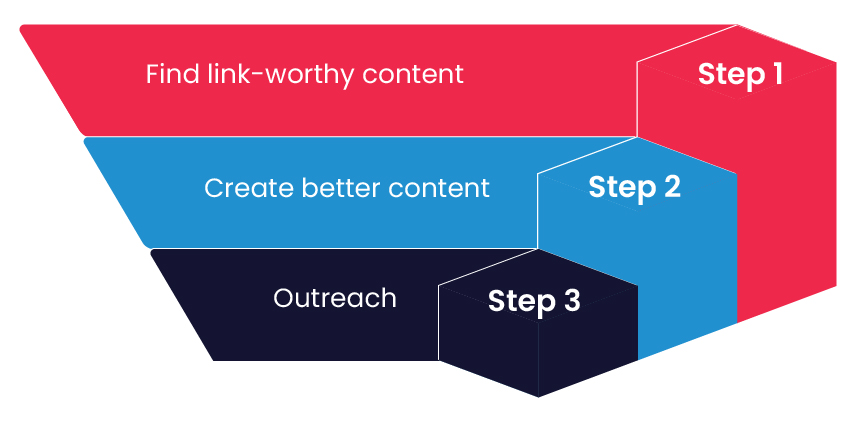
Brian Dean coined the idea and framed it around a simple insight: people naturally pay attention to the best, biggest, or most useful thing in a category. In SEO, that means the page with the strongest value often becomes the page people cite. His original Backlinko case study described the three-step framework as finding link-worthy content, making something better, and reaching out to the right people. He also reported that the campaign helped double his site’s organic search traffic in 14 days and earned 17 links from 160 outreach emails.
That original version made skyscraper link building famous because it gave marketers a repeatable system. Instead of random outreach, you had proof that the topic was already linkable. Instead of generic content, you had a benchmark to beat. And instead of emailing strangers with weak relevance, you contacted websites that had already linked to similar resources. That logic still holds in 2026, which is why skyscraper technique link building 2026 remains part of modern link acquisition playbooks. alongside other proven approaches like these 7 effective link building strategies.
Step 1 — Find Link-Worthy Content in Your Niche
The first step is not writing. It is research.
A lot of campaigns fail because people choose topics that are good for traffic but weak for links. A topic can have search demand without having citation demand. The job here is to find content with proven backlink appeal.
In Ahrefs Content Explorer, search for your topic and filter by referring domains. A practical baseline is 20 or more referring domains, but for ambitious campaigns, look for pages with 50, 80, or even 100-plus referring domains. Then sort by referring domains and review which pages keep attracting links. In Semrush, use Backlink Analytics on a competitor domain, then identify the pages with the strongest backlink counts. In BuzzSumo, review the most shared content because strong sharing can point to topics with broader amplification potential.
What kinds of pages tend to win links?
Original data tends to work well. So do comprehensive guides, free tools, useful templates, expert roundups, benchmark studies, infographics, and pages that solve a recurring industry problem. In 2026, simple blog posts are not enough. The best skyscraper content usually behaves like a resource asset, not just an article.
Look for pages with one or more of these patterns:
- outdated statistics or old screenshots
- strong topic demand but weak user experience
- thin examples or vague advice
- poor formatting despite solid backlinks
- no downloadable asset, calculator, template, or visual support
- high referring domains but weak freshness
This is where most people misunderstand skyscraping seo. They think the goal is to pick a popular keyword. The real goal is to pick a popular citation target.
A useful filter is to ask: why are people linking to this page? Are they linking for a stat, a definition, a method, a checklist, a graphic, or a tool? Once you know the linking reason, you know what your improved version needs to outperform.
Also, pay attention to topic fit. Search Engine Journal shared a failure case where the chosen topic was not painful or urgent enough for the audience, even though the content itself was solid. That is a good reminder that link-worthy topics are not always the same as high-volume topics.
Step 2 — Create Something 10x Better
This is the part most people get wrong.
“Better” does not mean “longer.” In fact, one of the biggest reasons older skyscraper technique seo campaigns stopped working is because everyone started publishing oversized articles without adding unique value. Search Engine Land’s 2025 analysis makes that point clearly: original insight now matters more than just writing a bigger guide.
Here are six ways to make your version genuinely stronger.
1. Use newer data
If the ranking page cites 2022 or 2023 numbers, update the asset with current benchmarks, fresh screenshots, new tool workflows, and recent examples. This is one of the easiest upgrades because many linked resources age badly.
2. Cover the topic more completely
Do not pad the article. Expand the coverage where users and linkers actually need more help. Add missing subtopics, common objections, workflows, examples, and FAQs. The goal is completeness with purpose.
3. Improve visual design
Clean formatting increases usability. Add charts, tables, custom graphics, summary boxes, comparison sections, and scannable layouts. In 2026, people link to pages that are easier to use and easier to cite.
4. Make it more actionable
Theory-heavy content often attracts fewer conversions and fewer editorial mentions than step-based content. Turn abstract advice into actual workflows, checklists, templates, or mini frameworks.
5. Add original research or first-hand insight
This is the biggest differentiator now. Search Engine Land highlighted a case where a shorter article with one original data point outperformed bloated “ultimate guides” and earned 37 backlinks in the first month. That is the clearest sign that unique input beats recycled scale.
6. Use better examples
Examples make content quotable. Show realistic scenarios, tool screenshots, outreach samples, before-and-after comparisons, or mini case walkthroughs. Good examples reduce friction for people who may want to reference your page.
The best skyscraper content in 2026 often includes at least one link-worthy asset inside the article itself:
- downloadable checklist
- outreach template
- calculator
- swipe file
- survey data
- visual framework
- local version of a national guide
- expert quotes
That is why the AI-era version of the skyscraper technique is shifting from “long-form post” to “linkable asset hub.” The blog can still be the main URL, but it needs something inside it that deserves to be cited.
Step 3 — Targeted Outreach
After publishing the asset, build your outreach list from the backlink profile of the page you are trying to beat.
In Ahrefs, open the target URL and export its backlinks. Then clean the list. Remove junk domains, irrelevant pages, forums, obvious spam, and competitor properties. Prioritize relevant sites with real editorial value. A practical quality filter is DA or DR 30+, niche relevance, and real organic visibility. Strong fit matters more than raw authority, but relevance and quality should both be present.
Your pitch should do three things:
- show that you noticed their existing link
- explain what is better in your version
- Ask politely whether they would consider updating or adding your resource
Keep it short. Under 100 words usually works best.
Here is a modern example:
Subject: Updated 2026 version available [Topic link] resource for your article
Hi [Name],
I was reading your page on [page topic] and noticed you linked to [old article]. We just published an updated version covering [specific upgrade: new 2026 data, templates, examples, or visuals]. Since your article already references this topic, I thought it might be useful for your readers, too. If you think it adds value, would you consider including it?
Thanks,
[Your Name]
That is enough. Do not oversell. Do not brag. Do not send a generic mass template.
Personalization matters more now than it did in the early days of the skyscraper method. BuzzStream notes that outreach results depend heavily on the effort you put into tailoring your message, and follow-ups can nearly double reply rates when done thoughtfully.
A simple 3-3-7 follow-up rhythm works well:
- first follow-up after 3 days
- second follow-up after 3 more days
- final follow-up after 7 days
Each follow-up should add a new angle rather than repeat the same ask. Mention a new data point, a useful template, or a section that is especially relevant to their readers.
The Skyscraper Technique in 2026 — What Has Changed
The foundation has not changed. The execution has.
The original logic still works because editors still want to link to the best resource available. But the bar is much higher now. Search Engine Land noted that many modern campaigns struggle because success rates have fallen far below early benchmarks, even though the basic concept remains sound.
Here is what changed.
More competition
In 2015, “make it better” often meant “make it longer.” In 2026, that is not enough. Nearly every SEO team knows the playbook. That means your edge has to come from uniqueness, not just size.
Original data is now the strongest differentiator
If you want high-authority links, add something nobody else has. That could be first-party numbers, mini surveys, expert commentary, screenshots from your own campaigns, or a proprietary framework.
AEO-first structure matters
If your page answers the query faster, it becomes more useful to both users and publishers. Short answer blocks, comparison tables, definition sections, quick takeaways, and scannable layouts improve both usability and citation value.
AI-generated fluff is easy to spot
Thin, generic articles are everywhere now. If your page sounds like every other summary on the web, it will not earn links. Human expertise, specific examples, and opinionated framing matter more than ever.
Linkable assets beat pure long-form text
The biggest shift in skyscraper link building is the move toward tools, templates, calculators, checklists, data studies, and visual assets. These make it easier for people to justify linking to your page.
Spam is a bigger risk
Google still expects paid or sponsored links to be qualified properly, and buying links that pass ranking value remains against policy. So, a modern skyscraper technique link building 2026 campaign should focus on earned editorial links, not manipulative shortcuts.
Real Example Walkthrough
Let’s say you want to build links in the SaaS SEO niche.
You find a competitor article called “B2B SaaS Link Building Guide” with 85 referring domains. It ranks well, but the page has old screenshots, generic advice, no templates, and no original examples.
You decide to build a better asset.
Your new page includes:
- 2026 workflow updates
- a 10-step process with screenshots
- three mini case examples
- One outreach template pack
- a downloadable prospecting sheet
- a comparison table for guest posting, broken link building, digital PR, and skyscraping seo
Now you build the campaign.
You export the backlinks to the original page and clean the list. After removing spam and irrelevant sites, you end up with 150 quality prospects. Of those, 110 are highly relevant and worth personalized outreach.
You send 150 emails over two weeks.
Results:
- 23 replies
- 18 earned links
- 4 “maybe later” responses
- 1 partnership opportunity
That is already a strong outcome for a single campaign.
But you do not stop there.
You then layer in three additional tactics around the same asset:
- broken link building using related dead resources
- unlinked mention outreach to pages that mention the topic but not your URL
- digital PR pitches using the page’s mini dataset or expert insights
Now the asset has multiple ways to earn links, not just classic replacement outreach. Many advanced campaigns also strengthen authority using supporting strategies like tiered link building to amplify the impact of newly acquired backlinks.
That is how teams move from “a good article with 10 links” to “a link-worthy resource with 50, 80, or even 100-plus links over time.” The article becomes the foundation, but scale comes from stacking multiple earned-link channels around it.
That aligns with recent case evidence, too. One 2026 write-up showing 112 backlinks in 30 days did not rely on Skyscraper alone. Skyscraper contributed 22 links, while broken link building, digital PR, unlinked mentions, HARO, guest posts, and link reclamation added the rest. The takeaway is important: the asset sets the ceiling, but layered promotion drives the total.
Skyscraper vs Other Link Building Methods
|
Method
|
Effort
|
Speed
|
Cost
|
Typical success profile
|
Best use case
|
|
Skyscraper technique seo
|
High
|
Medium
|
Medium
|
Strong when the topic already has a proven link demand
|
Turning an existing link magnet into a better resource
|
|
Guest Posting
|
Medium to High
|
Medium
|
Medium
|
Good for controlled placements, slower to scale
|
Brand exposure and context-rich niche links
|
|
Broken Link Building
|
Medium
|
Medium to Fast
|
Low to Medium
|
Often, the reply quality is higher because you help fix a problem
|
Replacing dead resources with relevant content
|
|
Digital PR
|
High
|
Medium
|
Medium to High
|
Best for authority links if your angle is newsworthy
|
Data studies, expert commentary, trend reports
|
|
Unlinked Mention Outreach
|
Low to Medium
|
Fast
|
Low
|
Often efficient because awareness already exists
|
Brand mentions, topic mentions, product mentions
|
The advantage of the skyscraper technique lies in its relevance. You are contacting websites that have already proven they link to that subject. The downside is that competition is high, so your content and outreach both need to be better than average.
Guest posting gives you more control, but it is slower and often harder to scale cleanly. Broken link building can work faster because the value proposition is obvious. Digital PR can produce the strongest links, but only if you have a story worth publishing.
In practice, the best approach is not to choose one forever. It is building one strong resource and then applying multiple outreach angles to it.
Final Takeaway
The core idea behind the skyscraper technique link building 2026 is still smart: do not guess what might earn links when you can study what already has. But in 2026, success comes from superiority, not size. The teams winning with skyscraper content are building resources with fresher data, stronger visuals, cleaner answers, useful assets, and more personalized outreach.
That is why the modern version of the skyscraper technique is less about writing the longest article and more about publishing the most cite-worthy one. Build something people actually want to reference, then promote it like it deserves attention. That is how skyscraper technique seo still becomes a serious backlink growth engine today.
If you want, I can turn this into a CMS-ready version next with a meta title, meta description, slug, and FAQ schema copy.
For businesses that want faster authority growth, combining skyscraper campaigns with professional link building services can help scale outreach, secure high-quality editorial backlinks, and maintain a consistent backlink acquisition strategy.