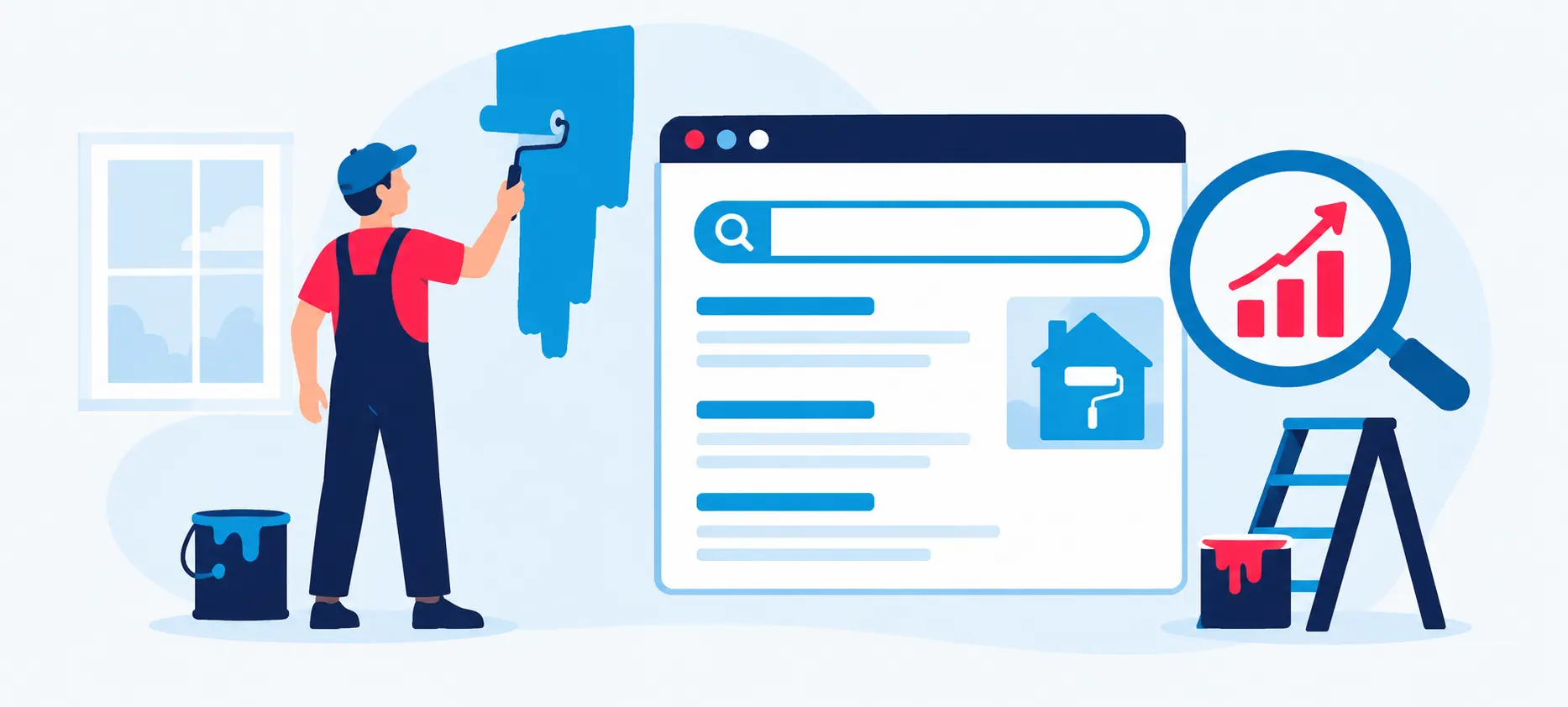
To dominate neighborhood-level real estate searches, you need to capture both the Google Map Pack and AI-generated search results. The strategy centers on three pillars: a fully optimized Google Business Profile, hyper-local neighborhood content that portals can't replicate, and a consistent stream of context-rich five-star reviews. National portals like Zillow and Realtor.com own broad city-level searches but individual agents can absolutely outsmart them with deep local specificity. That's not a theory. It's a repeatable, data-backed framework that's working for agents right now.
Picture this: a motivated buyer pulls out their phone and types "best realtor in Maplewood Hills." Your competitor, who listed three homes in that exact neighborhood last quarter, shows up instantly in the map results. You don't appear at all. Not because you're less qualified. Not because your track record is weaker. Simply because your digital presence isn't wired for neighborhood-level visibility. That's the core problem this realtor local SEO guide 2026 solves. The agents quietly capturing the most qualified inbound leads today aren't outspending anyone on ads.
Key Takeaways
- Hyperlocal beats broad: Skip competing for city-level keywords against Zillow and Redfin. Instead, target specific neighborhood-level searches like "realtor in Crescent Park," where buyer intent is highest and portal competition is virtually nonexistent.
- Your Google Business Profile is your #1 asset: It accounts for ~32% of Local Pack ranking weight. Optimize your category, post weekly with neighborhood-specific content, and seed the Q&A section proactively to pull ahead of inactive competitors.
- Neighborhood pages need real depth, not templates: Cookie-cutter location pages actively hurt your domain authority. High-ranking pages include sourced market stats, school info, lifestyle context, schema markup, and IDX listings updated quarterly.
- Reviews are a three-in-one growth lever: Strong Google reviews improve Local Pack rankings, build buyer trust, and get you recommended by AI tools like ChatGPT and Gemini. Ask within 48 hours of closing and nudge clients to mention the neighborhood naturally.
- Local authority is built offline too: Community sponsorships, press mentions, and co-marketing with local businesses earn geographically relevant backlinks that no national portal can replicate and these signals compound significantly over time.
How Home Buyers and Sellers Search in 2026
Search behavior in real estate has shifted faster than most agents have adapted. Buyers and sellers no longer arrive at Google with open-ended curiosity; they arrive with a neighborhood already in mind, a school district already researched, and a very specific question they want answered immediately. Understanding this behavioral shift is the starting point for any effective local SEO strategy for realtors operating in today's market.
"Realtor in [Neighborhood]" vs. "[City] Homes for Sale"
These two search types attract completely different people, and they require completely different content to satisfy them.
Someone typing "[City] homes for sale" is still in the discovery phase. They're browsing, comparing, and gathering information about a city they may not know well yet. Zillow, Redfin, and Realtor.com spend hundreds of millions of dollars to own that traffic, and fighting them there as an individual agent is a losing proposition. However, someone typing "realtor in Crescent Park" or "townhomes near Ridgeline Elementary" has already done the research. They know what neighborhood fits their life. They want a specialist who knows every block of it personally, not a national portal with a city-wide data feed.
That second searcher converts at a dramatically higher rate. Furthermore, a 2025 State of Real Estate Conversations Report found that over 72% of geo-specific buyer queries referenced either a named neighborhood or an exact address, not a city, not a metro area, not a ZIP code. As a result, agents optimizing exclusively for city-level keywords are chasing the wrong audience while the highest-intent buyers search for something nobody has built for them yet.
Voice Search Patterns for Real Estate
Voice and conversational AI search have permanently changed how buyers express real estate intent and the agents who adapt their content first will hold a significant structural advantage.
Traditional typed searches average just three to four words. In sharp contrast, voice queries and AI-tool prompts now average 23 words, according to 2025 Realty AI research. A buyer talking to their phone doesn't say "Austin realtor." Instead, they ask: "Which realtor knows the Mueller neighborhood in Austin best and has sold homes there recently?" Moreover, Google's March 2026 core update began surfacing YouTube neighborhood tour videos directly inside AI Overviews for local real estate queries. Consequently, video content has crossed from an optional marketing channel to an active search ranking signal. Write your content to answer full conversational questions, use question-format headings throughout your neighborhood pages, and seriously consider picking up a camera.
Hyperlocal Keyword Strategy for Realtors
Most real estate websites target keywords the same way a billboard targets commuters broadly, hopefully, and with minimal expectation of precision. Effective neighborhood SEO for realtors works in the exact opposite direction. It starts at the smallest meaningful geography, builds outward in tight clusters, and accumulates topical authority that compounds with every new page and every new piece of content published. Beyond that, because major portals almost never invest in genuine neighborhood-level specificity, the competitive landscape at this granularity heavily favors local agents who commit to the approach.
Related Blog: Hyperlocal SEO And Local SEO Guide
Neighborhood-Level Keyword Targeting
Start by mapping every neighborhood, subdivision, pocket community, and named micro-area within your geographic farm territory. Then, for each one, build a dedicated keyword cluster, a tightly related group of phrases that approach the same local intent from multiple search angles simultaneously.
For a neighborhood called Sycamore Glen, your cluster might include "homes for sale in Sycamore Glen," "Sycamore Glen real estate market 2026," "Sycamore Glen realtor," "moving to Sycamore Glen [City]," and "living in Sycamore Glen what residents say." Each phrase catches a different type of searcher at a different stage of their journey. Together, they give one well-built neighborhood page the topical breadth to rank for dozens of related searches while sending Google a clear signal: this page comes from someone who genuinely specializes here. Furthermore, these pages naturally cross-link with each other, building an internal authority network that lifts all of them over time rather than leaving any single page to rank in isolation.
School District, Lifestyle, and Amenity Modifiers
Buyers don't search purely in geographic terms. More often, they search for the daily life they're trying to create, and that opens a keyword opportunity most agents never touch.
Phrases like "homes near [School Name]," "walkable neighborhoods in [City]," "best streets for young families near [Park]," and "pet-friendly areas close to downtown [City]" all carry genuine search volume and almost zero competition from national portals. Additionally, these modifiers align almost exactly with the conversational language buyers use when asking AI assistants for neighborhood recommendations. Weaving them naturally into your neighborhood page copy, FAQ sections, and blog content serves double duty: it catches typed searches and positions your content for AI Overview citations simultaneously. That kind of dual-channel relevance is exactly what seo for real estate agents looks like in practice in 2026.
Long-Tail Buyer vs. Seller Intent Keywords
Buyer intent and seller intent pull in opposite keyword directions, and collapsing them into a single generic content strategy leaves half your potential audience underserved.
Buyers search with discovery language: "homes for sale near," "best neighborhoods for," "condos close to," "what is it like to live in." Sellers, however, reach for action language: "how much is my home worth in [neighborhood]," "fastest-selling streets in [area]," "top listing agent near [zip code]," "best time to sell a home in [city] 2026." Therefore, a complete realtor local SEO strategy requires both content types working in parallel. For broader strategies covering agencies, brokerages, and commercial property marketing, see our real estate SEO complete guide. Build neighborhood guide pages that serve buyers researching where to live, and pair them with seller-facing resources, market valuation tools, listing preparation guides, and local market reports, each explicitly targeting the geographies where you actively close deals.
Google Business Profile for Real Estate Agents
Your Google Business Profile isn't a secondary listing; to maintain it's the front door of your entire local SEO operation. When a buyer searches "real estate agent near me," Google presents map results before a single organic website link appears on the page. That means your GBP controls your first impression before your website ever gets a look. According to Whitespark's 2025 Local Search Ranking Factors research, GBP signals account for roughly 32% of Local Pack ranking weight, making it the single highest-leverage asset available to any agent doing local SEO for realtors today. For a complete setup and audit process, follow our Google Business Profile optimization checklist.
Category: Real Estate Agent vs. Real Estate Agency
Your primary GBP category is the most influential optimization decision inside your entire profile, and getting it right takes less than five minutes.
Individual agents should select "Real Estate Agent" as their primary category. Brokerages and team operations fit better under "Real Estate Agency." After locking in the primary, add two to three secondary categories, "Real Estate Consultant" and "Real Estate Agents" work well to expand your relevance footprint without misrepresenting your business. Additionally, fill out every attribute that applies honestly to your operation: online appointment availability, languages spoken, and accessibility features. Most agents skip the attributes section entirely. Completing it takes twenty minutes and delivers a competitive edge that compounds every time someone searches for an agent with your specific characteristics.
One tactical move worth highlighting separately: instead of pointing your GBP website link to your homepage, point it directly to your primary neighborhood landing page. This creates a direct relevance signal tying your profile to your target geography, telling Google clearly that you're the specialist for that specific area, not simply an agent who happens to operate nearby.
Posts: Listing Announcements, Market Updates, Sold Properties
GBP posts function as a live activity signal and a dormant posting history tells Google the same thing a dark storefront tells a buyer walking past it on a Saturday morning.
Post at minimum once every week, rotating across three content types: new listing announcements that always include the neighborhood name explicitly, just-sold posts with brief area context, and monthly market update snapshots for your primary farm neighborhoods. Over time, this activity builds a searchable, keyword-rich content layer directly inside your GBP that reinforces your neighborhood expertise to the algorithm and to every prospective client who reviews your profile before calling. Furthermore, 2026 Whitespark data confirmed that being listed as "open" during peak local search windows, Tuesday through Thursday evenings and Saturday mornings, now ranks as the fifth most influential Local Pack ranking factor. Correct business hours cost nothing to update and pay ranking dividends every single week.
Q&A Seeding for Buyer and Seller Questions
The Q&A section of your Google Business Profile is fully indexed and searchable, meaning well-constructed questions and answers help you rank for conversational queries that no other section of your profile targets.
Rather than waiting passively for buyers to submit questions, seed the section proactively with five to ten questions your best clients commonly ask: "Do you specialize in first-time buyers in [Neighborhood]?" "What's the current average sale price in [Area]?" "Do you provide free home valuations for sellers in [City]?" According to WordStream's 2025 GBP analysis, profiles with five or more populated Q&A pairs rank measurably higher in Local Pack results because Google reads this activity as a profile completeness and user-engagement signal. Seeding the section takes under an hour and remains one of the most underused quick wins in all of realtor local SEO.
Location Pages That Actually Rank
Almost every real estate agent has some version of a location page on their website. Very few have location pages that actually rank, generate consistent organic traffic, and convert visitors into leads. The gap between those two outcomes almost always comes down to the same mistake: treating neighborhood pages as interchangeable templates with the same boilerplate structure, same thin content, different city name dropped in at the top. However, Google's quality systems identify and discount thin location content immediately. As a result, cookie-cutter neighborhood pages don't just fail to rank on their own they actively suppress the authority of every other page on your domain.
What Makes a Neighborhood Page Rank
Ranking power at the neighborhood level comes from one thing: genuine specificity that can only exist when someone with real local knowledge writes the content.
Every high-performing neighborhood page needs three to five current, sourced statistics. Median sale price, average days on market, month-over-month inventory levels, and list-to-sale ratio are cited with the source name and publication date. This matters beyond standard credibility signals. According to 2026 Realty AI research, AI tools like ChatGPT and Google's AI Overviews are specifically designed to cite sourced numbers, not editorial observations. A page that says "the market is moving fast" won't appear in an AI-generated answer. A page that states "median days on market in this ZIP code fell from 34 to 18 year-over-year per [Local Board of Realtors] Q1 2026 data" has a genuine shot at being cited directly. Additionally, update this data every quarter stale statistics signal neglect to crawlers and drive away precisely the informed, research-oriented buyers most likely to call.
Structure for Area Pages: Market Stats, Schools, Amenities, Listings
High-ranking neighborhood pages follow a content sequence that moves from decision-driving context at the top to transactional tools at the bottom. Here's the architecture that consistently outperforms:
- Neighborhood character and lifestyle opening: Start with a vivid, specific description written from genuine local familiarity. Reference actual streets, landmarks, and the kind of daily experience residents have. This immediately differentiates your page from anything a national portal's algorithm could generate.
- Market data section: Current median sale price, days on market, inventory levels, and list-to-sale ratio. Cite the source. Include the date. Update quarterly without exception.
- Schools section: Specific school names, grade levels served, and ratings where available. Many buyers filter by school district before they filter by price range. A page that answers this question directly earns immediate trust.
- Amenities section: Local parks, dining options, walkability context, transit connections, and community character. Weave lifestyle modifier phrases naturally throughout "family-friendly," "walkable," and "pet-friendly" because these mirror the exact voice-search language buyers use when asking AI assistants for neighborhood guidance.
- Embedded IDX property search: A filtered search showing current active listings specific to that neighborhood. Keeping buyers on your site rather than redirecting them to a portal improves both conversion rates and session-engagement signals that support your page's rankings.
- Lead magnet: A simple opt-in form offering monthly neighborhood market updates. This converts engaged readers into contactable leads at the highest point of their interest.
- Client testimonials: Reviews that explicitly name the neighborhood, describe the property type, and highlight specific aspects of your service. Geographic specificity in testimonials adds both social proof and local relevance signals that Google weighs as prominence indicators.
Schema: RealEstateAgent and LocalBusiness
Schema markup is the technical translation layer between your content and the systems both traditional search algorithms and AI tools, that decide whether to cite and surface it. Most real estate agents implement no schema whatsoever. Consequently, anyone willing to implement it correctly gains an immediate structural advantage across every neighborhood page they publish.
At the page level, implement the LocalBusiness schema, including your verified name, address, and phone number. Add the RealEstateAgent schema with an areaServed field listing each specific neighborhood you serve by name, not just "City, State." For individual property pages, include neighborhood-level information within the listing schema itself, since a street address alone doesn't provide the geographic specificity needed to match AI Overviews to neighborhood-level queries.
For neighborhood guide pages, add Place schema specifying the area by name and geographic context. Wrap FAQ sections in the FAQPage schema. These structured data layers directly expand your eligibility for rich result features and AI Overview citations advantages that compound with every new neighborhood page you add to your site.
Building Local Authority as a Realtor
Rankings are the visible outcome of something that happens largely away from your website: the steady accumulation of trust signals across the broader local digital ecosystem. Google's local prominence factor measures how often your business earns mentions, links, and verification from external sources that already carry authority. Therefore, building a realtor's local SEO authority is not purely a content project; it's a community presence project that leaves a verifiable digital paper trail.
A citation is any directory listing that includes your business name, address, and phone number. Their ranking value flows from two parallel sources: the direct referral traffic some platforms generate on their own, and the NAP consistency signals they send to Google as corroborating evidence of your legitimacy as a local business.
Prioritize your citation-building in this order: Google Business Profile first, then Zillow, Realtor.com, Trulia, Homes.com, Yelp, and Facebook Business. After those primary platforms, add your local Realtor Association directory and Chamber of Commerce listing. The absolute rule across all of them: your Name, Address, and Phone number must be character-identical on every platform without exception. Our NAP Consistency Guide explains how inconsistent citations weaken local authority and how to fix them systematically. "Suite 100" versus "#100" or "Avenue" versus "Ave"; these minor typographic variations create inconsistencies that confuse Google's entity resolution system and quietly bleed local authority over months of accumulation. Run a citation audit monthly. When you change your phone number or move offices, update every directory that same week.
Community Involvement and Local Press
The highest-authority local backlinks don't come from any directory submission tool. They come from genuine, visible community involvement, the kind that earns editorial mentions rather than purchased placements.
Sponsor a local youth sports league and earn a listing on the team website. Support a neighborhood charity run and get referenced on the event page. Host a first-time homebuyer workshop and have the local library link to your registration page. Each of these activities produces a geographically specific, editorially earned backlink, the exact combination Google's local authority signals reward most heavily. As 2026 Agent Image research confirms, a single link from a city magazine, community event page, or neighborhood association website signals more genuine local authority than dozens of generic national directory entries combined.
Beyond links, position yourself consistently as the on-the-record market expert for local journalists. When reporters need a credible, quotable source on rising prices, new development, or shifting neighborhood demographics, be the agent who responds quickly and accurately. Do that consistently, and you earn regular mentions and inbound links from high-authority local news outlets, precisely the external validation that accelerates Local Pack ranking improvement most reliably.
Backlinks from Local Businesses and Neighborhood Blogs
Co-marketing with complementary local businesses produces backlinks that carry both geographic relevance and editorial credibility, the combination that matters most to Google's local authority scoring.
Collaborate with a local mortgage broker to co-author a "First-Time Buyer's Complete Guide to [Neighborhood] in 2026." Partner with a staging professional on a "Seller's Pre-Listing Preparation Guide for [Area] Homes." Work alongside a local contractor to publish a neighborhood renovation trends analysis. Each collaboration earns mutual inbound links, expands both parties' audiences, and sends a clear signal to Google that you're embedded in the actual professional fabric of your community. Ultimately, that kind of authentic local presence is what individual agents can build that no national portal ever will. For broader industry link-building opportunities beyond local partnerships, explore our real estate guest post guide to find authoritative property blogs and publications that accept guest contributions.
Review Strategy for Realtors
In 2026, reviews accomplish three distinct things at the same time: they influence your Google Local Pack rankings directly, they shape the decisions of prospective clients comparing agents side by side, and they determine whether AI tools like ChatGPT and Gemini include your name in their local recommendations. According to 2026 Revalto research, agents with optimized GBP profiles and strong review portfolios generate six to ten times more leads than those with bare-minimum setups. Furthermore, 88% of consumers report trusting online reviews as much as personal referrals from people they know. Consequently, your review portfolio is the most scalable trust-building asset available to you.
When and How to Ask for Reviews Post-Transaction
The timing and delivery of a review request matter as much as the request itself, sometimes more.
Ask within 24 to 48 hours of closing, ideally the same evening the deal finalizes, when your client's excitement and gratitude are freshest. Send a personalized text message with a direct link to your Google Business Profile review page with a single tap, no searching required. Keep the message human: "Working with you on [Neighborhood] was genuinely rewarding. I'm really happy for you. If you have a spare moment, a Google review would mean a great deal to me." Then, without scripting them, offer a helpful nudge about what to include: the neighborhood, the type of transaction, and anything specific about your service that stood out. Reviews that naturally contain neighborhood names and property type language carry measurably greater local ranking value than generic praise. Teaching clients what makes a helpful review without writing it for them is one of the most overlooked leverage points in all of local SEO for realtors.
Not all review platforms deliver equal value, and your review-generation energy should reflect that reality.
- Google reviews deserve the highest and most consistent priority. They directly influence Local Pack ranking positions, appear prominently in "realtor near me" search results, and, critically in 2026, are cited by AI tools like ChatGPT and Gemini when generating local business recommendations. A steady, recent flow of detailed, location-specific Google reviews is the single most impactful review action any agent can take.
- Zillow reviews reach buyers and sellers who use Zillow as their primary search platform, which still represents a very large audience segment. A strong Zillow review profile increases your visibility among portal-dependent searchers. Moreover, Zillow review profiles frequently surface prominently in Google results for agent name searches, adding a secondary credibility layer at an important moment.
- Realtor.com reviews reinforce your overall citation ecosystem and build trust with a distinct platform audience. Additionally, they contribute to the cross-platform NAP consistency that Google uses to verify prominence and legitimacy for any local business. Respond to every review on every platform within 48 hours of posting. Response behavior signals active engagement, and 2026 data confirms that AI tools factor review response patterns into their credibility assessments when deciding which agents to recommend.
Conclusion: Neighborhood Visibility Is the New Competitive Advantage
The framework is clear: fully optimize your Google Business Profile, build genuine neighborhood landing pages backed by real local data and proper schema, maintain iron-clad NAP consistency across every directory, earn community-rooted backlinks, and generate a steady flow of context-rich Google reviews. Run this system consistently, and Local Pack visibility and compounding inbound leads follow. W3era helps real estate professionals execute this framework, precisely translating hyperlocal SEO strategy into measurable rankings, qualified leads, and closed deals. Start building your neighborhood authority today, because the agents who move first own the market longest.
Businesses and agents looking for hands-on implementation can explore our Real Estate SEO Optimization for hyperlocal rankings, GBP management, and lead generation strategies.