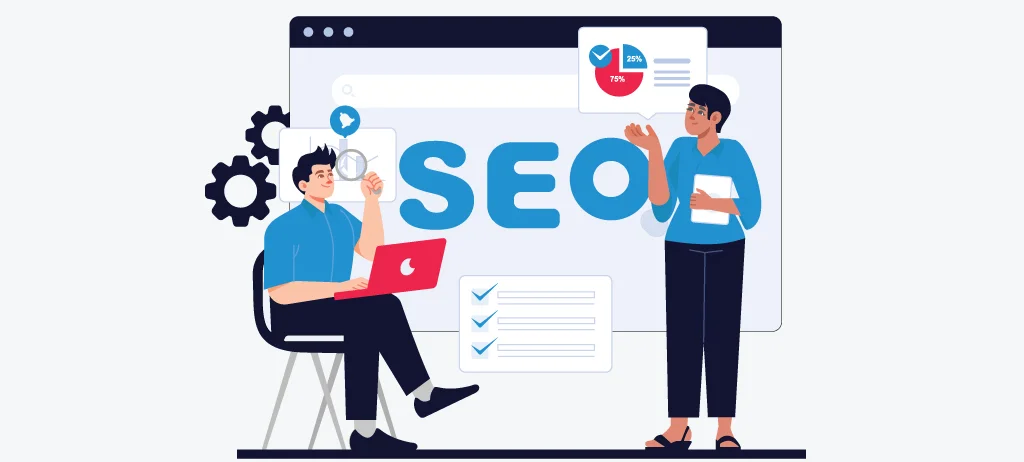
A LinkedIn SEO strategy in 2026 means optimising your profile and articles so they rank inside LinkedIn's search engine and on Google. To do this, place your primary keyword in your headline, About section, and experience fields. Publish native LinkedIn articles they get indexed by Google within 24–48 hours. Use consistent, specific language so AI tools like ChatGPT and Perplexity can cite you as an expert. Track your search appearances monthly in LinkedIn Analytics to measure progress.
The LinkedIn SEO strategy 2026 is no longer just about getting found inside LinkedIn. It is about showing up in Google, being cited by AI tools like ChatGPT and Perplexity, and building real authority in your field.
But here is the problem. Over 1 billion people are on LinkedIn. Most profiles look the same. Generic headlines. Vague summaries. No keyword strategy at all.
Key Takeaways
- LinkedIn is a search engine, not just a social feed — optimize for it like one
- Place your primary keyword in the first 60 characters of your headline — it's the highest-weight field
- Google indexes profiles, articles & company pages but NOT regular posts
- Native articles (500–2,000 words) get indexed by Google within 24–48 hours — treat them like blog posts
- Use consistent language across LinkedIn, your website & social profiles for stronger entity authority
- Add 10–20 relevant skills, take skill assessments — verified profiles rank 30% higher in searches
- Link your website ↔ LinkedIn both ways to boost Google entity recognition
- In 2026, optimize for AI citation (AEO) — specific, direct, consistent content gets cited by ChatGPT & Perplexity
- Post at least once a week, but quality engagement beats high volume every time
- Custom URL, complete profile & "All-Star" status all directly improve search ranking
How LinkedIn SEO Works in 2026
LinkedIn is no longer just a networking platform. In 2026, it works as a powerful search engine for professionals, businesses, and recruiters alike. Optimizing your presence here means showing up when the right people are actively looking for someone like you. Understanding how the algorithm works is the first step to making that happen.
The Internal Search Algorithm of This B2B Platform
When someone types "B2B content strategist" or "fractional CFO" into the search bar, the platform scans over 1 billion profiles. It then decides which ones to show first. That decision is based on relevance, not on how often you post.
So how does the algorithm decide who is relevant? It looks at four key signals:
1. Keyword relevance. The platform scans your headline, About section, job titles, experience descriptions, and skills list. Profiles that use clear, specific language rank above those with vague or jargon-heavy copy.
2. Profile completeness. A fully completed personal branding page with recent activity signals that you are active and credible. The algorithm rewards this with higher organic reach. This is why reaching "All-Star" status matters so much for your profile optimization.
3. Network proximity. Two profiles with the same keywords will not rank equally. The one closer to the searcher, a 1st or 2nd-degree connection, will often rank higher. This is the platform's built-in trust layer.
4. Query modifiers. Industry, location, seniority, and the searcher's own activity all shape the results they see. A recruiter and a founder running the same search will see different profiles.
The key takeaway? Rank, don't just post.Those stay inside the feed.Businesses combining LinkedIn content with broader search visibility strategies often improve organic discoverability, entity authority, and long-term search performance across Google and AI-driven search platforms.
Google Indexes Your Profile and Long-Form Content
Here is something most professionals do not realise. Google crawls this professional network and indexes certain types of content. That means your content can show up in Google search results.
However, not everything gets indexed. Here is what Google does and does not crawl:
| Content Type |
Indexed by Google? |
| Public LinkedIn profiles |
Yes |
| Native LinkedIn articles |
Yes (within 24–48 hrs) |
| LinkedIn newsletter articles |
Yes |
| LinkedIn company pages |
Yes |
| Regular posts/status updates |
No (blocked by LinkedIn) |
| Private or connections-only content |
No |
This means your long-form content plan on LinkedIn is also a Google SEO strategy. But your daily status updates? Those stay inside the feed.
Social Signals and Entity-Based Authority
In 2026, Google and AI tools are moving toward entity-based search. This means they try to understand who you are as a professional entity, not just match keywords.
If your LinkedIn profile, your website bio, and your other online profiles all describe you the same way, Google connects the dots. It recognises you as a consistent, credible entity. And that boosts your overall brand authority.
However, if you call yourself a "Growth Marketer" on your professional network, a "Digital Strategist" on your website, and a "Content Expert" on Twitter, Google gets confused. So does ChatGPT.
The fix is simple: Use consistent language everywhere. Pick your positioning and stick to it.
LinkedIn Profile Optimization for Organic Search
Your personal branding page is your digital landing page. Treat it like one.
Every section is a keyword placement opportunity. But keyword stuffing will hurt you in 2026. The algorithm now understands context, so natural specific language works far better than repeated phrases.
Headline: The Highest-Weight Field for Search Visibility
Your headline is the single most important field on your profile for ranking improvement.
It appears in search results, Google snippets, and every comment or post you make. It has a 220-character limit, but the first 45–60 characters matter most, which is what shows up without clicking.
Avoid this pattern: "CEO at Acme Corp"
Try this instead: "B2B SaaS Consultant | Helping Startups Build Sales Pipeline | Search Visibility | Content Strategy"
The formula is: [Your Role] | Helping [Target Audience] with [Result] | [Keyword A] | [Keyword B]
Place your primary keyword within the first 60 characters. This is critical for both internal search and Google indexing.
For the best results with your organic search plan, think about what your ideal client or employer would type into the search bar. That exact phrase should be in your headline.
About Section: Your Keyword Hub for Profile Optimization
Your About section is indexable copy. The platform allows up to 2,600 characters here. Use them wisely.
The first 300 characters appear above the fold before someone has to click "See more." So your opening lines need to do two things at once: hook the reader and contain your target keywords.
Here is a structure that works for how to optimize a LinkedIn profile for SEO:
- Opening statement: who you are and what you do (with primary keyword)
- Who you help: Be specific about your audience
- What you achieve: outcomes, results, and value you deliver
- Supporting terms: naturally weave in secondary entities and phrases
- Call to action: what you want them to do next
Write in first person. Keep sentences short. Avoid buzzwords like "passionate" or "dynamic" They add no search value and make your copy weaker.
Also, write a 150–250-word About section if you are targeting a specific niche. Do not try to cover everything. Be precise. Specific profiles rank better than general ones.
Experience Section: Titles and Descriptions That Drive Ranking
Each job title in your experience section is a searchable keyword field.
Use market-recognised titles. If your actual title at a company was something unusual, like "Ninja Content Wrangler," consider listing it as "Content Marketing Manager", which is what people search for.
In each role description:
- Use bullet points
- Start each bullet with an action verb
- Include measurable outcomes ("Grew organic traffic by 140% in 6 months")
- Weave in industry-specific entities and terms naturally
Think of each experience entry as a mini-landing page for a sub-topic of your expertise.
Skills and Endorsements as Search Signals
The platform allows you to add up to 50 skills. However, in 2026, less is more.
Add 10–20 highly relevant skills rather than 50 generic ones. Listing "Microsoft Word" as a skill signals that you do not know how to prioritise.
Here is what makes skills a powerful tool for profile optimization:
- Pin your top 3 skills to the top; these are shown first and carry the most algorithmic weight
- Take LinkedIn skill assessments profiles with verified badges rank 30% higher in recruiter searches for that skill
- Get 50+ endorsements on your top skills. The algorithm weights endorsements when ranking results
- Prioritise hard skills (e.g., "Python," "Google Ads," "Keyword Research") over soft skills like "teamwork"
Endorsements are also social proof signals. They tell the platform and your visitors that real people vouch for your expertise. This directly supports E-E-A-T (Experience, Expertise, Authoritativeness, Trustworthiness).
Custom URL: A Quick But Critical Credibility Signal
By default, the platform gives you a messy URL like: linkedin.com/in/yourname-12345678
Change it to: linkedin.com/in/yourname or linkedin.com/in/yourname-keyword
A clean, branded URL:
- Ranks better on Google
- Looks professional when shared
- Helps with entity recognition across platforms
This takes 30 seconds to change. Do it today if you have not already.
LinkedIn Articles SEO: Long-Form Content That Gets Indexed
Most professionals on LinkedIn focus entirely on daily posts and ignore articles completely. That is a missed opportunity. Articles work differently from posts, and in 2026, that difference has a direct impact on how visible you are — both inside LinkedIn and on Google.
Posts vs. Articles: A Crucial Distinction
This is one of the most important distinctions in any LinkedIn SEO checklist for 2026.
Regular posts are not indexed by Google. They stay inside the feed ecosystem.
Native LinkedIn articles, on the other hand, are fully indexed by Google within 24–48 hours of publication. They work like blog posts. They are permanent, linkable, and searchable both inside the professional network and on Google.
Businesses that already publish long-form content can apply many of the same principles used in Medium SEO 2026 including keyword-focused titles, structured headings, internal linking, and topical authority building.
This means every article you publish is a potential Google ranking opportunity.
LinkedIn newsletters also get indexed by Google. However, standalone articles have stronger individual SEO value because they are more discoverable as separate URLs.
The strategic difference is this:
- Posts build your audience and engagement signals
- Articles build topical authority and Google visibility
- Both feed into how AI engines perceive your thought leadership
Title and H2 Optimization for Long-Form Content
Your article title is your SEO headline. Treat it like an H1 tag.
Follow these rules:
- Place your primary keyword near the beginning of the title
- Keep it under 70 characters if possible
- Make it a clear, searchable question or statement
Example: "LinkedIn SEO Strategy 2026: How to Rank Your Profile on Google"
Inside the article, use H2 subheadings to organise your content. These subheadings are also indexed, so include secondary keywords naturally. For instance, a subheading like "How to Optimize a LinkedIn Profile for SEO" is both helpful for readers and good for search visibility.
Keep paragraphs short, 2 to 4 lines maximum. This improves readability and dwell time. And dwell time is a major ranking signal in 2026.
Internal Linking From Articles to Your Website
Here is a tactic most people miss entirely. When you publish a LinkedIn article, link back to a related page on your website inside the article body.
This does two things:
- It drives organic traffic from your professional network to your website
- It signals to Google that your personal branding page and your website are connected, which strengthens your overall entity authority
You can also do the reverse. Link from your website to your LinkedIn articles. This helps Google discover and index your long-form content faster.
Think of it as a sort of content ecology , where your website and your B2B platform presence should kind of feed each other instead of doing their own separate thing in separate silos.
Keyword Research for Long-Form LinkedIn Content
Keyword work for articles is similar to classic search engine optimization, but there is a slight twist you are aiming at professional intent, not casual consumer intent.
Use these tools and methods:
- In LinkedIn's search bar: type your topic and see what autocomplete suggestions appear. These are real queries people are searching.
- Google Keyword Planner: find search volumes for your target terms
- Competitor profiles: look at the most-followed professionals in your niche and see what topics they write about
- AI tools: ask ChatGPT or Claude: "What questions does a [target audience] search for when looking for [your service]?"
- Ahrefs or SEMrush: validate keyword difficulty and identifies long-tail opportunities
Target long-tail keywords in your articles. These are specific, lower-competition phrases like "how to rank a LinkedIn profile for B2B lead generation" rather than just "LinkedIn tips."
One article per topic. Build a content library over time. This is how you establish topical authority, which both Google and the platform's own algorithm reward.
Company Page SEO: Ranking Your Business on LinkedIn
If you run a business, your LinkedIn company page is a separate indexable SEO asset. Google crawls it. It can rank for brand terms and industry keywords in organic search.
Here is how to optimise it for maximum search visibility.
About Section: Lead With What Buyers Search For
Your company page's About section works just like a personal profile's About section, it is indexable copy.
Lead with what your company does in plain, specific language. Avoid corporate jargon. Use the keywords your buyers actually type into a search bar.
Structure it like this:
- One sentence: what you do and who you serve
- Two to three sentences: how you do it and what makes you different
- Relevant industry terms and entities are woven in naturally throughout
Front-load your most important keyword. Google and LinkedIn both scan the first 150–200 characters most heavily.
Specialties: A Dedicated Keyword Field Most Businesses Ignore
Company pages have a "Specialties" field. Most businesses fill this in carelessly.
Do not waste it.
The Specialties field is a dedicated keyword area that the platform uses to categorise and surface your company in search results. It is separate from your About section.
Add 10–20 specific specialties that reflect what your business actually does. Think about the service and solution terms your clients would type into a search bar.
Examples: "B2B Content Marketing," "Profile Optimization," "SaaS SEO," "Demand Generation," "Lead Generation Strategy"
Content Direction for Company Pages in 2026
Company pages in 2026 really do need a content calendar, not just random occasional posting. Like, you can’t sort of wing it anymore. Based on the newest research, AI tools such as Perplexity seem to gravitate toward content on company pages when people look up businesses and organizations. Meanwhile, ChatGPT and Google AI Mode often lean more toward individual creator content.
So the smart growth plan is kind of two-track at once. Put official company updates on the company page: news, data, product changes, etc. Then have founders and leadership drop personal insights onto their own individual profiles. After that, link those worlds together, so one feed kinda points to the other.
Also, employee advocacy matters a lot because it boosts organic reach. When team members interact with posts from the company page, the platform interprets it as a trust + relevance signal. And then it pushes the content out more broadly across business connections. It’s not just engagement for engagement’s sake.
LinkedIn Content Strategy for SEO in 2026
Most professionals post on LinkedIn without a plan. They share updates when inspiration strikes, go quiet for weeks, and wonder why their organic reach never grows.
But in 2026, a consistent content direction is not optional. It is the engine behind everything else in this guide.
AI Overview Visibility: The New Layer of Search Discoverability
Here’s the shift that’s reshaping the whole optimization plan for 2026. Traditional Google search volume is going down. More people now use AI tools to get answers, fast. For a lot of professional research questions, tools like ChatGPT, Perplexity, and Google’s AI Mode are basically the first stop before anyone even opens a search results page.
The good news? Content from this professional network feeds directly into these AI tools.
Research shows that AI responses have a 0.57–0.60 semantic similarity score with LinkedIn content. In plain terms, when you write something here, AI tools often mirror your exact language and definitions in their answers.
Native articles of 500–2,000 words account for 50–66% of AI citations sourced from this platform. This means long-form content is not just for human readers. It is also how AI tools discover and validate your thought leadership.
To become AI-citable, follow these principles:
- Be specific and precise. Vague language gets ignored. Specific definitions, frameworks, and named concepts get cited.
- Be consistent. Use the same terminology across all articles and posts. AI tools learn your brand voice over time.
- Answer questions directly. Write content that answers the exact questions your audience asks. AI tools favour clear, direct answers.
This approach is called Answer Engine Optimization (AEO). And it is the new layer on top of traditional search engine optimization in 2026.
Publishing Cadence and Engagement Signals
The algorithm rewards consistency. But quantity without quality is a fast route to invisibility.
The minimum effective content calendar cadence is one post per week. However, what matters more than frequency is the quality of engagement your content generates.
The platform tracks "meaningful social actions." These include:
- Comments that are more than 15 words
- Saves
- Shares with added commentary
- Replies to comments
- Profile visits after reading
Therefore, a post that gets 10 thoughtful comments outranks one with 100 quick likes. Ask questions at the end of your posts. Invite discussion. Engage with every reply you get, especially in the first hour after publishing, when algorithmic momentum is building.
Dwell time is the strongest individual signal. Write posts that make people stop and read. Use short paragraphs. Use line breaks. Write sentences people actually want to finish.
Cross-Linking: Website ↔ Professional Network
Connecting your website to your LinkedIn profile sends a powerful entity authority signal to Google.
The most effective method is to add a small piece of structured data (called JSON-LD Schema) to your website. This tells Google: "This website and this LinkedIn profile belong to the same person or business."
Here is a simple template you or your developer can add to your website's <head> section:
json
{
"@context": "http://schema.org",
"@type": "Person",
"name": "Your Full Name",
"jobTitle": "Your Role",
"url": "https://www.yourwebsite.com",
"sameAs": [
"https://www.linkedin.com/in/yourprofile"
]
}
Beyond schema, also:
- Link to your website from the "Contact Info" section of your profile
- Link back to your professional network page from your website's bio or team page
- Embed your best long-form articles on your blog (with a canonical tag pointing to the original LinkedIn URL)
This creates a two-way authority signal. Google then understands that your presence across both platforms belongs to the same trusted entity.
Conclusion
The professionals ranking on this B2B platform in 2026 are not the ones posting most often. They are the ones who treat their profiles as strategic assets and their articles as long-term authority investments.
Start with your headline today. Rewrite it using the formula in this guide. Then move through your About section, experience, and skills. Six months from now, your profile will be generating inbound organic traffic you never had to chase.