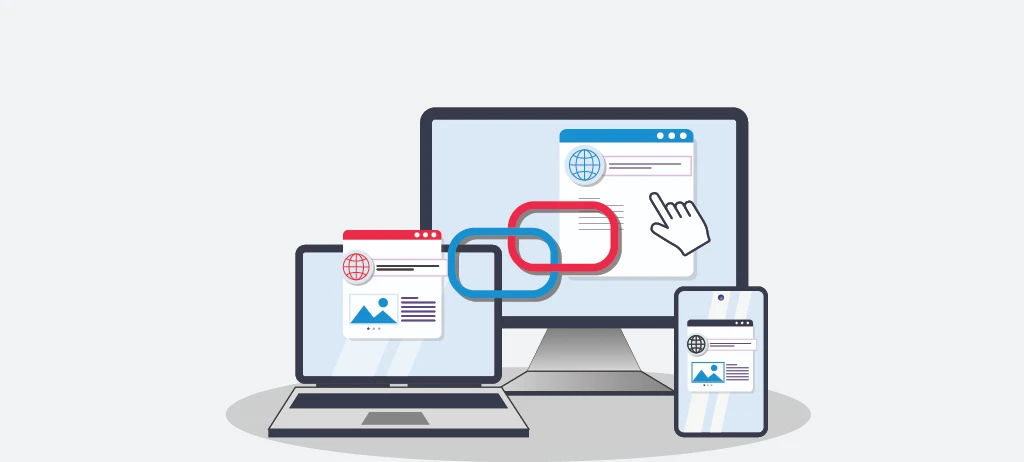
Link reclamation is the process of finding SEO value you already earned and bringing it back. In practice, that usually means two things: first, recovering backlinks that point to broken, deleted, or incorrectly redirected pages on your site; second, turning unlinked brand mentions into proper links. Instead of creating new content or running a full outreach campaign from scratch, link reclamation SEO helps you restore authority that should already be helping your site rank. Tools like Ahrefs, Semrush, Google Search Console, and Google Alerts make it easier to spot lost backlinks, identify 404 pages with link equity, and recover mentions that deserve attribution.
Link building often gets framed as a hunt for something new. But one of the fastest wins in SEO is often much simpler: go back and reclaim what you already had. Pages move. URLs break. redirects fail. Writers mention your brand without linking. Over time, these small issues quietly chip away at rankings, referral traffic, and page authority. Ahrefs notes that link reclamation is about recovering links you previously had, while Google’s documentation makes clear that when a page has moved, using a redirect is the right fix.
That is why a strong link reclamation seo guide is not just about outreach. It works best when combined with other proven methods, such as these 7 effective link building strategies for boosting website traffic, to build and recover authority together. It is about technical cleanup, backlink auditing, smart prioritization, and consistent monitoring. When done properly, it can restore value faster than many net-new link building campaigns because the relationship or mention often already exists. Ahrefs specifically recommends reviewing lost links by reason, filtering for your best opportunities, and redirecting dead pages with backlinks where it makes sense.
What Is Link Reclamation?
At its core, link reclamation means recovering backlinks or mentions that should be benefiting your site but currently are not. Ahrefs defines it as reclaiming links you had and lost. That is different from cold outreach, where you are trying to earn a link from someone who has never referenced you before. In link reclamation, some level of value has already been created. The link existed, the mention exists, or the page was originally intended to resolve correctly.
There are three common situations where this happens. The first is when a page moved, but the old URL still has backlinks and the redirect setup is weak, broken, or missing. The second is when a page was deleted and now returns a 404, even though other sites still link to it. The third is when another website mentions your company, product, research, or founder without adding a clickable link. All three are forms of recoverable SEO value, though the fix is different in each case.
This is why link reclamation seo matters so much in mature sites. The bigger your website, the longer it has been live, and the more often your content structure changes, the more likely you are to accumulate unnoticed losses. Site migrations, category rewrites, CMS changes, removed blog posts, and inconsistent redirect handling are all common sources of lost backlinks. Even a well-run content team can lose equity over time simply because maintenance falls behind growth.
Type 1 — Recover Links to Broken or Moved Pages
The first major type of link reclamation is recovering backlinks that point to URLs on your site that no longer work properly — a process closely related to broken link building, where you identify and fix or replace broken resources to regain SEO value. This is often the easiest starting point because the solution is usually under your control. You do not always need outreach. Sometimes you simply need to repair the destination. Google’s guidance is clear: if a page has moved, use a 3XX redirect to the new location; if it was removed and has no replacement, a 404 can be fine, but only if there is genuinely no better page to send users to.
In Ahrefs, one straightforward way to find these issues is through Site Explorer. Their guide shows the workflow for reviewing lost backlinks and also notes that when redirects are removed by mistake, a faster path is often to filter dead pages with backlinks and redirect them appropriately. This is effectively the answer to people searching how to regain lost backlinks ahrefs: look for dead pages that still have referring domains, then decide whether to restore the original URL or redirect it to the most relevant live page.
The decision matters. If the page truly moved and a close replacement exists, add a 301 redirect to the new equivalent page. If the deleted page covers a topic that still matters and has several quality backlinks, it may be smarter to recreate or restore the page at the original URL. Google also warns against sending dead URLs to irrelevant destinations, especially the homepage, because that can be treated as a soft 404 and provide little or no benefit.
A practical rule is simple: match intent, not convenience. If an old blog about “technical SEO audits for ecommerce” has ten strong referring domains, do not redirect it to your generic blog hub. Redirect it to the closest updated version of that page, or rebuild the original topic. That preserves user experience and gives your link reclamation seo guide real strategic value instead of becoming a box-ticking exercise.
Type 2 — Reclaim Links Lost to Redirects
The second type of link reclamation seo is more subtle. The backlink may still exist on the referring site, but the path between the old destination and the final live page is messy. This often happens after migrations, URL structure updates, HTTPS changes, or canonical adjustments. Ahrefs notes that “broken redirect” issues can occur when a redirect is removed, changed, or no longer resolves to the intended destination, and they specifically recommend checking dead pages with backlinks in the Best by Links report for easy recovery opportunities.
This is where many teams lose value without realizing it. A page that once earned dozens of links gets redirected during a redesign. Later, another redirect gets layered on top. Then one step in the chain breaks, or the final destination changes to something weaker. On paper, the migration looked complete. In practice, link equity and usability both degrade. Google’s Page Indexing documentation also flags redirect errors such as loops, excessive chains, or bad redirect paths as real technical problems.
To find these cases, review your best-linked redirected pages. In Ahrefs, the recommended workflow is to inspect pages with backlinks that are dead or redirected and verify whether the final target still makes sense. If it does not, clean up the redirect path. Replace chains with a single hop wherever possible. Make sure legacy URLs resolve directly to the best final page, not to an intermediate step or a diluted catch-all URL.
A lot of people ask whether redirected links pass full value. The honest answer is that redirects can preserve value when implemented properly, but poor redirect handling creates friction and loss. What matters most in practice is relevance, correctness, and technical cleanliness. A one-step, relevant 301 from an old page to its true replacement is fundamentally different from a messy chain that ends on an unrelated page.
Type 3 — Convert Unlinked Brand Mentions
The third major opportunity is unlinked brand mentions. Strictly speaking, Ahrefs distinguishes these from traditional link reclamation because you cannot reclaim a link you never had. That distinction is fair. Still, in everyday SEO workflows, most teams group unlinked mentions into the same recovery bucket because the opportunity is warm, not cold. The brand, product, or person is already mentioned, which makes outreach easier and more relevant.
You can find these opportunities in several ways. Google Alerts is the simplest ongoing option. Google’s own help documentation says you can set alerts for a topic and get email notifications when new search results appear, which makes it useful for monitoring brand mentions over time. Ahrefs Content Explorer is more advanced: Ahrefs explicitly positions it as a tool to discover unlinked brand mentions and link prospects.
A strong workflow is to search your brand name, product names, founder name, and any proprietary terms, then exclude your own domain. In Ahrefs’ unlinked mentions guide, they recommend using Content Explorer to search for branded terms and applying quality filters so you focus on worthwhile pages, not low-value clutter. They also note that the “highlight unlinked domains” feature helps surface websites that mention you without linking.
This is one reason unlinked mentions often outperform cold outreach. The author already knows who you are. You are not pitching an unfamiliar resource to a stranger. You are simply asking them to link the thing they already cited. Ahrefs references one case where 31 backlinks were reclaimed from 166 outreach emails, and broader case-study reporting has shown link reclamation campaigns can outperform cold outreach by a wide margin.
Step-by-Step Link Reclamation Process
A reliable link reclamation seo guide should be repeatable. Here is the process that works best for most sites.
Start by auditing for 404 pages and dead URLs that still have backlinks. Ahrefs shows how to review lost links and dead pages with backlinks, while Semrush’s Lost and Found report tracks newly acquired, lost, and broken referring domains over time. Google Search Console adds another angle by showing backlinks to your top-linked pages and by helping you identify indexing and 404 issues.
Next, decide the right fix for each case. If the page moved, redirect it. If the old topic still has strategic value and a quality backlink profile, restore the page or publish a closely updated replacement. If the link loss is caused by a broken referring page, you may need outreach. If the issue is an unlinked mention, send a lightweight attribution request. Google’s documentation is a useful reminder here: do not “fix” every 404 by forcing it somewhere irrelevant. Only redirect when there is a strong semantic match.
Then implement the technical fixes. Clean redirects. Remove chains. Make sure legacy URLs resolve properly. Validate that important pages are indexable and not blocked by mistake. Search Console’s Page Indexing report is especially helpful for spotting redirect errors, noindex problems, and URLs that should be live but are not.
After that, set up your mention monitoring. Google Alerts can notify you about new brand references, while Ahrefs Content Explorer can help you actively review brand mentions that do not link back. This step turns link reclamation from a one-off cleanup into a monthly maintenance system.
Finally, monitor every month. Link loss is ongoing. Ahrefs explicitly says link reclamation is not a one-time process and recommends checking regularly for lost links worth reclaiming. That is the difference between occasional repair and a durable SEO advantage.
Outreach Template for Unlinked Mentions
When reaching out for an unlinked mention, shorter is usually better. The goal is not to “sell” a link. The goal is to make the update easy.
Subject: Quick note about your mention of [Brand Name]
Hi [Name],
I was reading your article on [Topic] and noticed you mentioned [Brand/Product]. Thank you for including us. I saw that the mention is currently unlinked, so I wanted to send over the correct URL in case you’d like to add it for readers: [URL].
Appreciate the mention either way, and thanks again for the great piece.
This works because it is low-pressure, specific, and helpful. Ahrefs and other industry guides consistently frame link reclamation as a higher-conversion activity than cold outreach because the context already exists. The mention is there. You are just closing the loop.
For broken-link outreach, make the message even more practical. Point out the exact page, the issue, and the best replacement. Editors are busy. A vague email gets ignored. A clean fix gets handled.
Ahrefs is one of the strongest tools for this workflow because it combines Lost Backlinks reporting, dead page analysis, and Content Explorer mention discovery. Their guidance covers reviewing link loss reasons, finding dead pages with backlinks, and using Content Explorer for unlinked brand mention opportunities.
Semrush is especially useful for ongoing monitoring. Its Lost and Found report in Backlink Audit shows new, lost, and broken referring domains over the last 90 days, making it helpful for trend tracking and cleanup prioritization.
Google Search Console gives you first-party visibility into your external links and page indexing issues. Its Links report shows your top-linked pages and linking sites, while the Page Indexing report helps identify 404s, redirect errors, and noindex problems that may be affecting your recovery work.
Google Alerts is lightweight but useful for brand monitoring. It will not replace a full SEO suite, but it is a simple way to keep an eye on new mentions that may deserve links.
If you are serious about how to regain lost backlinks ahrefs style workflows, the best setup is usually one backlink tool, one technical source of truth, and one mention-monitoring system. In most teams, that means Ahrefs or Semrush, plus Search Console, plus Google Alerts.
Best Practices That Make Link Reclamation Work
Not every lost link is worth chasing. Prioritize the ones that matter most. Focus first on pages with strong referring domains, commercially relevant topics, or high referral potential. Ahrefs recommends filtering for your best links only, which is a practical way to avoid wasting time on junk.
Second, fix what you control before emailing anyone. If the real issue is your broken URL structure, outreach will not save you. Restore or redirect first, then contact publishers only when needed. Google’s documentation strongly supports using redirects when content has moved and avoiding misleading homepage redirects.
Third, keep the destination relevant. This is one of the most overlooked parts of link reclamation seo. The goal is not just to “recover a backlink.” It is to preserve or restore the intent of the original citation. When the destination still satisfies the original reason for the link, both users and search engines benefit.
Fourth, make link reclamation recurring. When combined with advanced strategies like tiered link building, it helps strengthen your overall backlink profile and amplify link equity across your site. One monthly check is usually enough for many small to mid-sized sites. For large publishers or fast-moving ecommerce sites, weekly monitoring may be better. Ahrefs explicitly notes that you will lose links all the time for many different reasons, which is exactly why recurring review matters.
Final Thoughts
A lot of SEO teams spend months trying to earn new links while older equity quietly leaks away. That is why link reclamation deserves a permanent place in your workflow. It is one of the few tactics where technical SEO, content maintenance, and outreach all combine around a single clear goal: restore the value you already deserve.
If you remember just one thing from this link reclamation seo guide, let it be this: start with the links and mentions closest to conversion. Fix broken destinations. clean up redirects. Monitor brand mentions. Then reach out only where a human update is needed. Done consistently, that is one of the smartest ways to recover lost backlinks and turn past visibility into present rankings
For businesses looking to scale faster, combining this process with professional link building services can deliver consistent authority growth and long-term rankings.