Technical SEO is the process of optimizing your website's infrastructure so search engines can crawl, index, and rank your pages efficiently. The 10 most important technical SEO areas in 2026 are:
(1) Crawlability — ensuring Googlebot can access all important pages,
(2) Indexability — controlling which pages enter Google's index,
(3) Core Web Vitals — LCP, CLS, and INP scores,
(4) Mobile-first optimization,
(5) HTTPS and site security,
(6) XML sitemaps — accurate, canonical, and up to date,
(7) Robots.txt — blocking the right pages without blocking important ones,
(8) Canonical tags — preventing duplicate content,
(9) Structured data and schema markup,
(10) Internal linking architecture.
Technical SEO fixes do not generate content — they remove the barriers that prevent good content from ranking.
You can write the best content on the internet. But if Google cannot crawl your pages, cannot understand your site structure, or finds duplicate versions of your content competing against each other — none of it will rank.
Technical SEO is the foundation that everything else sits on. On-page optimization and link building amplify a technically sound site. Applied to a technically broken site, they produce unpredictable, often disappointing results.
In 2026, technical SEO has expanded beyond the basics. Core Web Vitals are confirmed ranking signals. AI Overviews pull from structured, schema-enriched content. Mobile-first indexing means your mobile site is what Google actually evaluates. Log file analysis and crawl budget management are standard practice for any site above 1,000 pages.
This guide covers every layer of technical SEO — what it is, why it matters, how to audit it, and how to fix every category of issue systematically.
KEY TAKEAWAYS
- Technical SEO removes barriers — it does not create ranking signals on its own, but without it, everything else underperforms.
- Google uses your mobile site as the primary version for crawling and ranking — mobile-first is not optional.
- Core Web Vitals (LCP, CLS, INP) are confirmed ranking factors — INP replaced FID in March 2024.
- Duplicate content from parameter URLs, session IDs, and pagination is the most common technical issue on large sites.
- Structured data does not guarantee rich results but significantly improves how Google understands your content.
- A technical SEO audit should be run after every major site change — migrations, redesigns, CMS changes.
- Crawl budget management is critical for sites with 1,000+ pages — Googlebot has limits on how many pages it crawls per day.
What Is Technical SEO and Why Does It Matter?
Technical SEO is the practice of optimizing a website's technical infrastructure — its architecture, code, server configuration, and page performance — so that search engines can crawl, interpret, and index content efficiently, and users experience fast, stable, and accessible pages.
Unlike on-page SEO (which focuses on content and keywords) or off-page SEO (which focuses on links and authority), technical SEO operates at the site infrastructure level. It determines whether your content is accessible to Google at all — before any ranking consideration begins.
The three layers technical SEO addresses:
| Layer |
What It Controls
|
Example Issues
|
| Crawlability |
Can Googlebot access your pages?
|
Blocked by robots.txt, broken links, redirect chains
|
|
Indexability
|
Which pages enter Google's index?
|
Noindex tags, duplicate content, canonicalization errors
|
| Rankability |
Can Google understand and rank your content?
|
Missing schema, slow pages, poor Core Web Vitals, no internal links
|
A site can fail at any of these three layers. Most technical SEO audits find issues at all three simultaneously.
Crawlability — Ensuring Googlebot Can Access Your Site
Crawlability is the first and most fundamental technical SEO requirement. If Googlebot cannot reach a page, that page cannot rank — regardless of its content quality or backlink count.
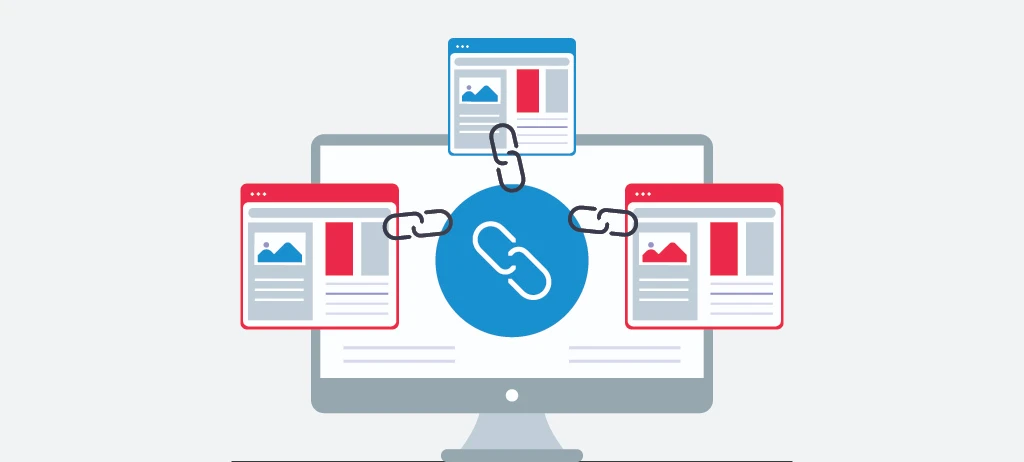
Google sends Googlebot to crawl your site by following links from page to page. Every barrier it encounters — whether a blocked resource, a redirect chain, a broken link, or a robots.txt rule — reduces the efficiency of that crawl.
Understanding how robots.txt rules affect crawling is essential, which is why learning robots.txt for SEO helps ensure important pages are not accidentally blocked.
Common crawlability issues and fixes:
| Issue |
How to Find It
|
Fix |
|
Pages blocked in robots.txt
|
Screaming Frog → Response Codes + Robots
|
Remove Disallow rules for important pages
|
|
Redirect chains (A→B→C)
|
Screaming Frog → Redirects
|
Flatten to single 301 (A→C)
|
|
Broken internal links (404s)
|
GSC → Coverage → Not Found
|
301 redirect or update the link
|
|
Orphan pages (no internal links)
|
Screaming Frog → Crawl + compare to sitemap
|
Add internal links from relevant pages
|
|
Crawl traps (infinite parameter URLs)
|
Log file analysis + GSC → URL Parameters
|
Block parameters in robots.txt or GSC
|
|
Blocked JavaScript resources
|
GSC → URL Inspection → View Rendered Page
|
Allow Googlebot to access JS and CSS
|
Crawl budget becomes critical for sites with 1,000+ pages. Google allocates a finite crawl budget per domain per day. If that budget is wasted on low-value parameter URLs, session IDs, and duplicate pages — important product and category pages may go uncrawled for days or weeks. Broken links not only waste crawl budget but also create a poor user experience, which is why understanding why fixing broken links matters is an important part of maintaining a technically healthy site. If left unresolved, these errors can accumulate across large sites, which is why it is important to understand what 404 errors mean for SEO and how they impact crawl efficiency.
Indexability — Controlling What Google Indexes
Not every page on your site should be indexed. To manage this properly, it helps to understand what is indexing and crawling and how search engines decide which pages enter the search index. some pages that should be indexed are accidentally excluded. Indexability management is about ensuring the right pages are in Google's index — and the wrong ones are not. Many site owners also struggle with getting new pages discovered quickly, which is why learning how to get content indexed by Google can help speed up visibility.
The indexability toolkit:
Robots.txt — A text file at the root of your domain that tells crawlers which pages to access and which to skip. Robots.txt controls crawling, not indexing. A page blocked in robots.txt can still be indexed if Google learns about it from other sources.
Noindex tag — A meta tag or HTTP header that tells Google not to index a specific page. Unlike robots.txt, noindex directly controls indexing. Use it for: admin pages, thank you pages, filtered category URLs, duplicate content pages, and staging environments.
Canonical tags — An HTML element that tells Google which version of a page is the "master" version when multiple URLs contain similar or identical content. Essential for: paginated pages, parameter URLs, HTTP vs HTTPS, www vs non-www, and product variant pages.
Common indexability issues:
| Issue |
Impact |
Fix |
|
Important pages noindexed accidentally
|
Excluded from search entirely
|
Audit noindex tags in Screaming Frog
|
|
Duplicate content (multiple URLs, same content)
|
Splits ranking signals
|
Implement canonical tags
|
|
Thin pages indexed (low-value parameter pages)
|
Dilutes site quality signals
|
Add noindex or block in robots.txt
|
|
www and non-www both indexing
|
Duplicate domain
|
301 redirect one to the other, canonical
|
|
HTTP and HTTPS both indexing
|
Duplicate domain
|
301 all HTTP to HTTPS
|
|
Paginated pages indexed without strategy
|
Can dilute category authority
|
Use canonical to category page or allow indexing if content is unique
|
Core Web Vitals are a set of three user experience metrics that Google uses as ranking signals. For a deeper explanation of these metrics and how to optimize them, see our Core Web Vitals complete guide 2026. They measure how fast, stable, and responsive your pages feel to real users — not in a lab, but in actual Chrome browser sessions.
The three Core Web Vitals in 2026:
| Metric |
What It Measures
|
Good Score
|
Common Cause of Failure
|
|
LCP (Largest Contentful Paint)
|
How fast the main content loads
|
Under 2.5 seconds
|
Large uncompressed images, slow server, render-blocking resources
|
|
CLS (Cumulative Layout Shift)
|
How much the page layout shifts during load
|
Under 0.1
|
Images without dimensions, late-loading ads, web font swaps
|
|
INP (Interaction to Next Paint)
|
How fast the page responds to user interactions
|
Under 200ms
|
Heavy JavaScript, complex event handlers, third-party scripts
|
Note: INP officially replaced FID (First Input Delay) as a Core Web Vitals metric in March 2024. Any technical SEO audit referencing FID is outdated.
How to measure Core Web Vitals:
- Google Search Console → Core Web Vitals report (field data — what Google uses for ranking)
- PageSpeed Insights → Both field data and lab diagnostics per URL
- Chrome DevTools + Lighthouse → Lab data for diagnosing specific issues
Always fix issues flagged in field data (GSC) first — that is the data Google uses for ranking. Use lab data (Lighthouse) as your diagnostic tool.
You can also analyze performance issues using multiple website speed test tools to identify loading bottlenecks across different page types.
Mobile-First Indexing — Your Mobile Site Is Your SEO Site
Since 2023, Google has been mobile-first for all sites — meaning it uses the mobile version of your site for crawling, indexing, and ranking. If your mobile site has less content, slower performance, or missing structured data compared to your desktop site, your rankings reflect the mobile version. Following a complete mobile SEO checklist helps ensure your mobile version meets Google’s indexing and usability standards.
Mobile-first SEO checklist:
- Mobile and desktop versions must have the same primary content — do not hide sections on mobile
- Structured data must be present on mobile pages — not only on desktop
- Images must be mobile-optimized — compressed, correctly sized, with width and height attributes
- Font sizes must be readable without zooming (minimum 16px body text)
- Touch targets must be at least 48x48px — buttons and links spaced so users can tap accurately
- No intrusive interstitials that cover content — Google penalizes pop-ups that block the main content on mobile
- Page speed on mobile must meet Core Web Vitals thresholds — mobile connections are slower, so mobile scores are typically worse than desktop
How to test: Google Search Console → Mobile Usability report. GSC flags specific mobile issues per URL group.
Implementing proven mobile SEO success strategies can significantly improve rankings and user engagement on mobile search.
HTTPS and Site Security
HTTPS has been a confirmed Google ranking signal since 2014 and is now a baseline expectation — not a differentiator. Sites still running on HTTP in 2026 face both ranking penalties and user trust barriers (browser "Not Secure" warnings).
HTTPS technical requirements:
- Valid SSL/TLS certificate installed and auto-renewing
- All HTTP URLs 301 redirected to HTTPS equivalents
- All internal links updated to HTTPS versions
- Canonical tags pointing to HTTPS versions
- XML sitemap referencing HTTPS URLs only
- No mixed content — all resources (images, scripts, CSS) loaded over HTTPS
Check: GSC → Security Issues report. Also use Screaming Frog to crawl and filter by HTTP internal links or resources.
XML Sitemaps — Helping Google Find and Prioritize Your Pages
An XML sitemap is a file that lists the URLs on your site you want Google to crawl and index. It does not guarantee crawling or indexing — it is an invitation, not an instruction. But a well-maintained sitemap significantly improves crawl efficiency, especially for large sites.
XML sitemap best practices:
- Include only canonical, indexable (200 status) URLs — no noindex pages, no redirect URLs, no blocked pages
- Split large sitemaps into multiple files if your site exceeds 50,000 URLs
- Include lastmod dates accurately — do not use today's date for pages that have not changed
- Submit your sitemap in Google Search Console → Sitemaps
- Update your sitemap every time pages are added, removed, or significantly changed
- Reference your sitemap location in robots.txt:
- Sitemap: https://www.yourdomain.com/sitemap.xml
Common sitemap mistakes to fix:
- Noindex pages appearing in the sitemap
- Redirect URLs in the sitemap (submit destination URLs only)
- Out-of-date lastmod dates that do not reflect real content changes
- Sitemap not submitted in GSC
Robots.txt — Configuration and Common Mistakes
Robots.txt is a plain text file at the root of your domain (yourdomain.com/robots.txt) that communicates with search engine crawlers about which pages they should and should not access. If you're unfamiliar with how this file works, understanding what is robots.txt is essential before making changes that could affect crawling.
Critical rules about robots.txt:
- Robots.txt controls crawling — not indexing. A blocked page can still be indexed.
- Blocking a page in robots.txt prevents Google from crawling it, which means canonical tags and noindex tags on that page cannot be read. Do not block pages you want to noindex — use the noindex tag instead.
- Robots.txt mistakes can accidentally block your entire site. Always test changes using Google's robots.txt Tester in Search Console before pushing live.
Common robots.txt configurations:
# Block all crawlers from admin area
User-agent: *
Disallow: /wp-admin/
Disallow: /checkout/
Disallow: /?s=
Disallow: /search/
# Allow Googlebot access to CSS and JavaScript
User-agent: Googlebot
Allow: *.css
Allow: *.js
# Sitemap location
Sitemap: https://www.yourdomain.com/sitemap.xml
What to block: Admin pages, checkout flows, duplicate filter URLs, session IDs, internal search results, staging subdirectories.
What not to block: CSS files, JavaScript files, images, or any page you want Google to be able to render correctly.
Canonical Tags — Solving Duplicate Content
The canonical tag (rel="canonical") is an HTML element placed in the <head> of a page that tells Google which version of a URL is the preferred, authoritative version. It is the primary tool for managing duplicate and near-duplicate content.
When to use canonical tags:
| Scenario |
Canonical Tag Strategy
|
|
www vs non-www
|
Canonical from non-www to www (or vice versa — pick one)
|
|
HTTP vs HTTPS
|
Canonical from HTTP to HTTPS + 301 redirect
|
|
Paginated pages
|
Canonical from /page/2/ to main category page, or self-canonical if each page has unique content
|
|
Filter/parameter URLs
|
Canonical from /products/?color=red to /products/
|
|
Product variant pages
|
Canonical from /shoes-red to primary /shoes/ page (or self-canonical if variants have unique intent)
|
|
Syndicated content
|
Sites that republish your content should canonical back to your original URL
|
Self-referencing canonicals — Every indexable page should have a canonical tag pointing to itself. This prevents external parties from establishing an unintended canonical signal.
Canonical tag errors to fix:
- Missing canonical tags on any indexable page
- Canonical pointing to a noindex page
- Canonical pointing to a redirect
- Multiple conflicting canonical tags on the same page
- Canonical tag placed outside the <head> section
Structured Data and Schema Markup
Structured data is code added to your pages (typically in JSON-LD format) that explicitly tells Google what your content is about — using a standardized vocabulary from Schema.org. It does not directly improve rankings but enables rich results in SERPs and significantly improves how Google understands and classifies your content. If you're implementing schema for the first time, following a structured data markup guide can help ensure the correct schema types are used.
In 2026, structured data also helps AI Overviews. Google's AI pulls from schema-enriched content when generating AI Overview answers — making structured data increasingly important for visibility in AI-generated search results.
Essential schema types by page:
|
Page Type
|
Schema Type
|
Rich Result Enabled
|
|
Blog post
|
Article + Author + BreadcrumbList
|
None (but improves understanding)
|
|
FAQ section
|
FAQPage |
FAQ rich result (People Also Ask)
|
|
Product page
|
Product + AggregateRating + Offer
|
Star ratings, price in SERP
|
|
Local business
|
LocalBusiness + Address + Hours
|
Local pack enhancement
|
|
How-to content
|
HowTo |
Step-by-step rich result
|
|
Video content
|
VideoObject |
Video carousel
|
| Organization |
Organization + SameAs
|
Knowledge panel support
|
| Website |
WebSite + SearchAction
|
Sitelinks search box
|
Implementation: Use JSON-LD format, placed in the <head> or <body> of the page. Validate using Google's Rich Results Test and Schema Markup Validator before pushing live.
WordPress users often implement schema using plugins, and Yoast SEO schema for WordPress is one of the most common solutions.
Internal Linking Architecture
Internal linking is the practice of linking from one page on your site to another. From a technical SEO perspective, internal links serve two critical functions: they help Googlebot discover pages by following link paths, and they distribute PageRank (authority) throughout your site.
A technically sound internal linking architecture ensures:
- Every important page is reachable within 3 clicks from the homepage
- No important pages are orphaned (zero internal links pointing to them)
- Authority flows from high-traffic pages (like your homepage and top blog posts) down to pages you want to rank
- Anchor text is descriptive and relevant — not generic ("click here", "read more")
Internal linking technical audit — what to check:
| Issue |
Tool |
Fix |
|
Orphan pages
|
Screaming Frog + GSC export
|
Add internal links from relevant pages
|
|
Pages with only 1-2 internal links
|
Screaming Frog → Inlinks
|
Add links from topically related pages
|
|
Broken internal links (404)
|
Screaming Frog → Response Codes
|
Update or redirect the broken URL
|
|
Over-optimized anchor text
|
Manual review
|
Use natural anchor text variations
|
|
Links from noindex pages
|
Screaming Frog
|
Move links to indexable pages
|
|
Redirect chains in internal links
|
Screaming Frog → Redirects
|
Update links to point directly to final URL
|
A technical SEO audit is a systematic examination of every technical factor affecting your site's crawlability, indexability, and rankability. Run an audit after every major site change — and proactively every quarter.
Step-by-step technical SEO audit process:
Step 1 — Crawl your site Use Screaming Frog to crawl every URL. Many SEO professionals combine multiple top 10 technical SEO audit tools to identify crawling, indexing, and performance issues. Export the full crawl data. This is your ground truth for everything that follows.
Step 2 — Check Google Search Console Review: Coverage report (indexed vs excluded pages), Core Web Vitals report, Mobile Usability report, Manual Actions, Security Issues, and the Links report.
Step 3 — Audit indexability Cross-reference your crawl data with GSC coverage data. Identify: pages that should be indexed but are not, pages that should not be indexed but are, and canonical conflicts.
Step 4 — Audit crawlability Check robots.txt for accidental blocks. Identify redirect chains and orphan pages. Review log files if available.
Step 5 — Audit Core Web Vitals Run PageSpeed Insights on your top 10 highest-traffic page types. Identify failing LCP, CLS, and INP metrics. Prioritize by page type and traffic volume.
Step 6 — Audit structured data Crawl for schema markup using Screaming Frog or Semrush. Validate each schema type using Google's Rich Results Test. Identify missing schema on key page types.
Step 7 — Audit internal linking Run Screaming Frog's Link Report. Identify orphan pages, low inlink pages, broken internal links, and redirect chains in internal links.
Step 8 — Prioritize and fix Not every technical issue requires immediate action. Prioritize by:
- Issues causing pages to be unindexed or blocked
- Issues affecting Core Web Vitals on high-traffic pages
- Issues affecting crawl efficiency at scale
- Schema and structured data gaps
Following a structured technical SEO checklist ensures that critical issues are identified and resolved during every audit cycle.
CONCLUSION
Technical SEO is not glamorous — it does not produce the visible output of a well-written blog post or the satisfying click of a published backlink. But it is the work that determines whether everything else you do in SEO actually works.
A site with excellent content and strong backlinks but broken crawlability, duplicate content, and failing Core Web Vitals will consistently underperform against a technically clean competitor with the same content and fewer links.
Start every SEO engagement with a technical audit. Use Google Search Console as your primary data source — it tells you what Google actually sees. Use Screaming Frog to diagnose the specifics. Fix indexability issues first, then performance, then structured data. Run the audit again every quarter — and always after any major site change.
Technical SEO is not a one-time project. It is an ongoing discipline that keeps the foundation of your site strong as it grows.