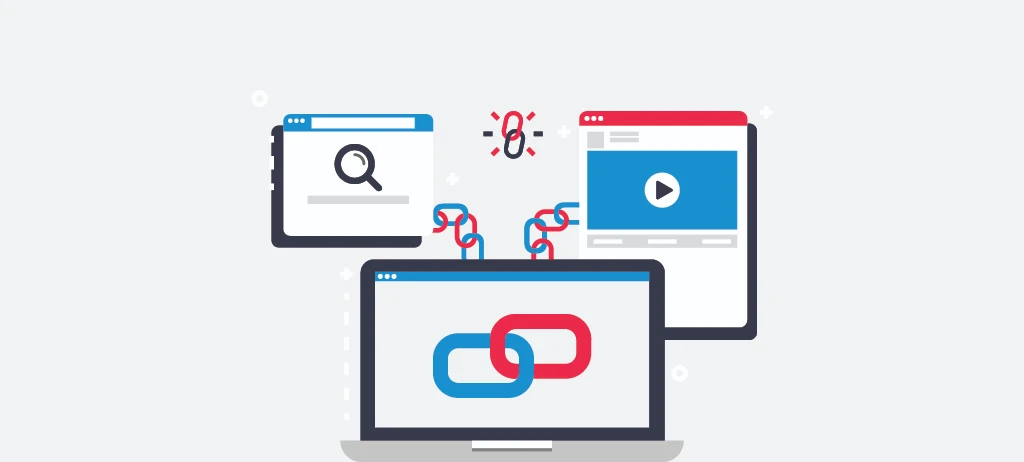
Link building is the process of acquiring hyperlinks from other websites to your own. Each backlink signals Google that your content is credible and worth ranking. The most effective link building strategies in 2026 are:
(1) Guest posting on niche-relevant blogs
(2) Broken link building, replacing dead links with your content
(3) Tiered link building, building links to your links
(4) Digital PR and data-driven content
(5) Resource page link building
(6) Social bookmarking and business directory submissions
(7) Article submission to high-DA platforms
(8) Unlinked brands mention reclamation.
Quality always outweighs quantity, one link from a DA 70 site outperforms 100 links from DA 10 sites.
Link building remains one of the most powerful and misunderstood practices in SEO. Google has confirmed that backlinks are among its top three ranking factors, alongside content quality and RankBrain. Yet despite this, most websites either avoid link building entirely or pursue it in ways that do more harm than good.
This guide covers everything you need to know about link building in 2026, from understanding what makes a backlink valuable, to executing the strategies that consistently deliver results for agencies and businesses of all sizes.
Whether you are starting from zero or looking to scale an existing link building operation, this guide gives you the complete picture: strategy, execution, tools, and what to avoid.
KEY TAKEAWAYS
- Backlinks remain a top-3 Google ranking factor in 2026.
- Quality, relevance, and authority of linking domains matter far more than quantity.
- Guest posting, broken link building, and tiered link building are the three highest-ROI strategies.
- Toxic backlinks can trigger Google penalties, regular audits are essential.
- AI is changing link building outreach but human relationships still win high-DA placements.
- A consistent link building cadence beats sporadic bursts, 10 quality links per month outperforms 100 links in one week.
What Is Link Building and Why Does It Matter?
Link building is the practice of acquiring hyperlinks, commonly called backlinks, from external websites pointing to pages on your own site. When a reputable website links to your content, Google interprets it as a vote of confidence, a signal that your page contains information worth referencing.
Google's algorithm evaluates hundreds of signals to determine where a page ranks in search results. Backlinks have been a core part of that evaluation since PageRank was introduced in 1998, and despite every algorithm update since, they remain critical to organic visibility in 2026.
Why backlinks still matter:
|
Factor
|
|
|
Domain Authority (DA)
|
The overall trust and strength of the linking website |
|
Topical Relevance
|
Whether the linking site covers the same or related subject
|
|
Anchor Text
|
The clickable words used for the hyperlink
|
|
Link Placement
|
Editorial body links carry more weight than footer or sidebar links
|
|
Dofollow vs Nofollow
|
Dofollow links pass ranking signals; nofollow links do not
|
|
Link Velocity
|
How quickly a site acquires new backlinks
|
A single editorial backlink from a DA 70 industry publication will do more for your rankings than 200 links from low-quality directories.
Types of Backlinks, Which Ones Actually Help Rankings?
Not all backlinks are created equal. Understanding the different types helps you focus your effort on links that move the needle and avoid those that waste time or cause harm.
Dofollow vs Nofollow Links
Dofollow links pass PageRank and ranking authority from the linking page to your page. These are the links that directly influence Google rankings. Nofollow links include a rel="nofollow" attribute that tells Google not to pass ranking signals, they are still useful for referral traffic and brand visibility, but do not directly boost rankings.
Editorial Links
The most valuable type. These are links placed naturally by another website's editor or writer because they found your content genuinely useful. You cannot buy these, you earn them through the quality of your content and outreach.
Guest Post Links
Links acquired by contributing original articles to other websites in your niche. When done correctly, with relevant, high-quality content on authoritative sites, guest posting is one of the most reliable link building strategies available.
Directory and Citation Links
Listings in business directories like Google Business Profile, Yelp, and industry-specific platforms. Essential for local SEO and brand consistency. Lower authority individually but important at scale.
Social Bookmarking Links
Links from platforms like Reddit, Mix, Scoop.it, and niche bookmarking communities. Primarily nofollow but drive early indexing, referral traffic, and content discovery.
Tiered Links
A structured approach where Tier 1 links point directly to your website, and Tier 2 links point to your Tier 1 links, amplifying their authority. When executed with quality content at each tier, this is one of the most scalable link building strategies for competitive niches.
The 8 Most Effective Link Building Strategies in 2026
1. Guest Posting
Guest posting involves writing original articles for other websites, in your niche in exchange for a backlink. It remains the most controllable and scalable white-hat link building strategy in 2026.
How to do it right:
- Target websites with DA 40+ and genuine organic traffic
- Pitch topics that fill content gaps on the target site, not topics you want to write
- Write for the host site's audience, not for the backlink
- Use natural anchor text, not exact match keywords
- One contextual link per 1,000 words is the safe standard
What to avoid: bulk guest posting networks, sites that publish paid posts from anyone, and sites with no real audience.
2. Broken Link Building
Find pages on high-authority websites that link to dead URLs (404 pages). Create or identify existing content on your site that covers the same topic. Contact the webmaster to suggest replacing the broken link with yours.
Why it works: You are solving a real problem for the webmaster. The conversion rate on broken link building outreach is significantly higher than cold guest post pitches because you are offering value immediately.
Tools to use: Ahrefs Broken Link Checker, W3Era Broken Links Finder, Screaming Frog.
3. Tiered Link Building
Build links to your links, not just to your website. Tier 1 links go directly to your site from quality guest posts and editorial placements. Tier 2 links point to those Tier 1 pages, from social bookmarks, article submissions, and web 2.0 properties, amplifying the authority passed through to your site.
This strategy multiplies the impact of every high-quality link you earn without risking your main site with low-quality link sources.
4. Digital PR and Data-Driven Content
Create original research, surveys, industry reports, or data visualizations that journalists and bloggers in your niche want to reference. When published, these assets naturally attract editorial links from high-authority news sites and industry publications.
Content types that earn editorial links:
- Original industry surveys and statistics
- Annual trend reports
- Free tools and calculators
- Comprehensive guides that become the definitive reference
5. Resource Page Link Building
Many websites maintain "resources" or "useful links" pages in their niche. Find these pages, identify if your content fits their resource criteria, and pitch a simple addition request.
Search operators to find resource pages:
[niche] + "useful resources"
[niche] + "recommended links"
[niche] + inurl:resources
6. Unlinked Brand Mention Reclamation
Set up Google Alerts or use Ahrefs Content Explorer to monitor when your brand name, content, or images are mentioned online without a link. Reach out to those authors and simply ask them to convert the mention into a hyperlink, success rates are high because the content is already written.
7. Social Bookmarking and Business Directories
Submit every new piece of content to relevant social bookmarking platforms. Submit your business to verified directories for local SEO signals and brand citations.
High-DA platforms to submit to:
- Mix.com, Scoop.it, Folkd
- Reddit (relevant subreddits)
- Industry-specific directories
- Free business listing sites
8. Article Submission
Submitting original articles to article directories and content syndication platforms builds brand visibility, early indexing signals, and domain diversity in your backlink profile.
How to Evaluate Backlink Quality Before You Build
Before committing time and resources to any link building strategies, evaluate it against these criteria:
|
Metric
|
What to Check
|
Good Threshold
|
|
Domain Authority (DA)
|
Moz DA score of linking domain
|
40+ for target links
|
|
Domain Rating (DR)
|
Ahrefs DR score
|
40+ preferred
|
|
Organic Traffic
|
Does the site actually get visitors?
|
1,000+ monthly
|
|
Topical Relevance
|
Is the site in your niche or related?
|
Same or closely related
|
|
Spam Score
|
Moz Spam Score
|
Under 10%
|
|
Link Placement
|
Where on the page will the link appear?
|
Body content preferred
|
|
Existing Outbound Links
|
How many external links on the same page?
|
Under 20
|
Red flags to reject immediately:
- Sites with no organic traffic despite high DA
- Pages with 50+ outbound links
- Sites flagged for spam or manual actions in GSC
- Sites in unrelated niches (gambling, adult, pharma linking to your SEO blog)
Link Building Outreach, How to Get More Responses
Most link building fails at outreach, not strategy. The majority of outreach emails are ignored because they are clearly templated, self-serving, and offer no value to the recipient.
The principles of effective link building outreach:
- Personalize every email, reference specific content on their site, not just their website name
- Lead with value, explain what you are offering before asking for anything
- Keep it short, 3-5 sentences maximum. Editors are busy
- Follow up once, send one follow-up 5-7 days after the initial email. No more
- Use a real name and verifiable identity, link to your LinkedIn, author bio, or company page
Subject line formulas that get opens:
Quick question about [specific article title]
Broken link on [page name], replacement suggestion
[Their site] + [your site] = good fit?
The key rule: Every outreach email should be something you would be happy to receive yourself. If it reads like spam, it is spam.
|
Tool
|
Best For
|
Cost
|
|
Ahrefs
|
Backlink analysis, competitor research, broken link finding
|
Paid
|
|
Semrush
|
Link gap analysis, backlink audit, outreach
|
Paid
|
|
W3Era Backlink Checker
|
Quick backlink profile check, free
|
Free
|
|
Google Search Console
|
Your own backlink data, manual actions
|
Free
|
|
Screaming Frog
|
Site crawl, broken link detection
|
Free up to 500 URLs
|
|
Hunter.io
|
Finding contact emails for outreach
|
Freemium
|
|
BuzzStream
|
Outreach CRM, follow-up management
|
Paid
|
|
Mailshake
|
Cold email outreach at scale
|
Paid
|
|
Notion / Google Sheets
|
Tracking link prospects and placements
|
Free
|
What Is the Google Penguin Update and How Does It Affect Link Building?
Google Penguin, first launched in 2012 and now running in real-time as part of Google's core algorithm, specifically targets manipulative link building practices. Sites with unnatural backlink profiles risk ranking penalties or deindexing.
What triggers Penguin:
- Buying links in bulk from link farms or PBNs (Private Blog Networks)
- Over-optimized anchor text, using exact-match keywords on every backlink
- Sudden unnatural spikes in link velocity
- Links from irrelevant or low-quality sites at scale
- Reciprocal link schemes
How to stay safe:
- Anchor text diversity, use branded, generic ("click here", "this article"), and natural variations
- Consistent link velocity, build links steadily, not in sudden bursts
- Quality over quantity, 10 good links per month consistently beats 200 weak ones
- Regular backlink audits, catch and disavow toxic links before they accumulate
How to Track and Measure Link Building Results
Link building is a long-term investment. Most link building efforts take 3-6 months to show meaningful ranking improvements. Tracking the right metrics prevents you from abandoning a working strategy too early.
Metrics to track monthly:
|
Metric
|
Tool
|
What to Look For
|
|
Total referring domains
|
Ahrefs / Semrush
|
Steady month-on-month growth
|
|
Domain Rating / Authority
|
Ahrefs / Moz
|
Gradual increase over 3-6 months
|
|
Organic keyword rankings
|
GSC / Semrush
|
Target pages moving up positions
|
|
Organic traffic
|
Google Analytics
|
Increasing trend on linked pages
|
|
New vs lost backlinks
|
Ahrefs / GSC
|
More gained than lost each month
|
|
Spam Score
|
Moz
|
Staying below 10%
|
Set a monthly review cadence. Export your backlink profile from Ahrefs or Semrush, compare to previous month, and log every new placement in your tracking sheet.
Conclusion:
Link building in 2026 is not about volume, it is about earning the right links from the right sources, consistently, over time. The sites that dominate competitive SERPs have not built thousands of links overnight. They have built authoritative, relevant, diverse backlink profiles through consistent effort across multiple strategies.
Start with a backlink audit to understand where you currently stand. Identify your top competitors' link sources using Ahrefs or Semrush. Build a targeted outreach list. Execute one strategy at a time, whether guest posting, broken link building, or directory submissions, and track results monthly.
The fundamentals of link building have not changed: earn links through great content and genuine relationships. What has changed is the tools, the scale, and the expectations. Agencies and businesses that treat link building as a long-term content and relationship investment consistently outperform those chasing shortcuts.