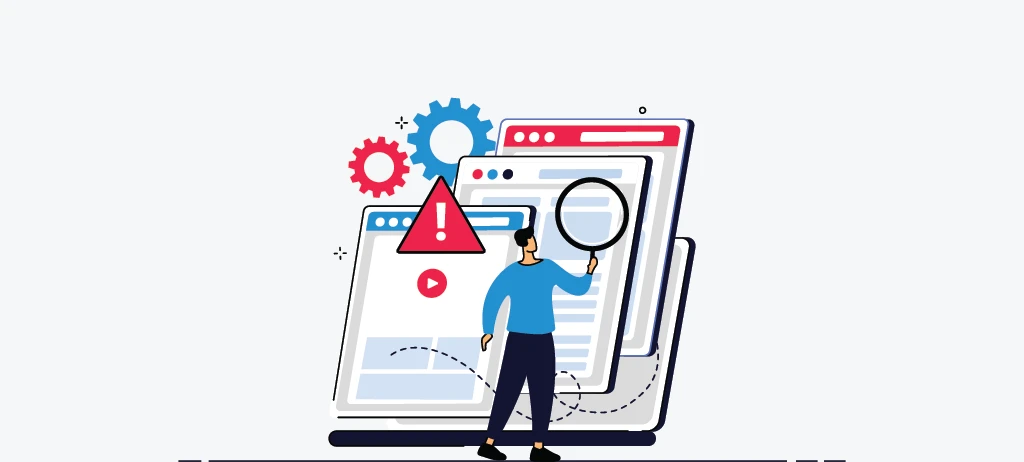
Crawl error fixing starts with one simple rule: identify whether Google cannot reach, render, understand, or index the URL. Use Google Search Console to group affected pages, inspect live URLs, test response codes, review sitemap signals, and compare crawl behavior with server logs. Prioritize revenue pages, high-authority URLs, and pages linked from important navigation paths. Then resolve blocked access, broken destinations, redirect failures, soft 404 patterns, server instability, and conflicting noindex rules before requesting validation or recrawling.
Crawl issues can hide strong pages from Google and drain revenue before teams spot the issue early. Fix crawl errors in Search Console 2026 by separating true technical failures from normal index exclusions. Google Search Console shows many warnings, but each label needs context. Some URLs should stay out of search. Others need urgent repair because they block rankings, traffic, leads, and sales.
Key Takeaways
- Crawl errors show access problems, response failures, redirect faults, or index-blocking instructions.
- Not every non-indexed URL needs repair; Google says “Not indexed” is not always bad in the Page Indexing report.
- URL Inspection gives page-level evidence, while Crawl Stats reveals server-level crawl behavior.
- 5xx errors deserve urgent attention because they can slow Googlebot activity and, if left unaddressed, lead to persistent failures being removed from the index.
- A clean crawl profile depends on stable hosting, relevant redirects, accurate sitemaps, crawlable resources, and consistent indexability signals.
Types of Crawl Errors in Google Search Console
Google Search Console groups technical problems based on what Googlebot encounters during URL discovery, page fetching, rendering, and indexing.
However, a crawl label only becomes useful when teams connect it to the affected page type, business value, and intended search outcome.
404 Not Found
A 404 Not Found status means the server cannot find the requested asset. This issue often appears after teams delete blog posts, rename product URLs, migrate CMS structures, or remove old campaign landing pages without updating links. Google does not index URLs that return 4xx status codes, and it removes previously indexed 4xx URLs over time.
A 404 does not always hurt SEO. For instance, a discontinued event page from 2021 may deserve a clean 404 or 410 if it has no traffic, backlinks, or replacement. A problem starts when important internal links, XML sitemap entries, paid campaign links, or external referring domains still point to that missing address.
Use this diagnostic split:
- Keep 404/410 when the page has no replacement, no demand, and no useful equity.
- Redirect when a close topical match exists.
- Rebuild when the URL had rankings, backlinks, leads, or product value.
- Remove links when menus, breadcrumbs, filters, or blog references still point to dead paths.
Expert insight: Treat 404s as inventory signals. A small number of intentionally removed URLs can stay harmless, but thousands of broken internal destinations usually expose weak site governance.
301/302 Redirect Errors
A 301 redirect tells crawlers that a URL moved permanently. A 302 redirect signals a temporary move. Google follows redirects, but long chains, loops, mixed protocols, and broken final targets create search engine accessibility problems. Google’s documentation says its crawlers generally follow up to 10 redirect hops, while Search Console may report failed redirections when Googlebot cannot reach a clean target.
Redirect errors usually appear during:
- HTTP to HTTPS migration
- www to non-www consolidation
- ecommerce platform changes
- international URL restructuring
- trailing slash cleanup
- product category updates
- CMS permalink changes
Therefore, fix redirect paths at the source. A clean redirect should send /old-page/ directly to /new-relevant-page/, not through five historic URLs, following an SEO-friendly URL Structure that helps both users and search engines understand page relationships. Permanent moves should use 301 or 308. Temporary campaigns can use 302 or 307 when the original URL must return later.
5xx Server Errors
A 5xx server error means Googlebot requested a URL, but the server returned an error. These failures include 500 internal server error, 502 bad gateway, 503 service unavailable, and 504 gateway timeout. Google treats 5xx and 429 responses as server overload signals, and repeated failures can reduce crawl rate.
Server faults often come from:
- overloaded shared hosting
- unstable plugins
- weak database performance
- failed deployment scripts
- CDN misconfiguration
- firewall blocks
- DNS resolution problems
- expired SSL certificates
- origin timeout issues
Additionally, teams should compare Crawl Stats, uptime monitoring, and server logs. Google’s Crawl Stats report shows crawl requests, server response data, and availability issues, which helps advanced users detect serving problems.
Soft 404s
A soft 404 occurs when a URL returns a 200 success code, but the content appears to be an error, an empty page, or a thin placeholder. Google explains that a successful 2xx response does not guarantee indexing, and empty or error-like pages can trigger soft 404 treatment.
Common soft 404 examples include:
- empty category pages
- product pages with no stock, no alternatives, and no content
- internal search pages with “no results found.”
- location pages with copied text
- deleted pages that still return 200
- doorway-style city pages
- profile pages with no meaningful details
Specifically, soft 404s confuse Google because the server says “success,” while the page experience says “nothing useful exists here.” Fix the mismatch by improving the page or returning a true 404/410.
Blocked by robots.txt
A robots.txt file tells search engine crawlers which URLs they can request. Google clearly states that robots.txt primarily controls crawler traffic and does not guarantee keeping a page out of Google Search.
Robots.txt errors usually come from accidental rules such as:
User-agent: *
Disallow: /
or risky folders such as:
Disallow: /assets/
Disallow: /wp-content/
Disallow: /product/
Disallow: /blog/
However, teams should not blindly open every blocked path. Cart pages, internal search URLs, staging areas, duplicate filters, and admin sections may deserve restrictions. The goal is to allow important crawlable content and critical rendering assets while limiting waste in the crawl budget.
Blocked by noindex
A noindex tag tells supported search engines not to index a page. Google says noindex can appear as a meta tag or HTTP response header, but Googlebot must crawl the page to see it. This aligns with how indexing and crawling work together in search.
Problems happen when teams submit a URL in an XML sitemap but also place this instruction in the HTML head:
<meta name="robots" content="noindex">
This conflict tells Google two different things: “this page matters” through the sitemap, and “do not index it” through the meta robots tag. As a result, the page loses indexing eligibility even if the content, links, and page speed look strong.
How to Find Crawl Errors in GSC
A strong crawlability check starts in Google Search Console, then extends to external crawlers and server data.
Meanwhile, each report answers a different question: which URLs Google knows, which pages Google fetched, and which server responses Googlebot received.
Pages Report: Not Indexed Section
Open Google Search Console and choose the verified property. Go to Indexing > Pages and review the Not indexed section. Google’s Page Indexing report shows the indexing status of URLs Google knows about in your property, including indexed and non-indexed URLs.
Look for these issue labels:
- Not found (404)
- Server error (5xx)
- Redirect error
- Blocked by robots.txt
- Excluded by noindex tag
- Soft 404
- Duplicate without user-selected canonical
- Alternate page with proper canonical tag
- Crawled — currently not indexed
- Discovered — currently not indexed
Do not chase every row blindly. First, export the examples, then classify URLs by template. A blocked cart URL may not matter. A blocked service page may cost leads. A soft 404 on a discontinued product may need removal. A soft 404 on a location page may need stronger content, more detailed service information, supporting evidence, and internal links.
Coverage Report Walkthrough
Many SEOs still say “Coverage Report,” although Google now places this work mainly under Page Indexing. Use the same thinking: evaluate status groups, isolate repeated templates, compare historical trends, and identify whether the issue appeared after a site update.
Follow this workflow:
- Open Pages.
- Click a reason under Why pages aren’t indexed.
- Review the affected URL examples.
- Export the sample list.
- Group URLs by pattern, such as /tag/, /product/, /location/, or query parameters.
- Compare first detected dates against deployments, migrations, CMS updates, and plugin changes.
- Inspect representative URLs before applying bulk fixes.
Consequently, you avoid random repairs. A sudden spike in 404s after a migration points to a redirect mapping issue. A rise in duplicate URLs after filter changes points to parameter control. A jump in excluded noindex pages after a staging launch points to CMS settings.
Use the URL Inspection Tool for page-level truth. Google says this tool provides information about Google’s indexed version of a page and lets users test whether a URL might be indexable.
Run this process:
- Paste the full URL into the top inspection bar.
- Check whether Google says the URL appears on Google.
- Review crawl date, crawl permission, indexing permission, canonical selection, and page fetch status.
- Select Test Live URL after making changes.
- Open the rendered HTML or screenshot when JavaScript, blocked resources, or template errors may affect content.
- Request indexing only after the actual issue is fixed. You can also validate findings through the URL Inspection Tool guide.
Additionally, remember that live tests do not validate everything. Google notes that live URL Inspection does not test all Page Indexing issues, especially duplicate or canonical conditions.
How to Fix Each Crawl Error Type
After diagnosis, the repair process should match the underlying failure, not just the Search Console label.
For instance, a 404, a soft 404, a redirect error, and a noindex conflict can all remove search visibility, but each requires a different technical response.
404 Resolution Strategies
Use this simple flowchart-style workflow:
Step 1: Ask whether the page should exist.
If the URL represents a current service, product, article, location, or lead page, restore it or rebuild it with useful content.
Step 2: Check performance value.
Review backlinks, organic sessions, conversions, impressions, internal links, and revenue impact. High-value URLs deserve preservation.
Step 3: Choose the correct outcome.
| Scenario |
Correct Action |
Why It Works |
| Deleted page has no replacement |
Keep 404 or 410 |
Sends a clear removal signal |
| Deleted page has close replacement |
301 redirect |
Transfers users and signals to relevant destination |
| Page was removed by mistake |
Restore content |
Recovers indexability and ranking potential |
| Internal links point to dead page |
Update links |
Improves crawl path and user flow |
| Sitemap includes dead URL |
Remove from XML sitemap |
Stops submitting unavailable pages |
Never redirect every missing page to the homepage. That tactic creates poor relevance, bad UX, and soft 404 risk. Instead, map old URLs to the closest living equivalent.
Soft 404 Fixes
First, check the actual page. If the page shows thin, empty, copied, or error-style content, Google may treat it as a low-value asset even with a 200 response.
Use these fixes:
- Add unique copy that answers real search intent.
- Include product specifications, pricing context, availability notes, FAQs, images, and internal links.
- Show alternatives for unavailable products.
- Add category descriptions for empty taxonomy pages.
- Return 404 or 410 when the page genuinely no longer exists.
- Avoid “sorry, page not found” messages on 200-status pages.
- Remove placeholder location pages until each page contains real local proof.
For example, an ecommerce category for “blue trail running shoes” should not show one sentence and no products. It should include available products, filters, helpful buying guidance, and links to related categories.
Server and Hosting Adjustments
Server problems need engineering, not copy edits. Start by confirming whether Googlebot receives the same response as normal visitors. Then check logs, uptime tools, CDN settings, and application monitoring.
Prioritize these actions:
- Upgrade hosting if CPU, memory, or concurrent-request limits keep being exceeded.
- Fix slow database queries that trigger timeouts.
- Reduce plugin bloat on CMS platforms.
- Confirm CDN rules allow verified Googlebot access.
- Repair DNS records and SSL certificate problems.
- Use proper 503 status during short planned maintenance.
- Monitor origin response time during peak traffic.
- Separate bot blocking rules from real security rules.
As a result, Googlebot can fetch stable content more often. Large sites should also monitor Crawl Stats, as repeated drops in availability can reduce crawl frequency and delay the discovery of fresh pages.
Disallow Rules Cleanup
Open example.com/robots.txt and compare the rules with your indexable page strategy. A safe robots.txt file blocks only low-value or private crawl paths, not essential CSS, JavaScript, product pages, service URLs, blog content, or location pages.
Audit these items:
- Disallow: / blocks the whole site.
- Disallow: /wp-content/ may block assets.
- Disallow: /products/ may block revenue pages.
- Disallow: /*? may block important parameterized pages.
- Old staging rules may remain live after launch.
- User-agent groups may affect Googlebot differently.
However, do not use robots.txt to remove pages from Google. If a URL should disappear from search results, use noindex, password protection, removal tools, or a proper unavailable status, depending on the case.
Noindex Tag Removal
Search Console may show “Excluded by noindex tag” when Google finds a noindex directive. Fix it only when the page should rank. Many thank-you pages, login pages, internal search results, and thin archive pages should remain excluded.
For indexable URLs, check:
- CMS page settings
- SEO plugin index controls
- theme templates
- HTTP X-Robots-Tag
- staging environment settings
- page builder defaults
- category and tag archive rules
Then remove this directive from legitimate ranking pages:
<meta name="robots" content="noindex">
Replace it with an indexable setup, or omit the meta robots tag entirely when the default allows indexing. Specifically, make sure the URL also appears in the sitemap, returns a 200 status code, includes a self-referencing canonical when appropriate, and has internal links from relevant pages.
Prioritizing Which Crawl Errors to Fix First
Not every crawl report item deserves the same urgency, budget, or developer sprint.
Therefore, prioritize by revenue value, backlink strength, conversion role, crawl-blockage severity, and whether the affected template is repeated across many important URLs.
Evaluating High-Impact Bottlenecks
Use this decision table during a technical SEO audit:
| Error Type |
Business Priority |
Risk Level |
Best Fix |
High-Authority URL Action |
| 5xx server errors |
Critical |
Very high |
Stabilize hosting, CDN, DNS, application layer |
Restore 200 immediately and monitor logs |
| Important 404 pages |
High |
High |
Restore page or 301 to closest match |
Preserve equity with relevant redirect |
| Redirect loops/chains |
High |
High |
Replace with one-step destination |
Map backlinks to final canonical URL |
| Accidental noindex |
High |
High |
Remove meta or header directive |
Request indexing after live test passes |
| Blocked by robots.txt |
High |
High |
Open critical paths and assets |
Confirm Googlebot can fetch content |
| Soft 404 on money page |
High |
Medium-high |
Expand content or return true removal status |
Improve content before validation |
| Duplicate canonical conflict |
Medium |
Medium |
Align canonicals, internal links, sitemap URLs |
Point signals to preferred version |
| Low-value tag archives |
Low |
Low |
Keep excluded or noindex |
Do not waste development effort |
| Old campaign 404s |
Low |
Low |
Keep 404/410 if irrelevant |
Redirect only if backlinks or demand exist |
Additionally, teams should create a “do not fix” list. This prevents wasted time on non-indexable pages that should stay private, be duplicates, be expired, or be low value.
Expert insight: The fastest SEO wins usually come from restoring important URLs, removing accidental blocks, and fixing server instability before rewriting lower-value content.
Crawl Budget Optimization
Crawl budget becomes important when a website has more URLs than Google can efficiently discover, request, and process.
Meanwhile, small sites can still benefit from cleaner crawl paths, but enterprise platforms gain the greatest returns from reducing the discovery of duplicate and low-value URLs.
What Crawl Budget Is and When It Matters
Crawl budget describes how much crawling Google can and wants to perform on a site. It depends on crawl capacity, site demand, server health, internal link structure, content freshness, and URL quality.
For a 200-page business website, crawl budget rarely limits SEO performance. For a marketplace with 2 million products, filters, pagination, and location URLs, wasted crawl budget can delay the indexing of high-value pages. Google’s Crawl Stats report even states that sites with fewer than 1,000 pages usually do not need that level of crawling detail.
Crawl budget matters more when a website has:
- massive product inventories
- faceted navigation
- endless calendar pages
- auto-generated location URLs
- duplicate sorting parameters
- thin tag pages
- internal search URLs
- weak canonicalization
- slow servers
- frequent content updates
Consequently, crawl optimization should focus on making important pages easy to discover and low-value variations harder to waste time on.
Reducing Crawl Waste
Reduce crawl waste by cleaning the paths that generate endless or duplicate URL sets.
Use these actions:
- Keep XML sitemaps limited to canonical, indexable, 200-status URLs.
- Block useless crawl traps only when you understand the indexing impact.
- Add noindex to low-value pages that Google can crawl and should exclude.
- Canonicalize duplicate variants to preferred URLs.
- Remove internal links to filter combinations that have no demand.
- Limit pagination bloat with better category architecture.
- Prevent calendar systems from creating infinite future URLs.
- Use parameter handling through platform logic and internal linking discipline.
- Consolidate near-duplicate city, product, or tag pages.
- Build strong HTML sitemap or hub structures for important deep pages.
For instance, a fashion ecommerce site may create thousands of URLs from size, color, price, brand, sort, and availability filters, making it important to prevent duplicate content generated by filter combinations. If only 80 filtered combinations have search demand, promote those 80 as crawlable landing pages and restrict the rest via a canonical, noindex, or robots strategy, or by reducing internal links.
This approach supports broader programs like scalable multi-location search campaigns and enterprise local visibility management, because Googlebot can reach the pages that matter instead of burning requests on noise.
Preventing Future Crawl Errors
The best teams prevent crawl errors before they reach production, rankings, or revenue reports.
Additionally, prevention works best when the SEO, development, content, and analytics teams share a single launch checklist.
Deploying Pre-Launch Checklists
Run a pre-launch crawl before changing URLs, templates, navigation, CMS settings, robots.txt, sitemaps, or hosting infrastructure.
Use this checklist:
- Crawl staging with Screaming Frog, Sitebulb, or a comparable crawler.
- Confirm indexable pages return 200.
- Confirm removed pages return 404, 410, or relevant 301.
- Review redirect maps before launch.
- Test HTTP-to-HTTPS and www/non-www versions.
- Check canonical tags on templates.
- Confirm noindex does not remain from staging.
- Validate robots.txt rules.
- Submit only canonical URLs in XML sitemaps.
- Check mobile rendering and key resources.
- Inspect sample URLs in Google Search Console after launch.
- Compare server logs before and after deployment.
However, do not rely only on crawler software. A third-party crawler shows what it can access, while Google Search Console shows what Google actually discovered, fetched, and processed.
GSC Monitoring Alerts
Google Search Console sends messages for many site issues, but serious teams should build their own monitoring workflow.
Track these items weekly:
- new 5xx spikes
- rising 404 patterns
- sudden noindex growth
- sitemap submission errors
- redirect error increases
- soft 404 clusters
- crawl request drops
- average response time jumps
- important URLs moving from indexed to non-indexed
- organic traffic drops after deployment
Build a simple alert system through Search Console exports, Looker Studio dashboards, log file analysis, Google Analytics annotations, uptime tools, and deployment calendars. Specifically, match issue dates with releases. If a noindex spike starts the same day as a theme update, investigate template logic. If 5xx errors rise during traffic peaks, review hosting capacity and CDN rules.
Use validation only after fixing all known examples in a specific issue group. Google says users can request recrawling after changes, but crawling can take from a few days to a few weeks, and a recrawl request does not guarantee instant indexing.
Conclusion
A healthy crawl profile comes from clean access, stable servers, accurate status codes, useful content, relevant redirects, consistent canonicals, and disciplined sitemap management. Fix the issues that block valuable pages first, then reduce low-value URL noise that drains crawl attention. W3era helps businesses run technical SEO site maintenance, deep crawl audits, and transparent search infrastructure improvements. If you're reviewing your entire website beyond crawl issues, use our SEO Website Audit Checklist to evaluate technical SEO, content quality, Core Web Vitals, indexing, internal linking, and AI search readiness before prioritizing fixes across your site.