Google Disavow tool was considered among the best tools for removing poor-quality links from your website. Yet, the new Google update makes a different statement. Here in this blog, we share the key insights to this Google update on the Disavow Tool with clear guidance on how to respond.
Since its inception in 2012, the Disavow Tool has allowed webmasters to request Google to ignore specific backlinks that may be detrimental to their sites' SEO, especially in the case of manual actions for unnatural links. Originally developed to combat penalties arising from using paid or spammy links, the tool allows users to upload lists of undesirable URLs or domains that they want unexplained associations with their sites.
Google: Disavow Tool Not Meant for Routine Site Maintenance
Google clarifies that the Disavow Tool should not be considered a routine maintenance tool for SEO. Yet, many webmasters still disavow links, thinking this action protects or improves their ratings. Google now has algorithms capable of detecting and ignoring spammy or low-quality backlinks. Disavowing is nothing short of redundant. It can become very detrimental if not used wisely. Do not use the Disavow tool unless your website expects a manual penalty for unnatural links. The emphasis should be on producing great content, gaining natural links, and improving on-page SEO for a long-term result.
What John Muller Said
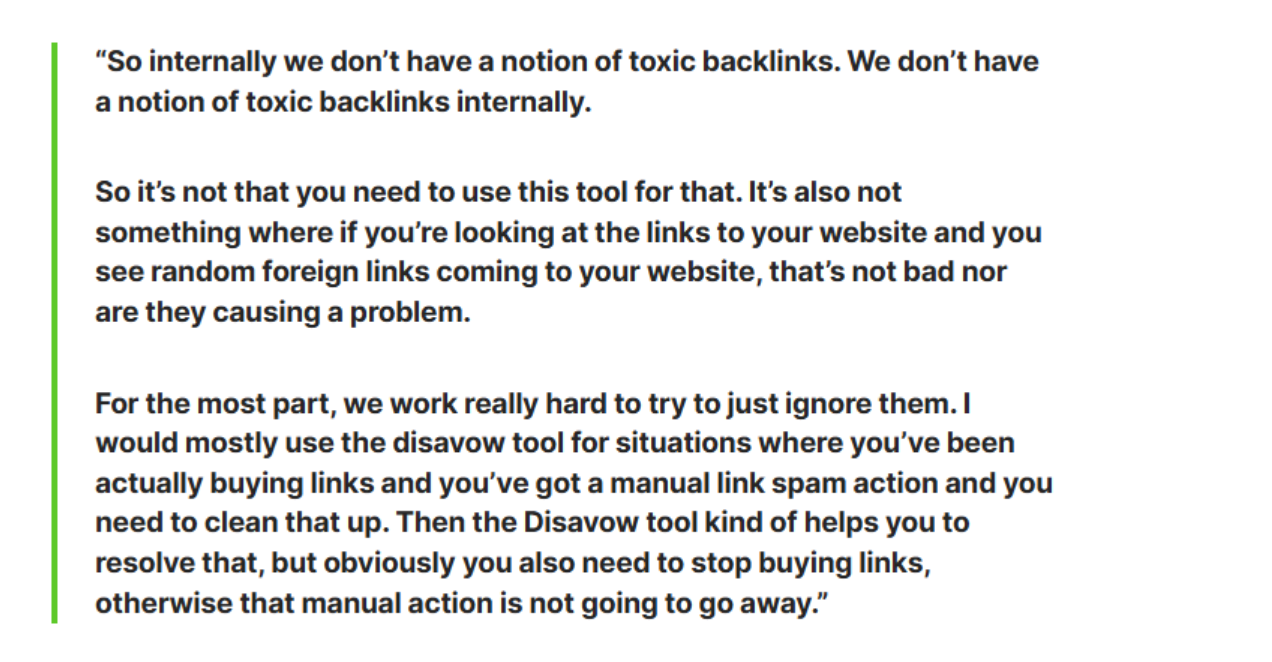
Muller has said that Google does not view 'toxic backlinks' in any sense and rarely requires a link disavowal. In fact, according to him, Google's algorithms automatically reject most low-quality or irrelevant links anyway.
With the opportunity to use the Google Disavow Tool behind you, it is necessary to focus on the above-mentioned steps for keeping a good backlink profile. The first and most crucial step is to create a strong, organic backlink profile, which consists of creating quality content where your natural links come during the process. Spammy or low-quality backlinks do not require manual disavowal, as Google's algorithm is said to be capable of ignoring them. Conduct a routine backlink audit to locate and remove harmful links by contacting the owners of those specific sites. Ensure proper optimization on-page and improve internal linking for good site construction. Always check Google Search Console for manual actions to catch early penalties.
When the Disavow Tool stops showing relevant results, follow the correct procedure to create and upload the disavow file. Second, authenticate that the links you are disavowing are detrimental following Google guidelines. If disavowing seems futile, you may contact the webmasters of the linking sites to obtain a link removal request. If this is not viable, disavow the entire domain. Apart from that, the Disavow Tool does not guarantee timely results. Google’s algorithm might be already filtering low-quality links. Be patient and monitor Google Search Console for any manual actions or penalties. Moreover, try enhancing the overall link quality and content.
Conclusion
The Disavow tool routine maintenance is now over. These days, Google algorithms automatically ignore toxic links. Craft high-quality content, accumulate natural backlinks, and keep improving the site structure. Use the Disavow Tool only for a manual penalty or link removal is not possible.
People Also Read: Google Disavow Tool: The Complete Guide to Removing Toxic Backlinks