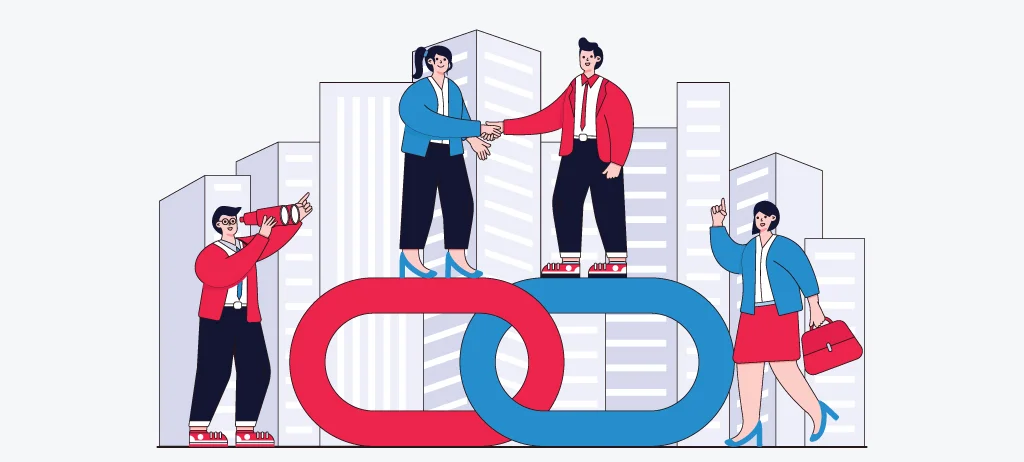
Broken link building is an SEO strategy where marketers find links on other websites that point to pages that no longer exist, create a useful replacement resource, and reach out to the website owner to suggest replacing the broken link with their relevant content.
For example, an industry website may have an old article that links to a resource about SEO audits. If that resource has been removed and returns a 404 error, an SEO professional can create an updated SEO audit guide and suggest it as a replacement.
The goal of broken link building is not simply finding broken URLs. The real objective is identifying relevant linking opportunities where replacing the missing resource improves the experience for users and provides value to the website owner.
A successful broken link building campaign combines:
- Finding broken pages
- Evaluating backlink quality
- Creating useful replacement content
- Personalised outreach
- Measuring results
Unlike low-quality link-building tactics that focus only on acquiring links, effective broken link building focuses on solving a problem: helping websites fix outdated references while providing a better resource for their audience.
Key Takeaways
- Broken link building is a technique for earning backlinks by replacing outdated or unavailable resources.
- The best opportunities come from relevant websites with existing backlinks pointing to valuable but broken pages.
- Finding broken links is only the first step; relevance and replacement quality determine success.
- A replacement page should improve the original resource rather than simply copy it.
- Broken link building works best when combined with content creation, relationship building, and broader SEO strategies.
- Quality matters more than the number of broken links discovered.
Why Broken Link Building Still Matters
Websites constantly change.
Pages are removed, URLs are updated, companies redesign websites, and old resources disappear.
When this happens, links pointing to those pages can become broken.
A broken link creates a poor user experience because visitors click expecting useful information but instead reach:
- A 404 error page
- A removed resource
- An unavailable document
For website owners, these broken links create maintenance problems.
For SEO professionals, they create opportunities.
Broken link building uses this situation by helping website owners replace outdated references with better resources.
The process looks simple:
Broken Resource Found
↓
Analyze Existing Link Opportunity
↓
Create Better Replacement Content
↓
Contact Website Owner
↓
Earn Relevant Backlink
However, successful campaigns require more than finding thousands of broken URLs.
The biggest mistake is treating broken link building as a numbers game.
A website owner will not replace a link simply because your page exists.
They replace it because:
- Your content matches the original resource
- Your page provides additional value
- The replacement improves their user's experience
What Is Broken Link Building in SEO?
In SEO, broken link building is considered an off-page SEO technique focused on earning backlinks from existing link opportunities.
The strategy works because websites often link to external resources that become outdated over time.
A typical example:
Original situation:
Website A publishes:
"Complete Guide to Technical SEO"
Inside the article:
They link to:
example.com/technical-seo-checklist
Later:
The linked page is deleted.
The URL returns:
404 Not Found
Now the website has a broken external link.
Broken Link Building Opportunity:
An SEO professional:
- Finds the broken URL.
- Checks who links to it.
- Creates a better technical SEO checklist.
- Contacts relevant websites.
- Suggests the updated resource.
The website owner benefits because:
- Their article becomes more useful.
- Users get a working resource.
- They remove a broken reference.
The SEO professional benefits because:
- They earn a relevant backlink.
- Their content reaches a new audience.
How Does Broken Link Building Work?
Broken link building follows a structured process.
Step 1: Find Broken Link Opportunities
The first step is discovering pages that:
- No longer exist
- Return errors
- Have backlinks pointing toward them
Common sources:
- Competitor websites
- Resource pages
- Industry guides
- Outdated articles
- Expired content
Step 2: Analyze the Broken Page
Not every broken link is valuable.
A good opportunity should have:
Relevant Topic
The broken page should relate to your content.
Example:
Good match:
Broken page:
"Technical SEO Checklist"
Your replacement:
"Technical SEO Audit Checklist"
Poor match:
Broken page:
"Email Marketing Guide"
Your replacement:
"SEO Services Page"
Existing Backlinks
A broken page is more valuable when other websites already reference it.
Analyze:
- Referring domains
- Link authority
- Anchor text
- Link placement
Related resource: referring domains
Step 3: Create Replacement Content
The replacement page should not be a copy.
It should improve the original resource.
Improve through:
- Updated information
- Better examples
- More complete explanation
- Improved structure
- Better user experience
Example:
Old resource:
"SEO Checklist 2018"
Replacement:
"SEO Checklist 2026: Technical, Content, and Authority Factors"
Step 4: Outreach to Website Owners
The final step is contacting websites linking to the broken resource.
The outreach should:
- Be personalised
- Explain the broken link
- Provide value
- Avoid aggressive requests
Why Does Broken Link Building Work?
Broken link building works because it creates a mutually beneficial situation.
Website Owner Benefits
They receive:
- A fixed broken link
- Better user experience
- Updated resource
Publisher Benefits
They receive:
- A relevant backlink
- Brand exposure
- Referral opportunities
Users Benefit
They receive:
- Working resources
- Better information
Broken Link Building vs Traditional Link Building
Many SEO professionals compare broken link building with other link acquisition methods.
| Method |
Approach |
| Broken Link Building |
Replace unavailable resources |
| Guest Posting |
Create content for another website |
| Digital PR |
Earn media coverage |
| Resource Link Building |
Create valuable resources people reference |
| Outreach Link Building |
Request relevant mentions |
Broken link building is different because the link already exists.
You are not asking a website owner to add a new link.
You are helping them replace an outdated one.
Does Broken Link Building Still Work?
Yes, but the approach has changed.
Older approach:
"Find any broken link and ask for replacement."
Modern approach:
"Find relevant broken resources where a better replacement genuinely improves the page."
The quality of the opportunity matters more than the number of broken links discovered.
Successful campaigns focus on:
Relevance
The replacement must match the original topic.
Authority
The linking website should have:
- Relevant audience
- Real editorial standards
- Industry connection
User Value
The replacement should improve the experience.
Types of Broken Link Building Opportunities
Not every broken link represents a valuable SEO opportunity.
The strongest opportunities usually come from pages that:
- Previously provided value
- Had external references
- Are relevant to your website topic
- Have websites that genuinely care about user experience
Below are the most common broken link building opportunities.
1. Competitor Broken Link Building
Competitor analysis is one of the most popular methods for finding broken link opportunities.
The idea:
Find pages from competitors that:
- No longer exist
- Lost their original URL
- Have backlinks pointing toward them
Then create a better replacement resource.
Example:
A competitor previously published:
example.com/seo-tools-guide
The page had backlinks from:
- Marketing blogs
- SEO communities
- Industry resources
Later:
The page is removed.
Now those backlinks point to a dead page.
Opportunity:
Create:
yourwebsite.com/seo-tools-guide
with:
- Updated information
- Better examples
- Current tools
- Improved structure
Then reach out to relevant websites.
Why Competitor Broken Links Are Valuable
The advantage:
The research is already done.
Someone previously decided:
"This page is useful enough to link to."
Your job is to create a stronger resource.
2. Resource Page Broken Link Building
Resource pages are collections of useful links around a specific topic.
Examples:
- SEO resources
- Marketing tools
- Industry guides
- Educational materials
Example:
A university website has:
"Digital Marketing Resources"
with links to:
- SEO guides
- Analytics tutorials
- Marketing research
One of those links becomes unavailable.
That creates an opportunity.
Finding Resource Pages
Common search operators:
keyword + resources
keyword + useful links
keyword + recommended websites
keyword + helpful resources
Example:
SEO resources
marketing tools resources
content marketing useful links
3. Broken Link Building From Outdated Content
Many websites have old articles that reference resources that no longer exist.
Examples:
- Old statistics pages
- Removed research reports
- Discontinued tools
- Archived guides
Example:
Old article:
"50 SEO Statistics Every Marketer Should Know"
References:
"Google Search Statistics Report 2018"
That report is removed.
Opportunity:
Create:
"SEO Statistics Report 2026"
with updated data.
4. Finding Your Own Broken Backlinks
Many SEO professionals focus only on competitors but ignore their own website.
A website can lose valuable backlinks when:
- URLs change
- Content is removed
- Website migrations happen
- Pages are redirected incorrectly
Example:
Old URL:
w3era.com/old-seo-guide
has backlinks from industry websites.
After redesign:
The page is removed.
Result:
External links point to a broken page.
Solution:
Options:
- Restore the page
- Create a new replacement
- Add a relevant redirect
This helps preserve existing authority.
Related resource: link equity
5. Broken Image Link Opportunities
Some websites reference images, charts, or visual resources that disappear.
Example:
A blog references:
"SEO Growth Chart"
but the image no longer loads.
Opportunity:
Create an improved infographic.
Contact the publisher and provide the updated visual.
Tools and templates frequently disappear.
Examples:
- Free SEO calculators
- Marketing templates
- Checklists
- Research tools
If many websites reference an unavailable tool, creating a replacement can attract strong links.
How To Find Broken Link Building Opportunities Step-by-Step
Now let's look at the actual workflow used by SEO professionals.
Step 1: Choose Your Target Topic
Start with your content area.
Example:
W3Era SEO cluster topics:
- SEO
- Link building
- Technical SEO
- Content optimization
- Digital marketing
Choose a topic where you can create a genuinely useful replacement.
Step 2: Find Broken Pages
There are several methods.
Popular tools:
- Ahrefs
- Semrush
- Screaming Frog
- Majestic
Example workflow:
Ahrefs:
Site Explorer
↓
Competitor domain
↓
Best by Links
↓
Filter:
404 pages
↓
Analyze backlinks
Look for:
- High referring domains
- Relevant topics
- Quality linking websites
Method 2: Using Google Search Operators
Google operators can help discover resource pages.
Examples:
SEO + "resources"
SEO + "recommended tools"
marketing + "useful links"
Then manually check:
- Are links still active?
- Are resources outdated?
- Can you create something better?
Method 3: Using Wayback Machine
The Wayback Machine helps understand what existed before.
Workflow:
Broken URL
↓
Check historical version
↓
Understand original content
↓
Create improved replacement
Example:
Original:
"Complete SEO Checklist 2017"
Your replacement:
"Complete SEO Checklist 2026"
Improvements:
- Updated practices
- Better structure
- More examples
Method 4: Using Screaming Frog
For large websites:
Workflow:
- Crawl resource pages.
- Find external broken links.
- Identify linking opportunities.
- Create replacement resources.
Useful for:
- Enterprise websites
- Large publishers
- Resource-heavy websites
How To Evaluate A Broken Link Opportunity
Finding broken links is easy.
Finding valuable opportunities is the difficult part.
Use this evaluation framework.
Broken Link Opportunity Scoring Framework
| Factor |
Importance |
| Topic relevance |
Highest |
| Website authority |
High |
| Existing backlinks |
High |
| Traffic potential |
Medium |
| Replacement ability |
Medium |
| Link placement |
Medium |
1. Topic Relevance
The most important factor.
Ask:
"Would this replacement naturally fit the page?"
Example:
Broken page:
"Technical SEO Checklist"
Good replacement:
"Technical SEO Audit Checklist"
Bad replacement:
"SEO Services Pricing"
2. Website Quality
Analyze:
- Is the website trusted?
- Does it publish useful content?
- Does it have a real audience?
Avoid:
- Spam websites
- Link farms
- Low-quality directories
3. Referring Domains
A broken page with many relevant referring domains is usually more valuable.
Example:
Broken page:
100 referring domains
But:
90 are unrelated spam websites.
Less valuable.
Broken page:
20 referring domains
All from:
- SEO blogs
- Marketing websites
- Industry publications
Potentially stronger.
Related resource: referring domains
4. Link Placement Context
Where is the link located?
Better:
Within a relevant article paragraph.
Example:
"According to this SEO checklist..."
Less valuable:
Footer link
Sidebar link
Unrelated resource list
5. Replacement Potential
Before contacting websites, ask:
Can we create something genuinely better?
If the answer is no:
Skip the opportunity.
Creating Better Replacement Content
This is where many broken link campaigns fail.
They find broken links but create average content.
A replacement should outperform the original.
Analyze The Original Resource
Study:
- Topic coverage
- Structure
- Examples
- Missing information
- Update opportunities
Improve Through:
Old:
SEO practices from 2018
New:
Current SEO guidance
Better Structure
Improve:
- Headings
- Navigation
- Readability
- Examples
More Complete Coverage
Add:
- FAQs
- Practical steps
- Templates
- Examples
Better User Experience
Improve:
- Visuals
- Tables
- Screenshots
- Internal links
Replacement Content Example
Original broken resource:
"50 SEO Tips"
Weak replacement:
"50 SEO Tips Updated"
Strong replacement:
"SEO Checklist 2026: Technical SEO, Content, Links, and Measurement Framework"
Why?
Because it improves:
- Depth
- Intent coverage
- User value
Broken Link Building and Content Strategy Connection
Broken link building is not only an outreach tactic.
It is also a content research method.
The process reveals:
- What resources earned links before
- Which topics publishers value
- Which content formats attract references
This information can guide future content creation.
For example:
If many websites previously linked to:
"SEO Audit Checklist"
that indicates market demand for that type of resource.
You can create:
- Better checklist
- Updated version
- Interactive tool
- Downloadable resource
Broken Link Building Outreach: How To Earn Backlinks From Broken Resources
Finding broken links and creating replacement content are only parts of the process.
The final step is outreach.
Many broken link building campaigns fail because the outreach message focuses only on getting a backlink instead of helping the website owner.
The correct approach:
Identify a problem → Provide a solution → Make replacement easy
Website owners are more likely to update a broken link when the replacement improves their existing content.
How To Create Effective Broken Link Building Outreach
A good outreach email should contain:
- Personal introduction
- Specific broken link mention
- Location of the broken link
- Helpful replacement suggestion
- No-pressure closing
Broken Link Building Outreach Example
Subject:
Broken resource on your SEO guide
Email:
Hi [Name],
I was reading your article about SEO resources and noticed that one of the links pointing to [old resource] is no longer working.
The section was useful, so I thought I would share a similar updated resource that may be helpful for your readers:
[Your Resource URL]
It covers the topic with updated information and examples.
Either way, I appreciate the valuable resources you are sharing with the community.
Thanks,
[Name]
Why This Outreach Works
It avoids:
"Please give me a backlink"
Instead, it communicates:
I found an issue
I understand your content
I created something useful
Your readers may benefit
Personalization Factors That Improve Response Rates
Avoid sending the same email to hundreds of websites.
Personalize:
Mention The Exact Article
Bad:
"I found a broken link on your website."
Better:
"I was reading your article about technical SEO resources and noticed the checklist link in the second section is no longer active."
Explain Why Your Resource Fits
Do not say:
"My article is better."
Explain:
"It covers the same topic with updated examples and current SEO practices."
Respect The Website Owner's Decision
The goal is not forcing a link replacement.
The goal is providing a useful option.
Measuring Broken Link Building Campaign Success
A broken link building campaign should be measured like any other SEO campaign.
Do not only track acquired backlinks.
Measure the complete process.
1. Opportunities Discovered
Track:
- Broken pages found
- Relevant opportunities
- Qualified prospects
Example:
| Stage |
Number |
| Broken pages found |
500 |
| Relevant opportunities |
80 |
| Qualified websites |
40 |
Track:
- Emails sent
- Replies received
- Positive responses
- Link replacements
Example:
| Metric |
Result |
| Outreach sent |
100 |
| Replies |
20 |
| Positive replies |
8 |
| Links earned |
5 |
3. Backlink Quality
A successful campaign should evaluate:
- Website relevance
- Authority
- Traffic potential
- Link placement
- Audience match
A single relevant editorial backlink can provide more value than many unrelated links.
Related resource: high-quality backlinks
4. Referral Traffic Generated
Broken link building can create direct visitors.
Measure:
- Referral sessions
- Engagement
- Conversions
A link that sends qualified visitors provides value beyond SEO.
5. Link Equity Recovery
When broken links are replaced, websites can improve their external authority flow.
Understand the relationship:
Broken Link
↓
Replacement Resource
↓
New Backlink
↓
Potential Link Equity
↓
Improved Authority Signals
Related resource: link equity
Broken Link Building Mistakes To Avoid
Many beginners approach broken link building incorrectly.
Here are the most common mistakes.
Mistake 1: Targeting Any Broken Link
Not every broken link is valuable.
A broken link should match:
- Your topic
- Your audience
- Your expertise
Example:
Broken page:
"Technical SEO Guide"
Your page:
"SEO Service Pricing"
Poor match.
Even if the link is available, the replacement is not useful.
Mistake 2: Creating Replacement Content That Is Not Better
A website owner has no reason to replace a broken link with average content.
Your replacement should improve:
- Accuracy
- Depth
- User experience
- Freshness
Ask:
"Would this page deserve the link even if the original page was still live?"
If the answer is no, improve the content first.
Mistake 3: Focusing Only On Domain Authority
Many SEO professionals only check metrics like:
- Domain Rating
- Domain Authority
- Authority Score
These metrics can help, but relevance matters more.
Example:
A high-authority website about finance linking to an unrelated SEO page may provide less value than a smaller SEO-focused publication.
Mistake 4: Sending Generic Outreach
Mass outreach reduces success.
Avoid:
"Dear webmaster, I found a broken link."
Instead:
Show:
- You read the content
- You understand the topic
- You provide a relevant solution
Mistake 5: Ignoring Existing Content Opportunities
Sometimes the best broken link opportunities are already on your website.
Check:
- Lost backlinks
- Removed pages
- Redirect issues
A website may already have valuable links that need recovery.
Broken Link Building vs Other Link Building Strategies
Broken link building is one approach within a larger SEO authority-building strategy.
Comparison:
| Strategy |
Main Approach |
Best Use Case |
| Broken Link Building |
Replace unavailable resources |
Existing link opportunities |
| Guest Posting |
Publish content on external websites |
Brand exposure and relationships |
| Digital PR |
Earn media mentions |
Authority and visibility |
| Resource Link Building |
Create useful assets |
Natural references |
| Editorial Link Building |
Earn contextual mentions |
Long-term authority |
Broken Link Building vs Digital PR
These strategies are connected but different.
Broken Link Building:
Starts with:
"Where are useful links already broken?"
Goal:
Replace missing resources.
Digital PR:
Starts with:
"What story, research, or insight can earn attention?"
Goal:
Generate mentions and coverage.
A strong SEO strategy can use both.
Example:
Create original SEO research.
Promote it through digital PR.
Later, use broken link research to find websites that referenced outdated research.
Broken Link Building and Editorial Links
The strongest broken link opportunities usually result in editorial links.
An editorial link is placed naturally because the content improves the reader's experience.
Example:
An SEO publication has:
"Best SEO Resources"
One resource is outdated.
They replace it with your updated guide.
The link exists because it helps readers.
Related resource: editorial links
Advanced Broken Link Building Workflow For SEO Teams
For larger campaigns, create a repeatable system.
Phase 1: Research
Tasks:
- Identify competitors
- Find broken pages
- Export backlinks
- Analyze opportunities
Phase 2: Qualification
Check:
- Relevance
- Link quality
- Audience
- Replacement possibility
Phase 3: Content Creation
Develop:
- Updated guides
- Checklists
- Research
- Tools
- Templates
Phase 4: Outreach
Contact:
- Website editors
- Content managers
- Resource page owners
Phase 5: Measurement
Track:
- Links earned
- Referral traffic
- Authority improvements
- Content performance
How Broken Link Building Supports SEO Growth
Broken link building is not only about acquiring backlinks.
When executed correctly, it supports multiple SEO objectives:
Content Discovery
It identifies topics that previously earned attention.
Authority Building
It creates relationships with relevant websites.
User Experience Improvement
It helps remove broken references from the web.
Brand Visibility
It introduces your website to new audiences.
USA SEO Perspective: Using Broken Link Building For Competitive Markets
For businesses competing in the US market, earning visibility often requires more than publishing content.
Competitive industries need:
- Strong authority signals
- Relevant backlinks
- Industry recognition
- Trusted references
Broken link building can support this by identifying existing authority opportunities and creating resources that deserve recommendations.
Businesses looking to build stronger organic visibility in competitive US markets can explore W3Era's seo services in usa:
UK SEO Perspective: Broken Link Building For UK Businesses
UK businesses can use broken link building to earn visibility through:
- Industry publications
- Local organizations
- Professional communities
- Relevant resource pages
The strategy works best when replacement content matches the audience and provides genuine value.
Businesses targeting UK search audiences can explore W3Era's United Kingdom SEO services:
Conclusion
Broken link building is a strategic way to earn relevant backlinks by helping websites replace outdated resources with better alternatives.
The process is not simply finding broken URLs.
Successful campaigns require:
- Finding the right opportunities
- Understanding the original resource
- Creating better replacement content
- Building genuine relationships
- Measuring outcomes
When combined with broader SEO strategies like content marketing, editorial link building, digital PR, and authority building, broken link building can become a valuable method for earning meaningful backlinks and increasing online visibility.