Your SEO strategy relies heavily on your link-building approach. But even a single misstep can trigger a Google penalty, leading to a drastic drop in traffic and rankings. “Most sites penalized by Google show clear patterns of unnatural or spam-driven backlinks.”
This makes safe, ethical link building more crucial than ever. In this guide, we’ll show how to protect your site by employing white-hat link-building strategies, auditing your backlink portfolio, and maintaining practices fully aligned with Google’s best practices — the same principles we apply in our off-site SEO optimization services.
Key Takeaways
- Google penalizes manipulative link practices, stay informed to stay safe.
- Build links ethically using white-hat methods, such as PR, content creation, and targeted outreach.
- Monitor and audit frequently; disavow risk links but only as a last resort.
- Recovery is a step-by-step process; quality content and UX matter immensely.
- Understanding whether a penalty is algorithmic or manual determines the correct recovery path.
- Natural anchor text diversity and link velocity are as important as link quality.
Understanding Google Penalties
Google enforces two main types of penalties:
- Algorithmic systems like Penguin and SpamBrain suppress rankings when they detect unnatural linking patterns, without issuing formal penalties.
- Google places manual actions on top of the review, which can typically be seen in the Search Console notifications.
Differentiating between them is key to crafting the correct response, whether that’s cleaning up your profile or submitting a reconsideration request. Manual actions are explicit penalties visible in Google Search Console, while algorithmic suppressions occur silently and recover only after signals improve.
Common Link-Building Triggers for Penalties
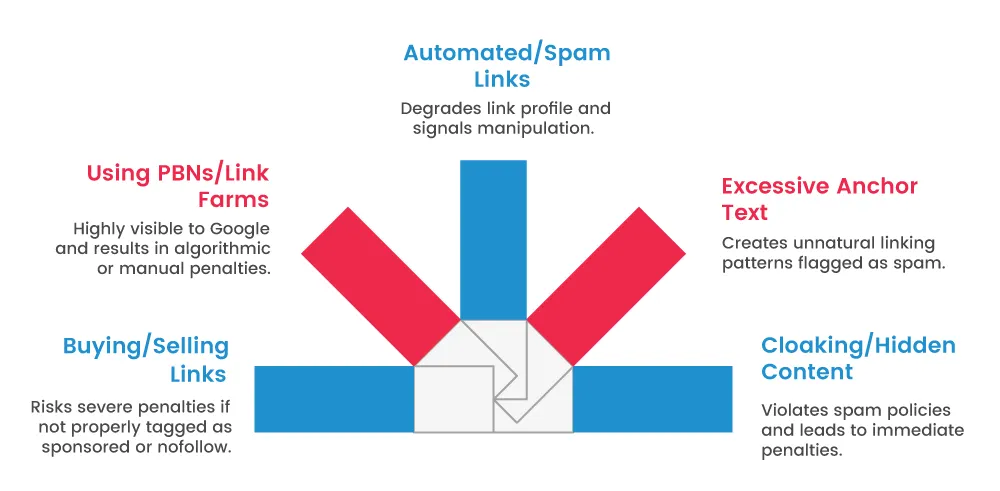
Despite their temptation for quick gains, these link-building tactics put your site’s SEO health at serious risk:
- Buying or Selling Links (Without Proper Tagging)
Google explicitly forbids paying for links that pass PageRank unless they’re marked with rel="sponsored" or nofollow. Unlabeled paid links are treated as manipulative link schemes and can trigger severe penalties.
- Using Private Blog Networks (PBNs) or Link Farms
PBNs collections of sites created solely to funnel link authority or link farms are classic examples of unnatural link schemes. These setups are obvious to Google and often result in Penguin-style algorithmic penalties or manual actions.
- Automated or Spam-Driven Links
Tactics like blog-comment spam, mass directory submissions, or auto-generated profile links add low-value, irrelevant backlinks that degrade your link profile. Google considers these signals of manipulation and penalizes accordingly.
- Excessive Exact-Match Anchor Text
Continuously using the same exact-match keyword in anchor text creates an unnatural linking pattern. Google’s algorithms and manual reviewers, flag this as spammy. A healthy link profile requires diverse, contextually integrated anchors.
- Cloaking or Hidden Content
Presenting different content or links to search engines than to users, known as cloaking, is strictly forbidden. It violates spam policies and leads to immediate penalties.
Why It Matters: These practices not only risk algorithmic or manual penalties but also erode your credibility with search engines and users. The best protection? Invest in ethical, white-hat link-building strategies, such as editorial links, promoting valuable content, and contextual outreach that build lasting SEO value.
Core Strategies to Avoid Link Penalties
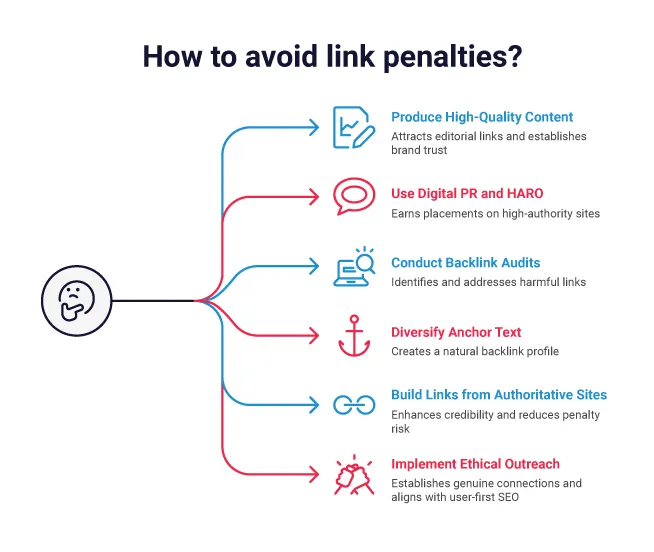
Avoiding Google penalties starts with adopting ethical, sustainable, white-hat link building practices prioritizing long-term authority over short-term gains:
- Produce High-Quality, Shareable Content
Creating valuable content such as in-depth guides, infographics, original research, or interactive tools naturally attracts editorial links. These linkable assets continue to earn backlinks over time.
Engage in digital PR, outreach for expert commentary, or use HARO (Help a Reporter Out) to earn placements on high-authority sites such as Forbes or Business Insider. These earned links carry substantial editorial value while respecting Google’s linking guidelines, find out how through our Guest Post Services.
- Conduct Regular Backlink Audits
Periodically audit your link profile using tools like Ahrefs, SEMrush, Moz, or Google Search Console to spot suspicious spikes or low-quality domains. Follow this backlink audit step-by-step 2026 process to identify toxic patterns, remove harmful links, and maintain a healthier backlink profile. Address harmful links by manually reaching out for removal or using Google's Disavow Tool only when necessary.
Explore our Link Building Services to keep your profile healthy. Safe link building works best when content quality, outreach ethics, anchor diversity, and audit discipline are applied together—not in isolation.
- Diversify Anchor Text Naturally
Avoid repetitive use of exact-match keywords. Instead, diversify with branded terms, generic phrases, and long-tail variations to create a natural and varied backlink profile reducing the risk of spam flags.
- Build Links from Relevant, Authoritative Sites Only
Focus on link placement where it naturally adds value. Editorial content from industry-relevant, reputable sources reduces penalty risk and bolsters credibility.
- Implement Transparent and Ethical Outreach
Avoid anonymous or mass email templates. Instead, establish genuine connections with site owners, offer valuable content, and be transparent about the value you provide. Ethical behavior aligns with user-first SEO models and mitigates penalties.
By combining these elements high-quality content, strategic audits, diversified anchors, and ethical outreach you can build a resilient, penalty-resistant backlink profile that supports sustainable SEO growth.
Maintaining a Healthy Link Profile Over Time
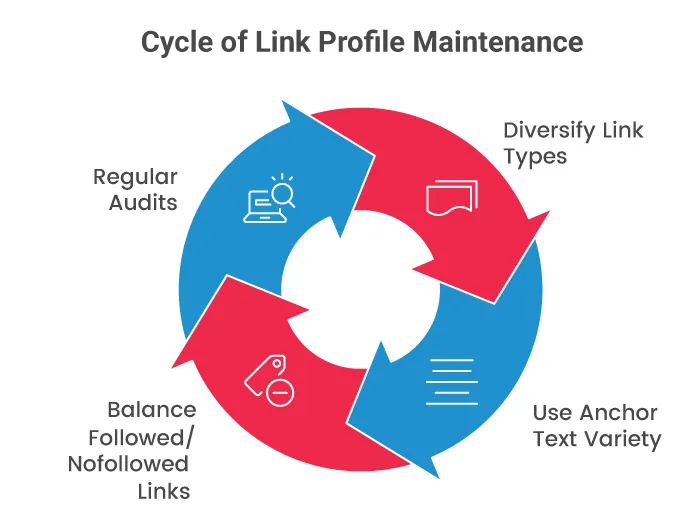
Sustaining a robust backlink profile is essential for SEO longevity. It requires diversity, natural growth, and ongoing vigilance.
1. Diversify Link Types and Sources
Google values a mix of link types, text-based links, image links, redirects, and canonical links, as signals of natural acquisition. Relying too heavily on one type (e.g., only text links) can appear manipulated.
Also, aim for backlinks from a variety of referring domains: industry blogs, educational sites, news outlets, and forums, rather than a narrow cluster of sources. This diversity conveys authenticity and topic relevance.
2. Use Anchor Text Variety
Anchor text should be a balanced mix: branded, generic, partial match, naked URLs, and empty anchors. A good guideline: 35–40% branded, 15–20% partial match, 10–15% generic, 5–10% exact match, and small proportions of naked URLs or empty anchors. This blend minimizes over-optimization risk.
Maintain this variety by monitoring your link profile and adjusting outreach or content strategy accordingly. These ranges are guidelines, not strict rules, and should vary based on industry, brand maturity, and link acquisition history.
3. Balance Followed vs. Nofollowed Links
Healthy profiles include both followed and nofollowed links approximately a 70–80% follow to 20–30% nofollow ratio is considered natural. Including sponsored, UGC, or nofollow links signals to Google that your profile reflects real-world dynamics.
This mix supports authenticity and aligns with Google’s guidelines.
4. Regular Audits & Cleanup
Conduct backlink audits at least every six months. Use tools like Wranker, Ahrefs or SEMrush to review your profile, identify low-quality or toxic links, and disavow if unable to remove them manually.
This proactive maintenance prevents minor issues from becoming significant penalties and ensures your backlink strategy remains aligned with SEO best practices.
Recovery Steps if You’re Penalized
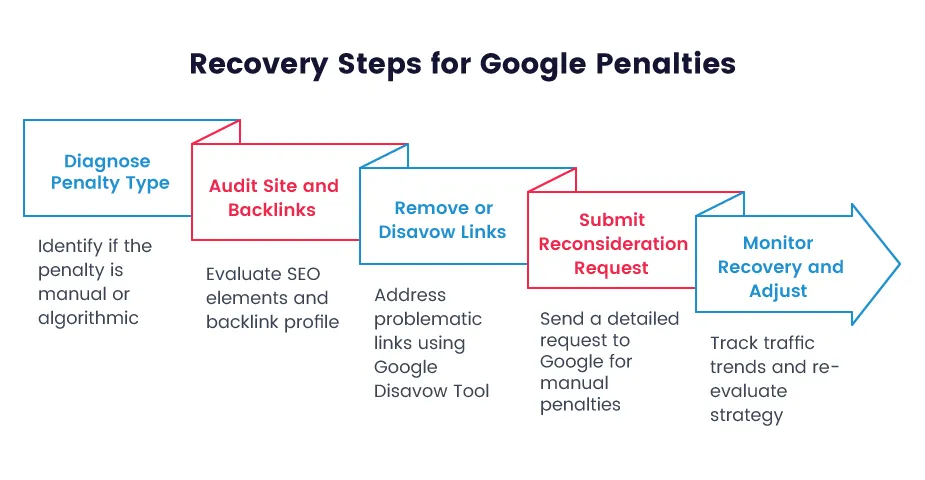
If you’ve been hit with a Google penalty, whether algorithmic or manually imposed here’s a comprehensive roadmap to get back on track. Penalty recovery requires identifying the penalty type, removing or neutralizing harmful signals, and rebuilding trust through compliant practices. Manual penalties require reconsideration requests; algorithmic suppression resolves only after sustained quality improvements.
1. Diagnose the Type of Penalty
Check Google Search Console: manual penalties trigger visible alerts under "Manual Actions." Algorithm-related drops may not be flagged, so match traffic declines against algorithm update timelines.
This identification helps you decide whether to file a reconsideration request or wait for algorithm recovery.
2. Audit Your Site and Backlinks
Conduct a comprehensive SEO audit to evaluate on-page content, technical issues, site structure, and backlink profile across tools such as SEMrush or Google Analytics.
Identify issues like spammy or low-quality links, duplicate content, crawl errors, and other factors contributing to the penalty.
3. Remove or Disavow Problematic Links
Contact affiliates and publishers to remove toxic or irrelevant links. If removal isn't possible, use the Google Disavow Tool carefully and sparingly.
Next, address any harmful on-page or technical issues like thin content or cloaking to align with Google's guidelines.
4. Submit a Reconsideration Request (If Manual)
For manual penalties, after cleanup, submit a well-documented reconsideration request through Google Search Console. Include details of the actions taken and improvements made. It is often vital for Google's team to lift the manual action.
5. Monitor Recovery and Adjust
Restoring rankings can take time algorithmic recoveries may start within weeks, while full recovery from manual penalties may require months. Be patient and monitor traffic trends and re-indexing status.
If the penalty recurs or persists, re-evaluate your strategy or consider consultation with SEO specialists.
Conclusion
Avoiding Google penalties isn’t just about reacting, it’s about building your link strategy on a foundation of integrity, relevance, and vigilance. Ultimately, the strongest link strategies are not those that game the system but those built on value, trust, and resilience.
If you’re looking to safely ramp up your SEO performance and authority, consider exploring our full-service offerings to support your growth journey.
People Also Read: 7 Effective Link Building Strategies For Boosting Website Traffic