Google has started rolling out reports that show how often your pages appear in AI Overviews and AI Mode. For site owners trying to understand how AI search treats their content, that is a genuine step forward.
What those reports cannot show is the rest of the answer. When ChatGPT or Gemini recommends three brands for a buying question, which competitors make the cut? How is each one described, and where does your brand land in that line-up?
That second question is a competitive one. If a buyer acts on an AI assistant's shortlist, the brands named in the answer are the only ones in the running.
This guide ranks six platforms built to report on exactly that. It explains what Google's new data covers, what good competitor reporting looks like, how each platform compares on engines and pricing, and how to turn the findings into a plan your team can act on.
Key Takeaways
- Search Console's new generative AI reports cover your own site's impressions on Google. They do not show how competitors are positioned or what other AI engines say.
- Competitor positioning platforms track share of voice, sentiment, citations, and recommendation gaps across several AI engines at once.
- The most useful reports show the prompts where rivals get recommended, and you do not, along with the sources AI engines relied on for those answers.
- Entry plans differ widely in engine coverage, prompt limits, and how many competitors you can compare, so match the plan to the engines your buyers actually use.
- Pricing models range from published self-serve tiers to custom enterprise quotes, so confirm current terms on each vendor's pricing page before you buy.
- Competitor data only pays off when it feeds a content, digital PR, and outreach plan.
What Search Console's AI Reports Show, and What They Don't
On June 3, 2026, Google introduced Search Generative AI performance reports in Search Console. They give site owners a dedicated view of their visibility in generative AI features on Search, such as AI Overviews and AI Mode, plus generative AI features in Discover.
According to Google's announcement, the reports include:
- Impressions: How often URLs from your site appeared in generative AI features in Search and Discover.
- Pages: Which of your URLs appeared within those features.
- Dates: Performance over time, with hourly, daily, weekly, and monthly views.
Google launched dedicated reports for both Search and Discover and notes that this data still counts toward the overall performance report. The new view simply separates it out, so you can finally see the AI share of your visibility on its own rather than blended into one number.
Where the data stops
That is valuable, but it stops at your own property. Search Console only covers Google, so ChatGPT, Perplexity, Gemini, and Copilot sit outside it entirely.
It also cannot tell you anything about the brands sharing the answer with you. You will not learn which competitor ChatGPT recommended instead of you or how Perplexity describes your pricing next to a rival's.
In short, it measures presence rather than positioning.
Why positioning is a separate job
Appearing in an AI answer is one thing. Being named first, described favorably, and recommended for the right use case is another.
That gap is why visibility in AI answers now needs its own measurement layer. If you are still working out how this fits with your existing search work, this breakdown of GEO and SEO explains where the two disciplines overlap and where they split.
The stakes are rising, too. A 2025 Semrush study found that visitors from AI platforms convert at 4.4 times the rate of visitors from traditional organic search, so losing a recommendation to a rival costs more than a click.
What Should a Competitor Positioning Report Show?
Before comparing tools, it helps to know what good competitor data looks like. The strongest platforms cover five areas, and each one answers a different question your team will be asked.
Share of voice
Share of voice measures how often your brand appears in AI answers compared with each rival across a set of prompts. Tracked over time, it shows whether you are gaining or losing ground against each rival.
Sentiment
Sentiment shows whether AI engines describe you more or less favorably than competitors. Two brands can share the same mention count, while one is praised for value and the other is flagged for poor support.
Citations and sources
Citation data reveals which pages and third-party sources AI engines relied on when they built an answer.
If a review site, comparison article, or forum thread keeps getting cited when a rival is recommended, that source becomes an outreach target. It also tells you which of your own pages engines trust and which they ignore.
Recommendation gaps
A recommendation gap is a prompt or buying situation where competitors are named, and you are missing. Each gap points to a specific prompt or buying situation your content and outreach can target.
Engine coverage
Your buyers do not all use the same assistant. Coverage across Google AI Overviews, AI Mode, ChatGPT, Perplexity, and Gemini gives a fuller picture than tracking a single engine.
Coverage also varies by plan. Several platforms on this list include three or four engines by default and sell the rest as add-ons, so check what the entry tier actually tracks. Peec AI's self-serve plans, for example, include three models, while every Otterly.AI plan includes four core engines.
We reviewed each vendor's own product pages, pricing pages, help documentation, and changelogs in October 2026. Every price in this article comes from the vendor's own pricing page or documentation, and all should be confirmed before purchase.
Platforms were scored on four criteria:
- Depth of competitor reporting. Does the platform show share of voice, sentiment, citations, and recommendation gaps against named rivals, or only your own mentions?
- Engine coverage. How many AI engines does the entry plan track, and which ones cost extra?
- Connection to wider search data. Can you act on AI findings in the same place you manage keywords, backlinks, and site health?
- Pricing transparency. Is the entry price published, and does it reflect what a typical team will actually pay?
We weighted the first two most heavily. A tool that tracks many engines but cannot tell you why a rival keeps winning will not change your position.
Comparison table
| Platform |
Competitor positioning strengths
|
AI engines covered
|
Entry pricing
|
| Semrush |
Side-by-side competitor research, share of voice, and missing-source reports tied to SEO data
|
Google AI Overviews, AI Mode, ChatGPT, Gemini, Perplexity
|
Free plan available; AI Visibility Toolkit $99/mo
|
|
SISTRIX
|
Perception matrix and recommendation Map backed by original quotes
|
Google AI Overviews plus AI chatbot answers (beta)
|
From €119/mo plus taxes, AI features are currently included
|
|
Ahrefs Brand Radar
|
AI share of voice, citation shares, and competitor gaps across a large prompt index
|
AI Overviews, AI Mode, ChatGPT, Perplexity, Gemini, Copilot
|
$199/mo per AI index; $699/mo for all indexes
|
|
Profound
|
Answer Engine Insights for enterprise teams, paired with marketing agents
|
ChatGPT, Gemini, and AI Overviews on Trial; up to 9 on Enterprise
|
Free 7-day Trial; Enterprise is custom
|
|
Peec AI
|
Daily competitor benchmarking with source guidance |
Choice of 3 models per self-serve plan
|
Starter tier with 50 prompts; 15% off annual billing
|
|
Otterly.AI
|
Daily brand reports and competitor tracking at a low entry price
|
ChatGPT, AI Overviews, Perplexity, Copilot (AI Mode and Gemini as add-ons)
|
Lite from $29/mo with 15 prompts
|
1. Semrush
Best for: Marketing teams and agencies that want competitor positioning in AI answers next to their SEO, content, and traffic data.
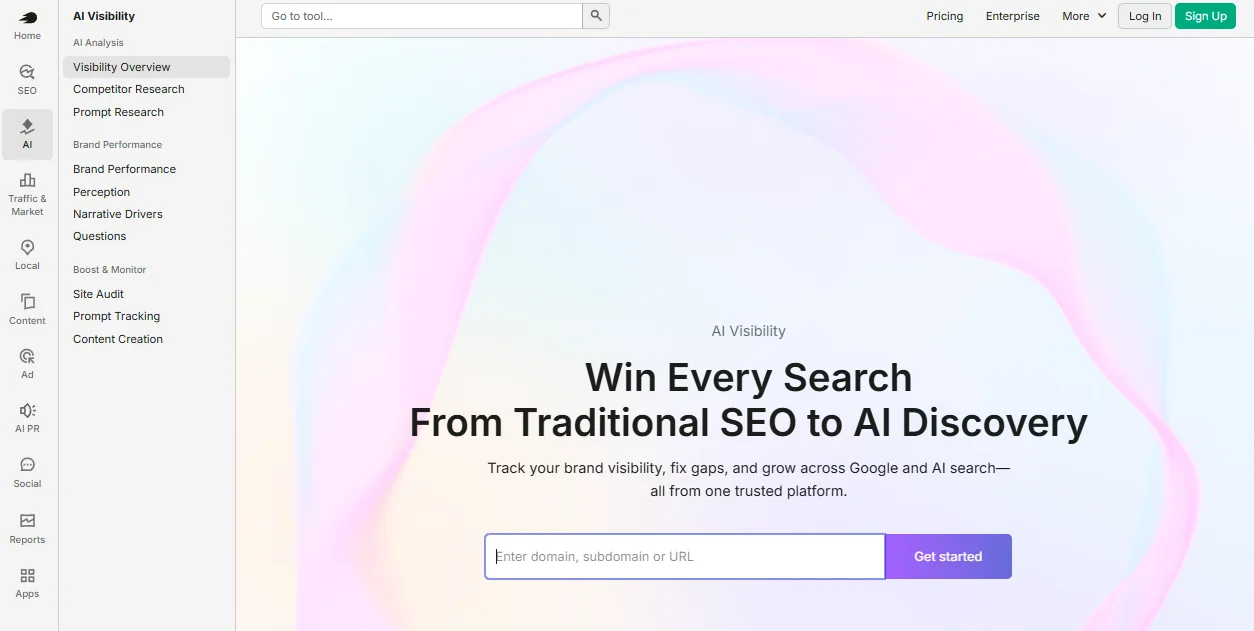
Semrush is a search visibility platform covering SEO, content, competitive intelligence, PPC, and AI visibility. Its AI Visibility Toolkit shows how brands are mentioned and cited in AI-generated answers, so you can see exactly where rivals pull ahead.
The toolkit is built for SMBs, agencies, and mid-market companies. Because it sits in the same account as keyword, backlink, and site audit data, a gap spotted in an AI answer can move straight into a content or outreach task.
Competitor positioning features:
- Competitor research compares your AI visibility side by side with up to four competitor domains at once. Its Missing Sources view lists the domains AI cites when competitors are mentioned, but your brand is not.
- Brand Performance reports track share of voice and sentiment across AI platforms, along with the narrative drivers shaping how each brand is described.
- Prompt Research draws on a database of more than 317 million AI prompts covering Google AI Overviews, AI Mode, Gemini, and ChatGPT and shows which brands lead each topic.
How it fits a workflow: Start with Visibility Overview, which gives an AI Visibility Score from 0 to 100 and flags prompts where your brand is missing. Move to Competitor Research to see who wins those prompts and which sources back them, then add the most valuable ones to Prompt Tracking for daily monitoring. Data in these research reports refreshes daily on a rolling basis.
For mid-market and enterprise teams, Semrush also offers Enterprise AIO as its tier for managing AI visibility across multiple brands and markets. It adds metrics such as share of voice, sentiment, concept analysis, and ChatGPT Shopping visibility.
Limitation: The standalone toolkit includes 25 tracked prompts and one domain for Brand Performance, so teams tracking several brands will need add-ons or a bundled Semrush One plan. The toolkit has no free trial, and Brand Performance reports update weekly rather than daily.
Pricing: The AI Visibility Toolkit costs $99/mo, and Semrush also offers a free plan. Its Starter, Pro+, and Advanced plans bundle SEO and AI visibility with higher prompt tracking limits. Current plans and pricing are listed in full.
2. SISTRIX
Best for: Teams that want to understand how AI describes them compared with rivals, not just how often they appear.
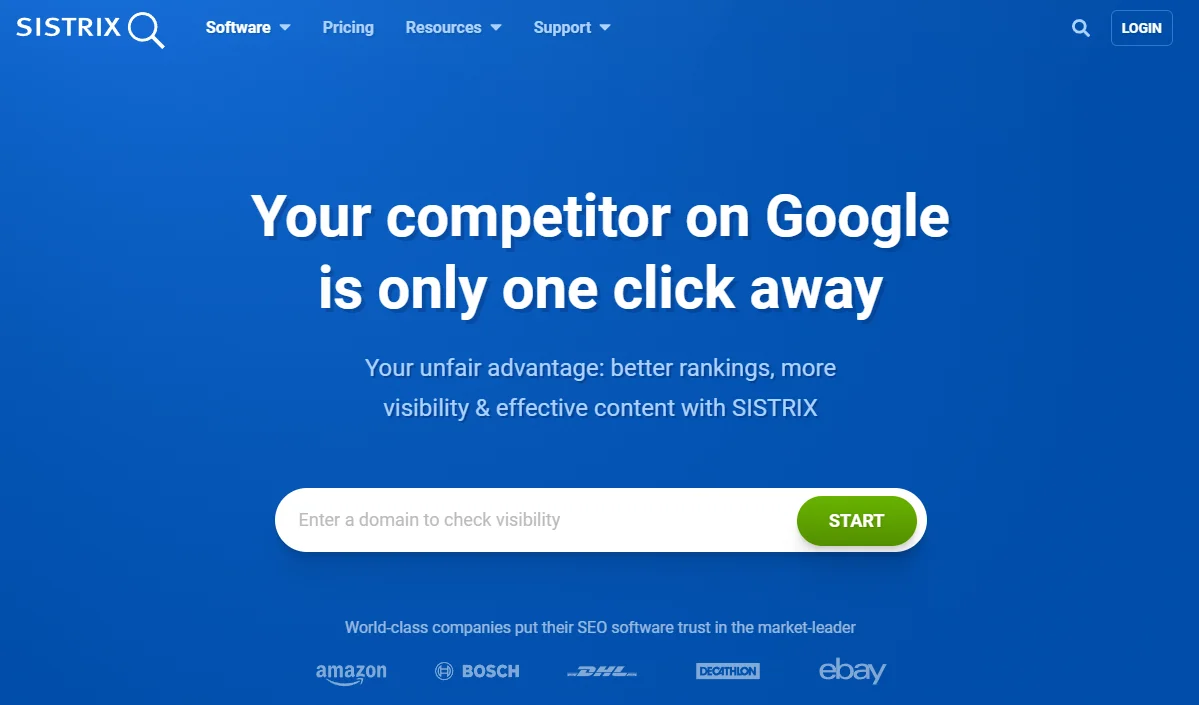
SISTRIX is an SEO platform whose Visibility Index covers more than 100 million domains in over 30 countries. Its AI Check shows the prompts in which any brand or domain is mentioned or quoted in AI responses, and the data is available without setting up a project.
What sets its competitor analysis apart is the evidence trail. The analyses are built on real AI responses to real user questions; statements are counted deterministically rather than by the model, and every finding can be traced back to the original quote and prompt.
Competitor positioning features:
- Competitive perception builds a matrix of the strengths and weaknesses AI systems attribute to you and each competitor, then suggests next steps for content and communication.
- The Recommendation Map records whether a brand is the first choice, one of several options, absent, or advised against in each purchase situation. A priority matrix then ranks those situations by attractiveness and your competitive strength, labeling each as one to expand, pursue selectively, or treat as low priority.
- A gap view lists purchasing situations where only competitors are recommended, with the leading brand, the original quote, and the content that would close the gap.
How it fits a workflow: Sentiment analysis sits in its own section and scores the net balance of praise and criticism from -100 to +100 per platform. SISTRIX notes that AI systems lean positive, with the average across brands sitting around +50, so its benchmark classification helps you read a score in context. Sentiment is also broken down by topic, showing which themes lift or hold back the overall score.
Prompt Tracking adds monitoring for your own prompt sets. SISTRIX's Brand Gap Analysis tutorial walks through the full process from first assessment to action plan.
Limitation: These analyses are part of a beta. SISTRIX says AI Check and Prompt Tracking are currently included in existing packages but may be priced separately in the future, and the Start package includes one user and three months of data history.
Pricing: From €119/mo plus taxes for Start, with Plus at €239/mo. The Start package includes 9,300 prompt updates per month for prompt tracking.
3. Ahrefs Brand Radar
Best for: Existing Ahrefs customers who want large-scale competitor benchmarking without writing prompts first.
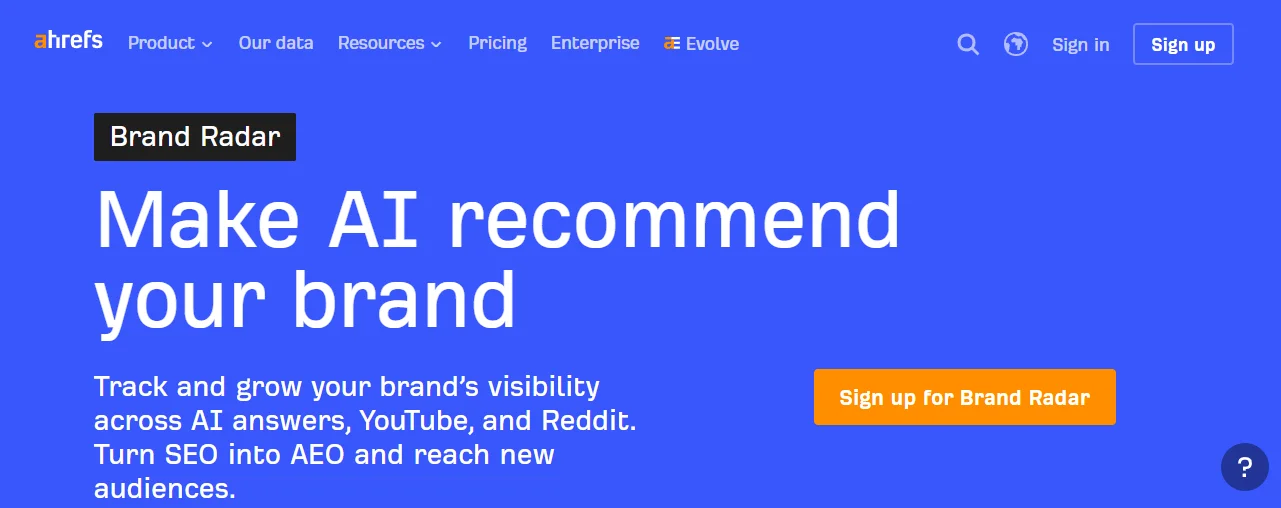
Brand Radar is Ahrefs' brand visibility product. Its AI indexes seed prompts with real search demand data and runs them through AI platforms, so you can look up any brand and compare it with rivals with no setup.
The same dashboard tracks brand mentions across the web, YouTube, Reddit, and TikTok, with eleven indexes available in total, including Ahrefs' own search demand data. That helps when PR and SEO teams want one shared view of brand presence, and custom prompts let you add questions the index does not already cover.
Competitor positioning features:
- AI share of mentions benchmarks your ownership of specific topics against competitors and shows how that changes over time.
- Competitor gap analysis surfaces AI responses that mention your rivals but not you, so you can target those topics directly.
- The Domains report shows the share of AI citations, revealing which brands AI engines actually link to rather than just names.
How it fits a workflow: Response excerpts show the full AI answer with your brand highlighted, which gives useful context for sentiment and reputation checks. The AI indexes cover AI Overviews, AI Mode, ChatGPT, Perplexity, Gemini, and Copilot.
Ahrefs positions the indexes for top-level, directional analysis across many prompts, which smooths out the variance that comes with tracking only a handful of questions.
Limitation: AI indexes are priced separately from core Ahrefs plans, and access to all indexes costs $699/mo versus $199/mo for a single one. Questions specific to your own buyers need custom prompts, since the index only covers prompts already in its database.
Pricing: Ahrefs plans start at 108/mo billed annually). Individual AI indexes cost $199/mo each, or $699/mo for all of them.
4. Profound
Best for: Enterprise brands with dedicated answer engine optimization teams and budget for a custom contract.
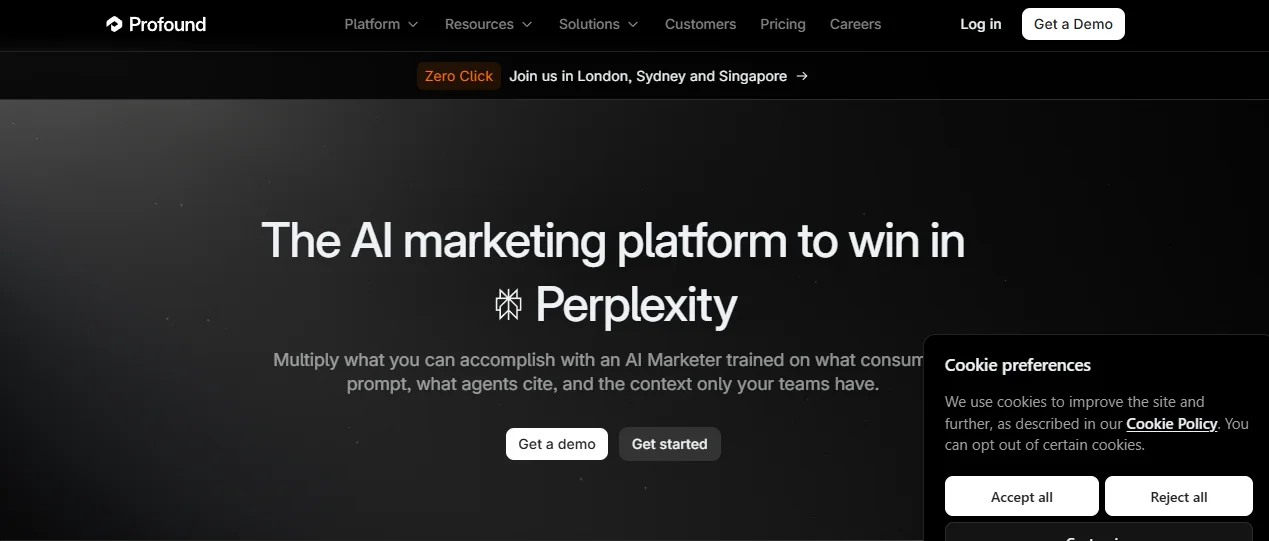
Profound is a standalone platform built to analyze how brands and their competitors appear across answer engines. It now pairs that monitoring with an AI marketing layer of agents that research, write, and report on behalf of the team.
Its Answer Engine Insights module runs structured prompts across AI platforms and tracks citations, sentiment, ranking, and competitive presence. Agent Analytics adds tracking of AI-sourced traffic across your domains, with integrations for tools such as Cloudflare, Google Analytics, and WordPress.
Competitor positioning features:
- Answer Engine Insights analyzes how your brand and your competitors appear across AI platforms.
- Broad engine coverage on Enterprise spans up to nine answer engines, including ChatGPT, Perplexity, Google AI Mode, Gemini, Microsoft Copilot, Claude, and Google AI Overviews.
- Prompt Volumes shows what users are asking AI engines, and Enterprise adds ChatGPT Shopping visibility for retail brands.
How it fits a workflow: The free trial runs 50 unique prompts daily for seven days across ChatGPT, Gemini, and Google AI Overviews. Trial users get a recommended prompt set based on their industry.
On Enterprise, you can edit, disable, or add prompts to match your brand strategy. That tier also adds full history, CSV and JSON exports, API access, SSO/SAML, and SOC 2 compliance. The trial covers one language and one region, while Enterprise sets both to your needs.
Limitation: Profound's brand pricing page now lists only the free trial and a custom-priced enterprise plan, so there is no published mid-tier option for brands. Trial prompts cannot be customized, and agencies have a separate self-serve agency growth plan.
Pricing: Free 7-day trial, then enterprise pricing by quote.
5. Peec AI
Best for: Lean marketing teams that want clean daily competitor reporting without a full SEO suite.
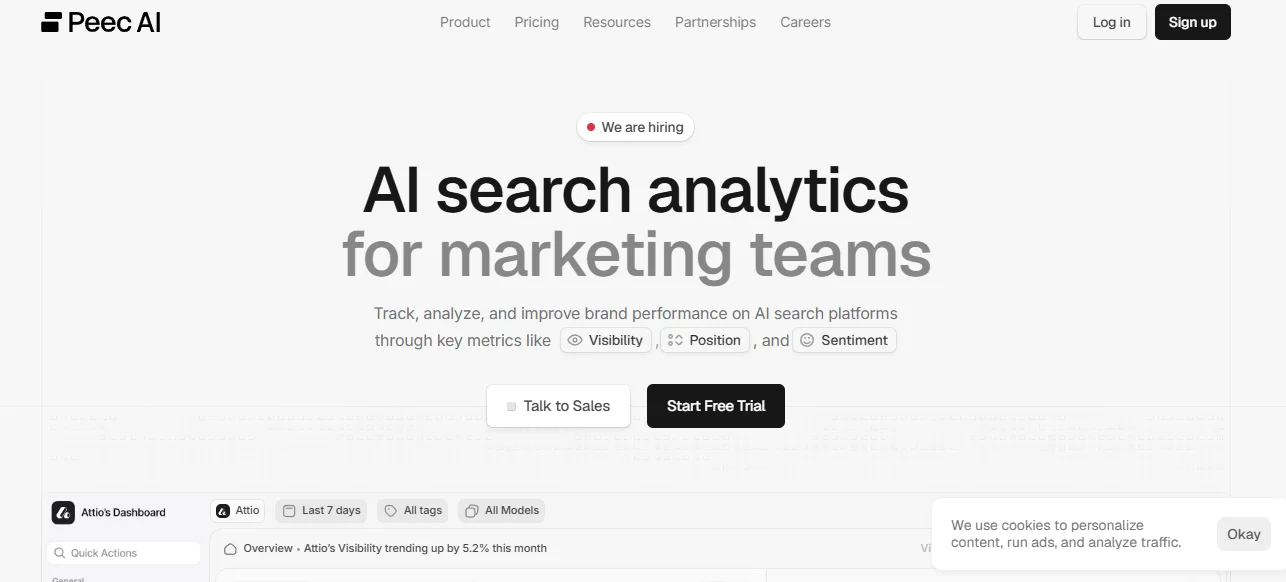
Peec AI focuses purely on AI search analytics. It runs your prompts every day across the AI models you choose and records visibility, position, and sentiment for your brand and the competitors you track.
Every plan includes unlimited users. Peec says tracking across supported countries and languages costs nothing extra, since pricing is tied to prompts and models rather than regions.
Competitor positioning features:
- Visibility overview tracks your visibility, position, sentiment, and share of voice daily against competitors, with competitor suggestions to help build the comparison set.
- Gap analysis surfaces sources that appear often and name competitors but not you, broken down by domain, subdomain, and URL.
- Objections groups recurring arguments AI raises against your brand and traces them to the pages behind them.
How it fits a workflow: Daily tracking runs on every tier, including Starter, so short-term swings after a model update or competitor launch show up quickly. Pro and Advanced add more projects, and Advanced adds multi-country tracking and a Looker Studio integration.
Peec's feature set also covers AI shopping visibility at the SKU level and agent analytics for AI crawler activity and AI referral traffic.
Limitation: Self-serve plans include three AI models, with extra models sold as add-ons. The starter is limited to one project, and API access and SSO are reserved for enterprise.
Pricing: Starter includes 50 prompts, Pro 150, and Advanced 350, with Enterprise priced by quote and tracking up to 13 LLM models. Annual billing saves 15%, and current prices are listed on Peec's pricing page.
6. Otterly.AI
Best for: Freelancers and small businesses taking a first step into competitor tracking in AI search.
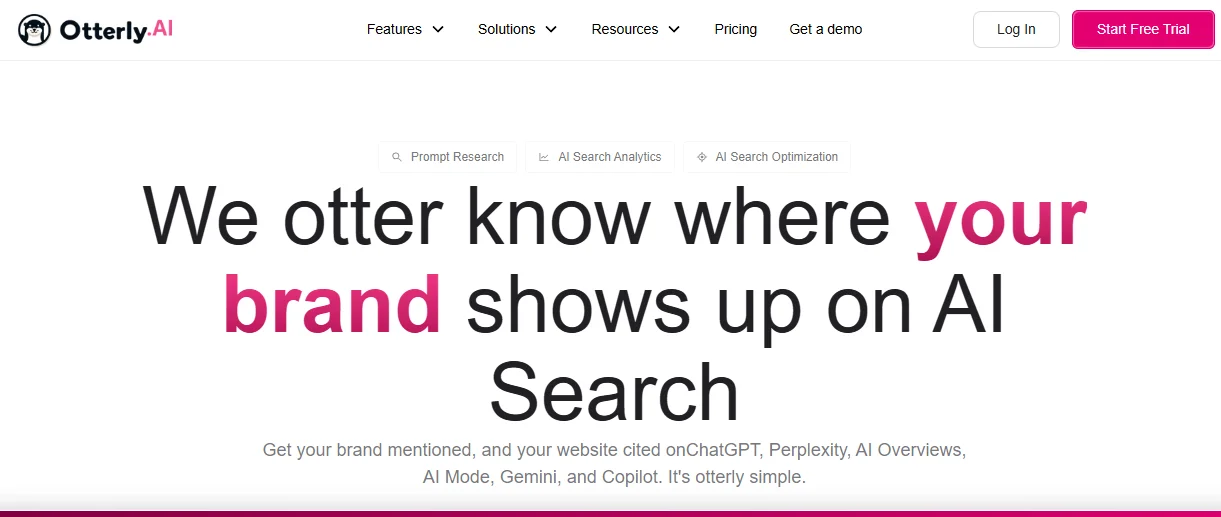
Otterly.AI keeps setup simple, with daily tracking, unlimited brand reports, and unlimited team members on every plan. At $29/mo, its Lite plan has the lowest paid entry price on this list.
Every base plan tracks the same four engines: ChatGPT, Google AI Overviews, Perplexity, and Microsoft Copilot. The difference between tiers is mainly prompt volume, so a team can start small and scale without changing tools.
Competitor positioning features:
- Brand reports compare how many mentions competitors receive versus your brand across tracked prompts, along with share of voice and brand coverage.
- Domain Ranking and Link Citations Analysis show which domains and links AI engines cite in their answers, a useful starting list for outreach.
- The AI Keyword Research Tool helps you find the questions worth tracking before you spend your prompt allowance.
How it fits a workflow: Prompts can be spread freely across workspaces, brand reports, and domains. On Standard and Premium, you can add batches of 100 extra prompts as your tracking grows. Each plan also includes GEO URL audits, from 1,000 a month on Lite to 10,000 on Premium.
Every plan supports more than 50 countries. Lite includes one workspace, while Standard and Premium include unlimited workspaces.
Limitation: The Lite plan includes only 15 prompts, which fill up fast once you track several competitors. Google AI Mode and Gemini are paid add-ons on all plans.
Pricing: Lite costs $29/mo for 15 prompts, Standard $189/mo for 100 prompts, and Premium $489/mo for 400 prompts, plus custom Enterprise plans. Annual billing takes 15% off.
The right choice depends less on feature lists and more on who will use the data and what they will do with it. Three questions narrow the field quickly.
Which engines do your buyers actually use?
Start with your audience, not the vendor's coverage chart. A B2B software brand may care most about ChatGPT and Perplexity, while a local or retail brand may live or die by Google AI Overviews and AI Mode.
If you need broad coverage from day one, check whether those engines are included or sold as add-ons. On Otterly.AI's Standard plan, for example, adding Google AI Mode and Gemini takes the monthly price from $189 to $307.
How many competitors and prompts do you need?
Count your realistic comparison set, then multiply by the buying questions you care about. Three rivals across 20 high-intent prompts is very different from ten rivals across 200.
Entry plans on this list track between 15 and 50 prompts, while higher tiers run to several hundred. Pick a tier that covers your core set with room to test new prompts each month.
Do you want AI data next to your SEO data?
If your team already manages keywords, backlinks, and technical audits in one platform, keeping AI visibility in the same place saves time. That lets you check an AI visibility gap against keyword, backlink, and site audit data in one account.
How to Put Competitor Positioning Data to Work
Data on its own does not move your position. These four steps turn reports into a plan that changes how AI engines describe you.
1. Pick the right comparison set
Track the three to five competitors your buyers actually weigh you against. Then add any brand AI engines that keep recommending in your category, even if you never considered it a direct rival.
That second group is often the most revealing. AI answers can name niche specialists, review sites, and marketplaces that a traditional keyword gap analysis would not flag.
2. Build prompts around buying moments
Generic prompts such as "best CRM" are useful, but they rarely show where you lose deals. Add prompts that match real buying situations, such as comparisons, budget limits, team sizes, and specific use cases.
Group prompts by funnel stage so you can see whether you are strong at awareness but missing from shortlists. Each pattern calls for a different fix.
3. Study the sources behind each win
When a competitor gets recommended, and you do not, look at the pages and third-party sources the AI cited. Look for review sites, comparison articles, community threads, and listicles among them, since those are the sources outreach can reach.
Sort them by how often they appear across prompts. A source cited in a dozen answers is worth far more effort than one cited once.
4. Connect AI insights to your wider strategy
Fold your findings into a broader competitor SEO analysis that also covers keywords, backlinks, and content. Treating both as one plan keeps content, PR, and SEO work pointed at the same priorities.
Review the data on a fixed schedule, monthly for most teams and weekly during launches. AI answers can change as models update and new content is published, so trends across several weeks are more reliable than any single snapshot.
Final Thoughts
Google's new reports finally put a number on your AI visibility in Search. Competitor positioning platforms add the missing context: who else is in the answer, how they are described, and why the engine chose them.
Start with the engines your audience relies on, track a focused set of rivals, and act on the gaps you find. Understanding how AI frames your competition is the first step toward changing that framing.