After months of tight competition, Google Search ads' performance surged in Q3 2025 as Amazon scaled back its advertising presence on Google Shopping. The move reshaped the paid search landscape—giving retailers breathing room, lowering CPCs, and spotlighting how automation and AI are redefining campaign efficiency.
Let’s break down what this shift means for advertisers and how it signals a new phase in the digital advertising market share battle between Google and Amazon.
Key Highlights
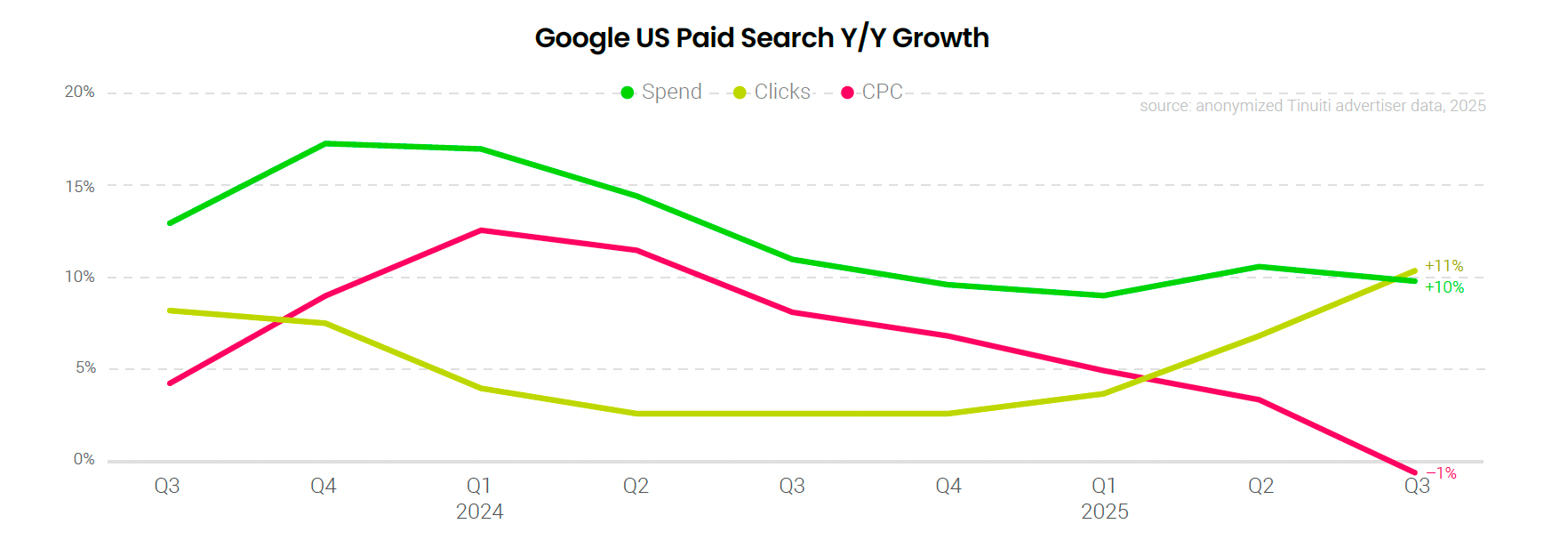
- Amazon’s reduced activity in Google Shopping auctions lowered ad competition, helping clicks rise by 11% and CPCs drop for the first time in 2025.
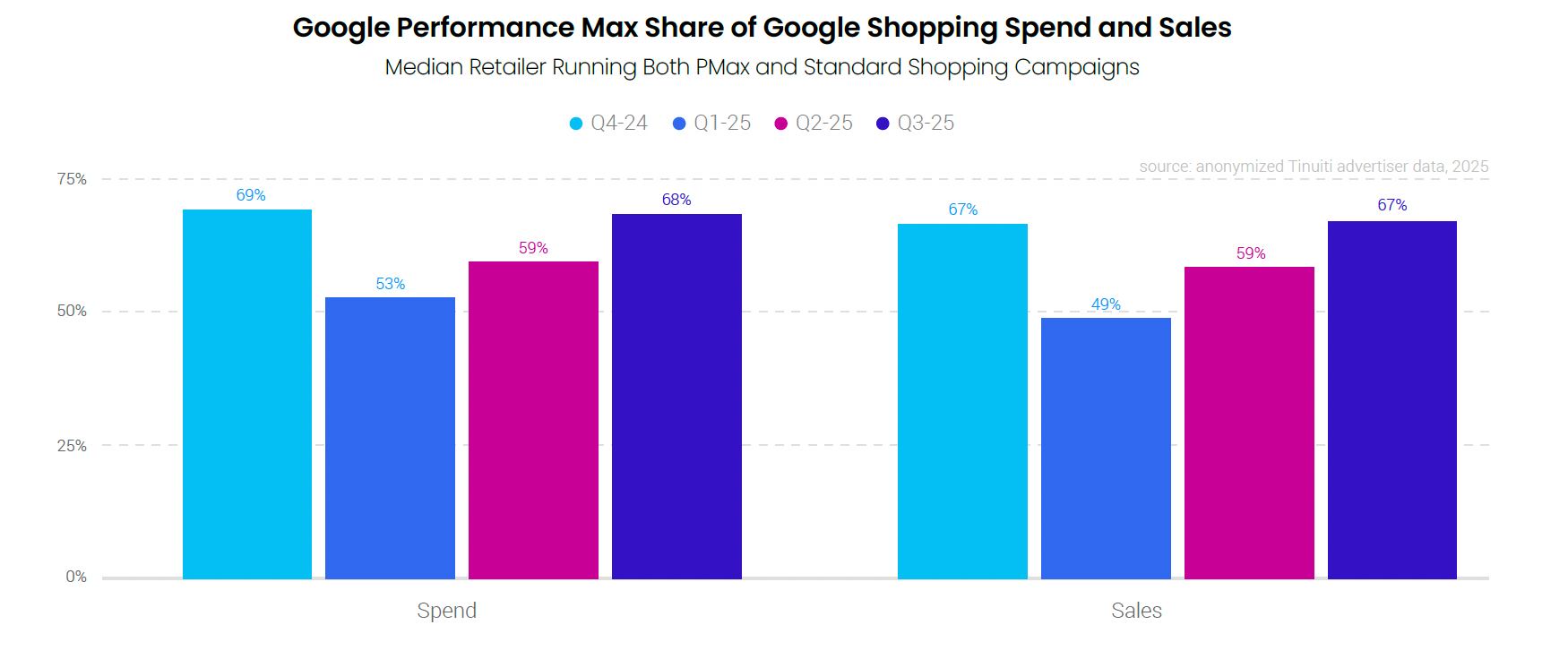
- Performance Max campaigns captured nearly 70% of Shopping ad spend, proving AI-driven automation is now central to Google’s ad recovery.
- Retailers like Walmart, Temu, and Shein quickly filled Amazon’s gap, reshaping Google Shopping visibility and spend efficiency.
- Advertisers can leverage lower CPCs, smarter bidding, and multi-channel automation to maximize results in the evolving digital ad market.
Why Did Amazon Pull Out of Google Ads in Q3?
The move by Amazon to cut its activities in Google Shopping auctions was a surprise to many. The change is part of a fine-tuned Amazon advertising strategy, according to the analysts, aimed at its internal retail media ecosystem and growth on Microsoft Ads.
By shifting back the expenditure to its own DSP and marketplace advertisements, Amazon is tripling on the first-party data ownership and in-house ad optimisation. This tactical withdrawal was not a strategy of weakness but rather a strategy of channeling resources into areas where it can control the entire conversion funnel.
Not entirely. Amazon did not disappear overnight from the ecosystem of Google; it merely stalled a significant portion of its operations, particularly in high-competition categories. It opened the opportunity for new retailers and brands, such as Walmart, Temu, and Shein, to fill the gap in Google Shopping trends rapidly.
It consequently resulted in reduced auction pressure and better visibility to advertisers, particularly in Shopping placements, which Amazon had previously dominated.
The impact of Amazon's absence was short-term and tangible. Google search has received 11 percent more clicks on advertisements, ad expenditure increased by 10 percent, and average CPCs dropped by 1 percent, reversing the 3 percent increase seen in Q2. These tendencies prove that there is less competition and more intelligent automation that allows Google to stabilize its ad system.
Key Takeaways from Google’s Q3 Ad Spend Report
The Q3 ad spend report by Tinuiti reveals:
- Shopping ad clicks grew 15%, while CPCs declined slightly.
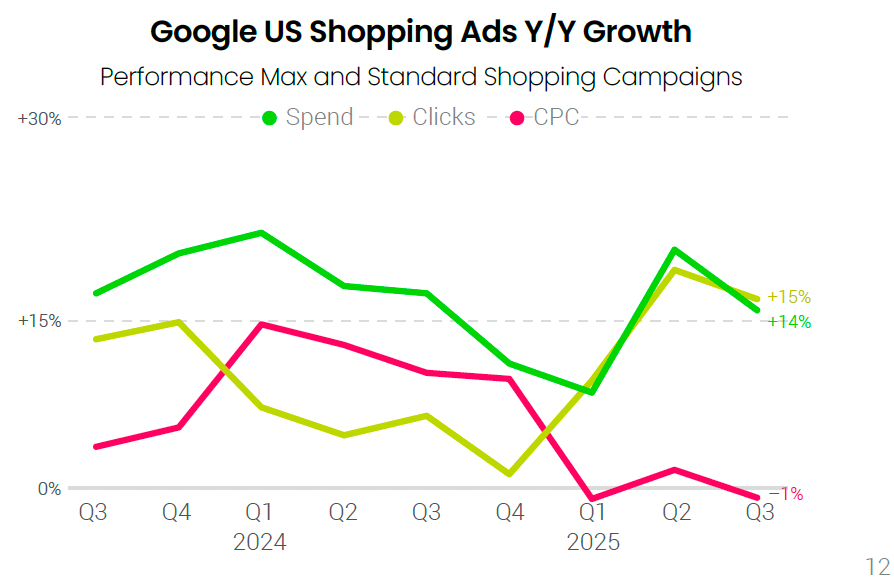
- Performance Max accounted for 68% of all Shopping ad spend (up from 59% in Q2).
- Text ads regained traction with 8% year-over-year spend growth.
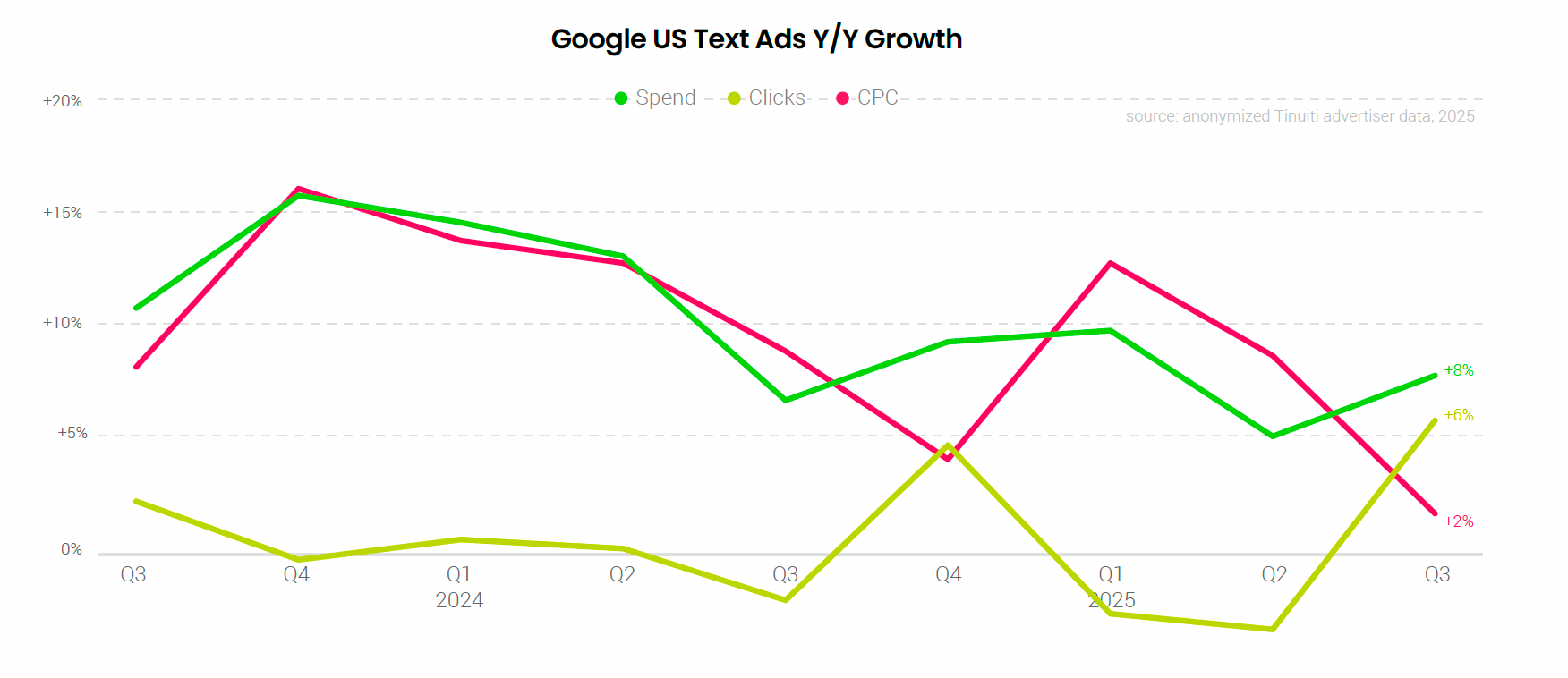
Together, these metrics paint a picture of efficiency—higher engagement at lower costs—something advertisers haven’t seen in over a year.
Google has been betting heavily on AI-driven automation, as it is at the core of its recovery. The Performance Max campaigns help advertisers integrate various types of campaigns into a single system, optimizing performance across Search, YouTube, Display, and Discover.
Yes, in several key metrics. According to PMax campaigns, conversion rates were 2 percent higher and sales per click were 5 percent more than with standard Shopping ads. Despite the reduction of ROAS (because of the increase in CPCs), the efficiency and reach were significantly better.
Performance Max is not merely another type of campaign but an extension of Google's AI vision. To ensure advertisers can automate bids, customize creative, and extend their reach across numerous surfaces with minimal manual effort, PMax offers an opportunity to change the competition of the year and maximize captured attention. It forms the basis of ad optimization in the modern day.
CPC and Impression Trends in Q3 2025
The recent data represent an average decrease in CPCs by 1 percent, along with a significant increase in impressions due to the relaxed auctioning conditions. To most brands, it is an increased exposure at reduced cost. Nevertheless, CPMs (cost per thousand impressions) also depend on the industry- retail and electronics are very competitive, whereas in the travel and services industry, softer rates are being experienced.
Related Blogs:
In 2025, performance declined earlier in the year due to high competition in auctions and poor campaign segmentation. As Amazon is taking a back seat and advertisers are adopting automation, such inefficiencies are being reduced. The smart bidding and audience indicators at Google are now doing a better job at matching ads to actual purchase intention. At the same time, working with an amazon agency can help navigate these changes and optimize strategies more effectively.
How Advertisers Can Maximize Google Search Ad Effectiveness After Q3 Shifts
For advertisers, the post-Q3 landscape offers a renewed opportunity:
-
Leverage Performance Max campaigns for multi-channel coverage.
-
Focus on first-party data integration for better targeting accuracy.
-
Monitor Google Shopping trends to identify new high-performing categories.
- Use adaptive bidding strategies to capitalize on lower CPCs and more substantial CTRs.
Advertisers who adapt quickly will see lasting gains in visibility and return on ad spend.
What Amazon’s Withdrawal Means for the Digital Advertising Market Share?
This action by Amazon does not portend withdrawal, but rather redistribution of authority. Google has redeveloped a temporary competitive advantage in the digital advertising market share, yet Amazon is expanding its proprietary ad network. The benefits of this dynamic competition to the advertisers are that it promotes innovation and cost-effectiveness in cross-platform advertising.
Future Outlook — Google vs Amazon in 2026
Looking ahead, 2026 may redefine digital ad balance. Expect Google to double down on AI-first campaign tools like Performance Max and creative automation, while Amazon expands Sponsored TV and video ads within its ecosystem. The competition will likely become less about platform dominance—and more about ecosystem synergy.
Ready to make your Google Ads campaigns perform smarter, not harder?
Partner with W3era—our PPC and AI-optimized ad strategies help you turn every impression into measurable growth.