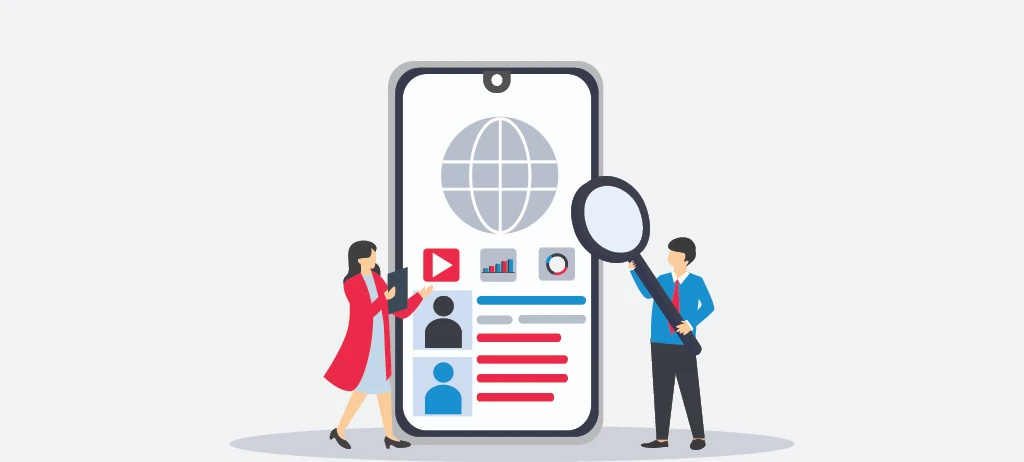
If you sell hemp‑derived products online, you’ve likely asked, “what is CBD SEO?” In short, CBD SEO (search engine optimization for cannabidiol businesses) is the practice of improving your organic visibility in Google and other search engines so qualified shoppers find your brand without relying on paid ads. Because advertising policies for CBD are strict and vary by platform and region, organic search is often the primary growth channel for hemp retailers, DTC brands, dispensaries, and wholesalers. This CBD SEO guide explains CBD SEO meaning, why it matters for revenue, and the cannabis SEO basics you need to rank sustainably and compliantly.
Key Takeaways
- CBD SEO = sustainable growth when ads are restricted—own the SERP with content, products, and local listings.
- Compliance + E‑E‑A‑T win: Avoid medical claims; show credentials, testing, and transparency.
- Structure beats guesswork: Map clusters, optimize templates, and use schema to earn rich results.
- Local matters: GBP, citations, and reviews drive store visits and calls.
- Measure what moves revenue: Non‑brand SOV, organic CVR, and assisted conversions.
CBD SEO Meaning — A Simple Definition
CBD SEO is the set of tactics that help SEO for CBD brands—from eCommerce shops to multi‑location retailers—earn higher rankings for non‑paid (organic) searches. It spans:
- Technical SEO: Crawlability, indexation, site speed, Core Web Vitals, and structured data.
- On‑page SEO: Keyword‑smart titles/meta, headings, internal links, product/category copy.
- Content SEO: Educational blogs, FAQs, guides, and compliant product education.
- Local SEO: Google Business Profile (GBP), citations, reviews for dispensaries/retailers.
- Digital PR/Links: Authority earned via safe, relevant publications and partnerships.
Why it’s different: CBD sits in a regulated space. You must balance growth with compliance, claims risk, and platform policies—that’s where specialized CBD SEO strategy pays off.
Why CBD SEO Matters for Growth
- Ad restrictions = organic opportunity: When paid channels are limited, organic search becomes your most scalable, defensible acquisition engine.
- High‑intent discovery: Shoppers search terms like “CBD gummies for sleep” or “full‑spectrum CBD near me.” Ranking earns warm, ready‑to‑buy traffic.
- Lower blended CAC: Evergreen content + optimized product pages reduce reliance on expensive (and sometimes unavailable) ads.
- Trust & compliance: Well‑researched, transparent content builds credibility in a YMYL (Your Money, Your Life) category where E‑E‑A‑T (Experience, Expertise, Authoritativeness, Trustworthiness) signals matter.
- Local visibility: For stores, appearing in the Map Pack drives foot traffic and calls.
Cannabis SEO Basics — The 5 Pillars
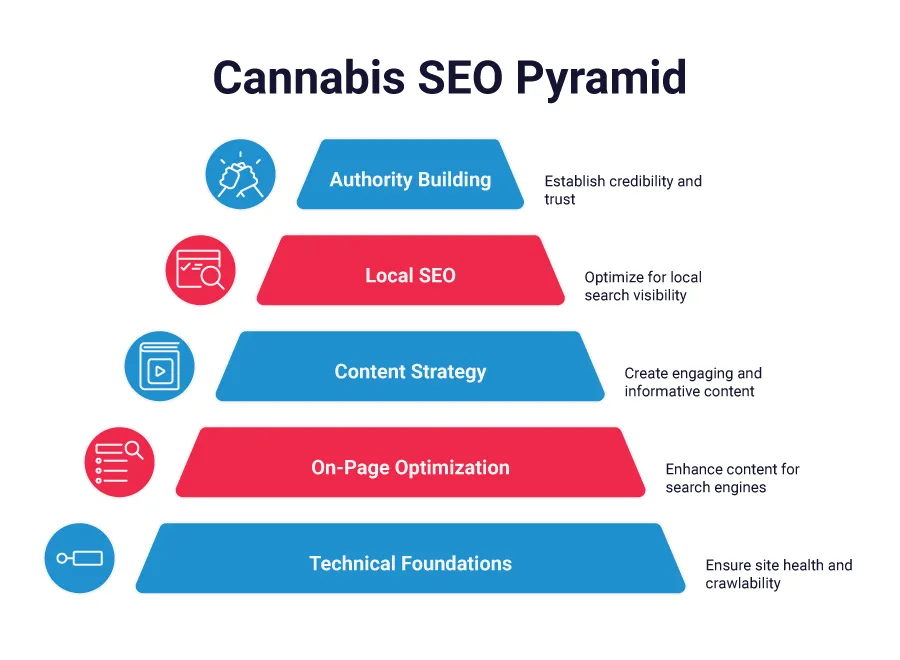
1) Technical Foundations
- Pass Core Web Vitals (LCP, CLS, INP).
- Ensure clean URL structure: /cbd-oil/, /cbd-gummies/, /learn/cbd-dosage/.
- XML sitemaps, robots.txt, canonical tags to prevent index bloat.
- Structured data: Product, FAQ, Organization, LocalBusiness (where applicable).
- Age‑gates (if required) that don’t block crawlers.
2) On‑Page Optimization
- Map primary intent keywords to pages (e.g., “CBD oil,” “CBD capsules,” “CBD for dogs”).
- Write unique titles/meta: include form factor + benefit phrase without medical claims.
- Optimize headers (H1‑H3), alt text, and internal links (collections ↔ products ↔ educational hubs).
- Add scannable specs: milligrams per serving, spectrum type, ingredients, lab results.
3) Content That Ranks (and Converts)
- Build topic clusters:
- Pillar: “CBD 101: Types, Uses, and Safety”
- Supporting: “Full‑Spectrum vs Broad‑Spectrum CBD,” “How to Read a COA,” “CBD Dosage Basics,” “When Does CBD Kick In?”
- Publish buying guides (by need/state/form factor) and brand stories with farm/extraction transparency.
- Add FAQs to product and category pages to capture long‑tail queries.
4) Local SEO for Retailers/Dispensaries
- Google Business Profile: accurate NAP, categories (e.g., “Herbal medicine store,” per policy), hours, photos, Products, Posts.
- Citations: Consistent listings on authoritative directories; remove duplicates.
- Reviews: Request, respond, and showcase (no incentives).
- Local pages: “CBD store in [Neighborhood/City]” with unique content, inventory, and directions.
5) Authority Building (Safely)
- Digital PR: Expert commentary, data stories, partnerships with wellness publishers.
- Community: Sponsor local events, collaborate with yoga studios, pet rescues, nutritionists.
- Resources: Linkable assets (dosage charts, COA explainer, extraction method guide).
Compliance note: Avoid unproven medical claims. Cite credible sources, include disclaimers, and align with your market’s regulations. When in doubt, consult legal counsel.
Keyword Research for CBD Brands (Quick Framework)
- Core commercial: “CBD oil,” “CBD gummies,” “CBD capsules,” “CBD balm” (+ “online,” “near me,” “for [need]”).
- Modifiers that convert: strength (500mg/1000mg), spectrum (full/broad/isolates), flavors, vegan, organic, THC‑free.
- Education/”CBD SEO guide” terms: “how to use CBD,” “CBD dosage basics,” “COA meaning,” “cbd seo meaning.”
- Local intent: “[city] CBD store,” “CBD dispensary [zip],” “CBD delivery [city].”
- Brand moat: farm/source terms, extraction method (CO2), third‑party lab/COA searches.
Cluster each term to a page; avoid keyword cannibalization by giving every theme a clear home.
On‑Page Template — What to Include on Product Pages
- Title/H1: Form + spectrum + strength + key differentiator.
- Above the fold: Price, strength selector, flavor, COA badge/link, trust seals.
- Bullets: Benefits phrased as wellness support (no disease claims), ingredients, usage.
- FAQ block: Shipping, dosing basics, how long it lasts, storage.
- Schema: Product + FAQ + AggregateRating (if eligible and genuine).
- Internal links: To Collection, Learn hub article, COA, related products.
Content & E‑E‑A‑T — How to Build Trust in YMYL
- Attribute articles to qualified authors (e.g., RN, herbalist); include bios.
- Reference reputable sources; link out where useful.
- Publish COAs (Certificates of Analysis) per batch and explain how to read them.
- Add clear disclaimers (not medical advice; not evaluated by authority).
- Maintain an About/Quality/Testing section with farm, extraction, and manufacturing details.
Measurement — Proving ROI from CBD SEO
Track beyond traffic:
- Revenue metrics: Organic revenue, AOV, CVR by landing page.
- Visibility: Non‑brand impressions/clicks, share of voice for priority clusters.
- Content impact: Assisted conversions, first‑click attribution, time to purchase.
- Local KPIs: GBP calls, direction requests, product views, photo views.
- Technical: Core Web Vitals pass rates; index coverage.
Common CBD SEO Mistakes (and Fixes)
- Thin / duplicate pages: Consolidate; write unique copy per product/strength.
- Medical claims: Replace with compliant wellness language; add disclaimers.
- Ignoring local SEO: Claim/optimize GBP; build citations; create local pages.
- Slow pages & poor UX: Compress images, lazy‑load, streamline apps/scripts.
- No COA access: Link COAs clearly; make them indexable and human‑readable.
- Blog without strategy: Build clusters tied to products and questions buyers ask.
CBD SEO Checklist (Copy/Paste)
- Fix site speed & Core Web Vitals
- Map keywords → pages; de‑duplicate intents
- Optimize titles/meta/H1s; add internal links
- Add Product, FAQ, Organization, LocalBusiness schema
- Publish CBD 101 pillar + 4–8 supporting articles
- Build compliant product copy + FAQs + COA links
- Claim/optimize GBP; add Products/Posts/photos
- Request/respond to reviews; track GBP insights
- Launch 1 digital PR asset; pitch relevant sites
- Set up dashboards for revenue, SOV, CVR
Conclusion — Ready to Rank (the Right Way)?
Organic search is the most reliable lever for CBD brands to grow awareness, trust, and revenue. With the right CBD SEO strategy—solid technicals, compliant copy, educational clusters, and local optimization—you can outrank competitors and reduce acquisition costs.
Want a rapid CBD SEO opportunity audit? We’ll surface compliant quick wins across products, content, and local—plus a 90‑day roadmap you can implement immediately.