Links are vital to your website's SEO (Search Engine Optimization) performance. It acts as a bridge between your website and search engines for meaningful crawling and indexing. This way, these links improve your website navigation and hence search engine rankings. Over 85% of SEO experts prioritize links even for brand authority.
What are these links? There are two categories of links in SEO, i.e., internal and external links. Both these links are equally important to your website SEO, yet serve different purposes.
What is the difference between an External link and an Internal link? Let’s help you find how these links differentiate in terms of purpose and their importance in SEO. This blog will help you identify the clear meaning and best practices for internal links and external link SEO.
Key Takeaways
- Internal and external links are both critical to SEO performance and user engagement.
- Internal linking enhances the site structure and accessibility while guiding users to related content.
- External linking develops trust and authority that points from your content to credible, high-quality sources.
- Smart linking tactics align with E-E-A-T signals, strengthened by Google, thus improving your chances of ranking higher in search.
- Applying the best practices for two types of links guarantees higher visibility, easier navigation, and SEO success.
What is Internal linking in SEO?
Internal links are those hyperlinks you use in different webpages within your website to develop a solid network between them. Internal Linking acts as a roadmap for users to explore an entire website rather than just sticking to the page they visited. For example, we sometimes link service pages to a relevant blog to drive actions from visitors.
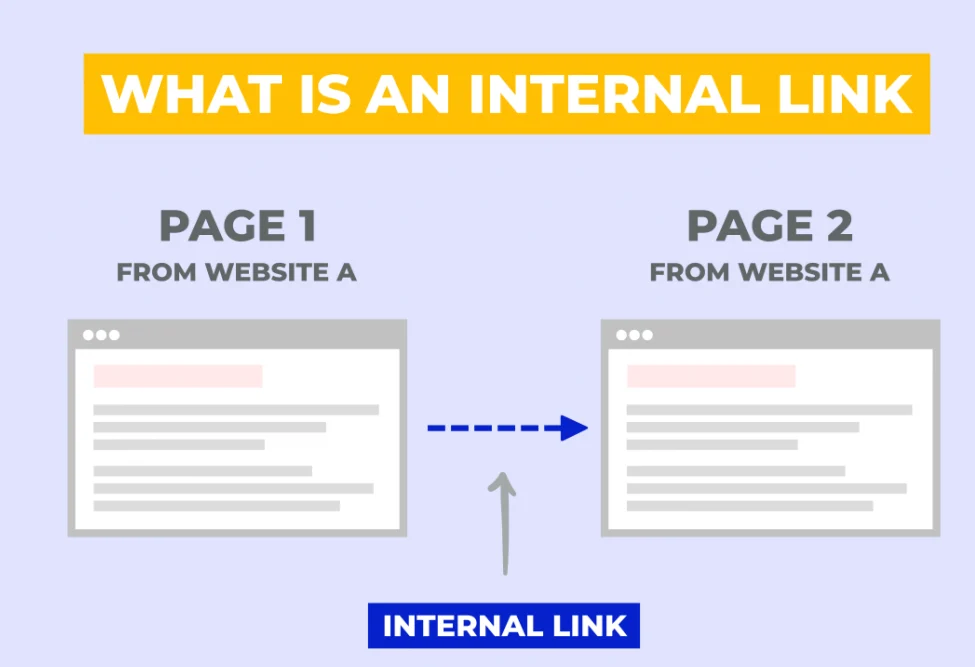
These links also help your website build a logical content hierarchy. It simplifies finding more information about your business or a specific topic within your website. On top of that, internal links allow users to stay longer on your website.
What is External Linking in SEO?
Unlike internal links, External or outbound links are not present on your website directly. These are hyperlinks that connect your webpage with another webpage or website from another domain.
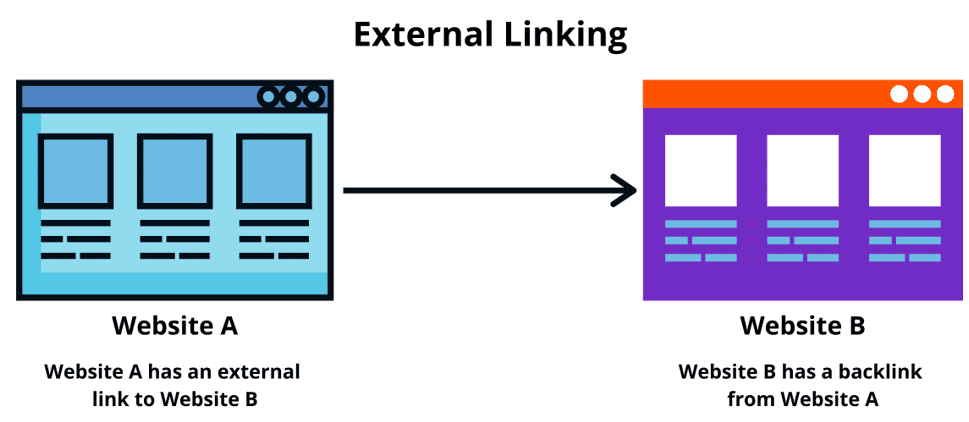
External linking is used to establish credibility and trust among the target audience. For example, citing a fact or statistics from an external domain in your citation is external linking. Even generating backlinks through guest posting on reliable websites is a part of these links.
Internal and External Links in SEO: Key Differences
Still struggling with how to differentiate between internal and external links for your website SEO. Let’s have a quick comparison through the table below:
| Criteria |
Internal |
External |
| Definition |
Links within the same domain |
Links from an external domain |
| Purpose |
Improved user navigation and engagement |
Enhanced Domain Authority and Website credibility |
| When to Use |
- When linking to related content or pages on the same website.
- To guide users to more relevant, in-depth articles or services.
|
- To offer diverse perspectives and integrate authoritative sources for trust-building.
- To craft high-quality external links for referral traffic generation.
|
| SEO contribution |
- Site architecture and crawlability enhancement
- Maximize content relevance and internal linking equity
|
- Developing links with high authority websites for better credibility
- Sending trust signals to search engines
|
| Density |
A strategic Abundance is recommended |
An intentional limit is recommended |
| Example |
- Link relevant blogs with each other or with matching service pages.
- Link service pages to establish a logical hierarchy within a content structure
|
- Developing citations to build more credibility and authority for the information presented on the website.
- Creating backlinks on authentic and credible websites to gain the trust of customers.
|
Key External and Internal Linking Benefits in SEO
Internal and external links act as positive signals to search engines to prioritize your content in search rankings. These links offer separate yet significant benefits to your SEO performance.
1. Internal Links
Improved Crawlability and Indexing: Internal linking creates signals for search engines to crawl content within your website. These links guide crawlers to access the entire website content and minimize the risk of leaving any page unindexed. It further prioritizes your websites for better search rankings.
Enhanced User Experience and Navigation: Internal linking enhances website navigation. Users can easily identify more information about the topic and the services by moving from one page to another. This enhanced navigation, in turn, improves overall user experience, satisfying their search queries and offering broader yet contextual information they came for.
Establishing Website Hierarchy and Content Organization: Internal linking enables search engines to understand the content structure and how the content on different pages is related. This way, search engines access the content hierarchy and understand the importance of content on website pages.
Distributing Link Equity (Page Authority): Internal links connect high-authority pages with other pages, sharing this authority with them. This link juice strengthens credibility and authority across the website for better ranking results.
2. External Links
Improved Website Authority: External links act as credible sources of information that you provide to your website. These links signal search engines that you use credible and evident information on your website, considering your content trustworthy and credible.
Potential for Backlinks: Providing links from high-quality and credible websites creates potential for them to reciprocate. These websites that find you authentic can offer backlinks, enhancing your overall SEO.
E-E-A-T Support: Google ranking algorithm priortize E-E-A-T (Experience, Expertise, Authority, and Trustworthiness), and getting positive signals through high-quality external links ensures it. It creates more chances for your website to rank in search results.
Internal And External Linking Best Practices
Following the best linking practices allows both your internal and external links to add higher value to your overall website performance. While internal linking strategies enhance your SDEO performance within websites, external linking effectiveness helps build credibility and trust beyond this.
Internal Linking
Descriptive and Relevant Anchor Text: Your internal links should be placed on a correct anchor text that guides crawlers and users towards a relevant page. Instead of writing click here, use know more. Priortize LSI keyword integration to link your blog or pages to other pages. For example, an SEO service page may include a keyword SEO company, driving you towards the SEO company page.
Strategic Placement and Relevance: Internal Links should be as many as possible, but not without relevance or a clear strategy. Priortize low authority pages to be linked to those with high authority. Your headers and footers should include prominent webpage links. Find connections or correlations between the content on different pages to bring relevance to your internal link strategy.
Structure and Maintainability: Internal linking plays a vital role in content organization and structure. Our website structure must align with the complete user journey from awareness to consideration and action. Strategically interlink the pages within a website to create this journey for target users. It simplifies navigation for users and provides positive signals to search engines.
External Linking
Link to Authoritative and Relevant Sources: Search engines, including Google, are loaded with structured and unstructured data. Do not trust any website or content you come across online. Before you link your website with an external page, find authoritative evidence. Check whether the statistical or relevant content has a cited source, whether the company has a copyright content policy for that page, and if the content is based on research.
Use Relevant Anchor Text: Your anchor text must be relevant to the content on the external website you linked to. It enables users to understand the purpose and intent behind the link and send contextual signals to search engines. For example, if you add stats about of seo experts suggest AISEO, here the section can be considered anchor text for adding an external link to a credible source of this data.
Audit Your External Links Regularly: Not all links are valuable or secure for your website. When creating external links, identify whether the links are broken or unstructured. Moreover, as a part of your SEO audit, constantly analyse the external links to avoid spamming and other technical issues.
Open External Links in New Tabs: Allowing external links to open in other tabs will not drive them directly to those websites. The user has to move to another tab only if they want to seek more information from the external source. This way it enhances user experiences and helps you increase your visitor time.
Conclusion: The Power of Link-Building for SEO
Internal and external links are necessary in SEO to strengthen your online presence on the website. Using internal links enhances the experience of users, site structure, and content visibility, while external links enhance trust, authority, and credibility. These links guide search engines and their visitors around your website, allowing you to increase your ranks and engage your audience to climb. Therefore, work on smart linking—link those pages that matter and cite sources that count. Such a simple strategy can significantly impact your website’s performance and visibility. Keep linking right and let your SEO talk!