Paid search advertising is one of the most effective ways for e-commerce businesses to increase traffic, sales, and brand visibility. But running effective SEM campaigns for an online store is very different from other industries — you need the right mix of Shopping Ads, smart keyword targeting, and feed optimization to get results.
In this complete guide, we’ll show you how to build an eCommerce SEM strategy that drives measurable sales growth and delivers strong ROI.
Key Takeaways
- Utilize Google Shopping Ads and feed optimization to place your products in front of ready-to-buy customers at the precise moment of search.
- Leverage innovative bidding strategies like Target ROAS and Maximize Conversions to automate performance while keeping daily oversight for profitability.
- Set up powerful remarketing campaigns — such as abandoned cart recovery and dynamic product ads — to convert hesitant shoppers and increase average order value.
- Track key performance metrics, such as ROAS, CPA, and AOV, by connecting Google Ads, Analytics, and your eCommerce platform for comprehensive, full-funnel insights.
- Avoid common SEM mistakes, such as poor product feeds, a lack of negative keywords, or neglecting mobile — and continuously test, refine, and optimize your campaigns.
Why SEM is Essential for eCommerce Growth
Most online shoppers begin with a search, often using detailed queries such as “buy running shoes online” or “best deals on headphones.” It means your products must appear prominently when buyers are searching for them.
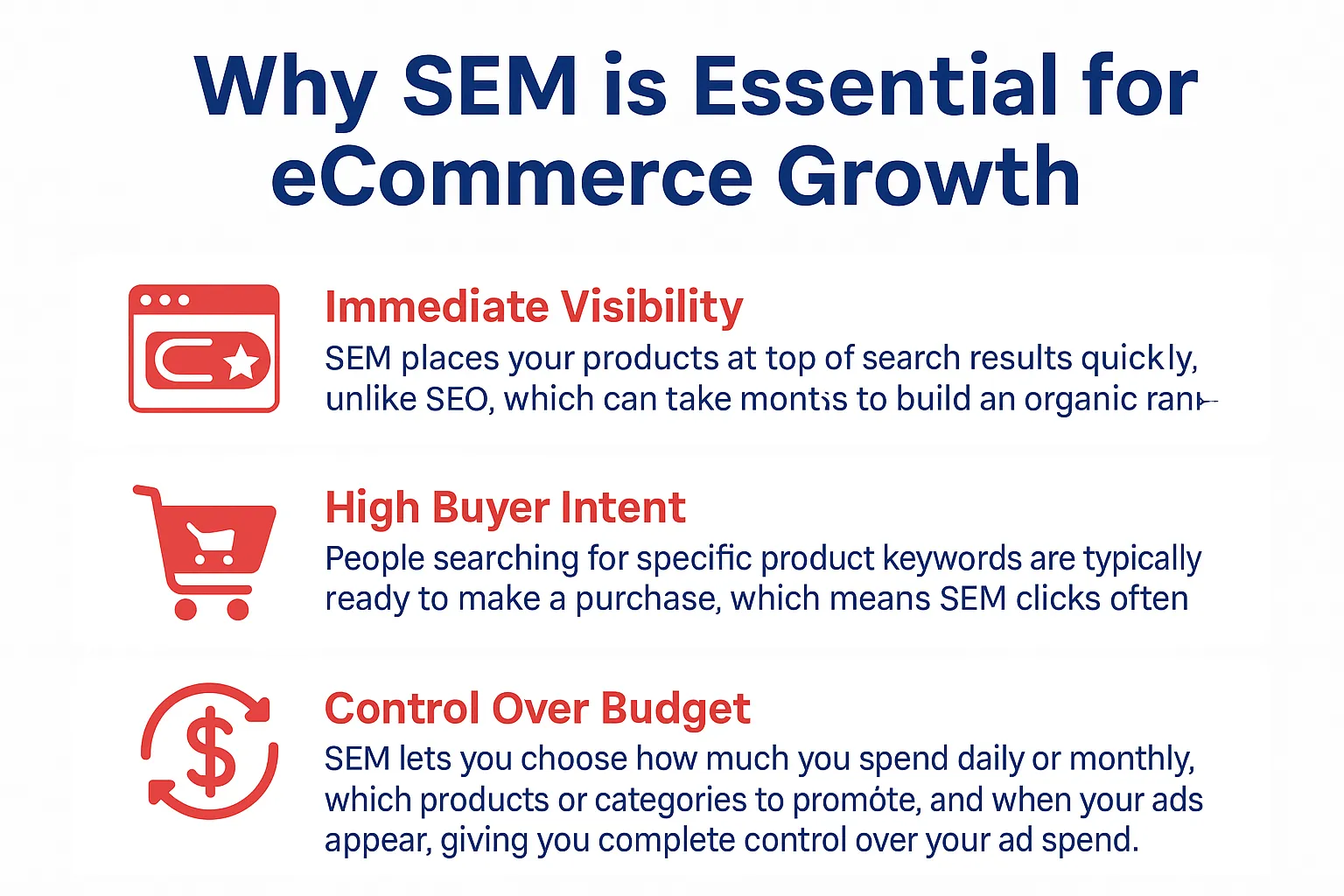
- Immediate Visibility: SEM places your products at the top of search results quickly, unlike SEO, which can take months to build an organic ranking.
- High Buyer Intent: People searching for specific product keywords are typically ready to make a purchase, which means SEM clicks often have a higher conversion rate.
- Control Over Budget: SEM lets you choose how much you spend daily or monthly, which products or categories to promote, and when your ads appear, giving you complete control over your ad spend.
Choosing the Right SEM Channels for eCommerce
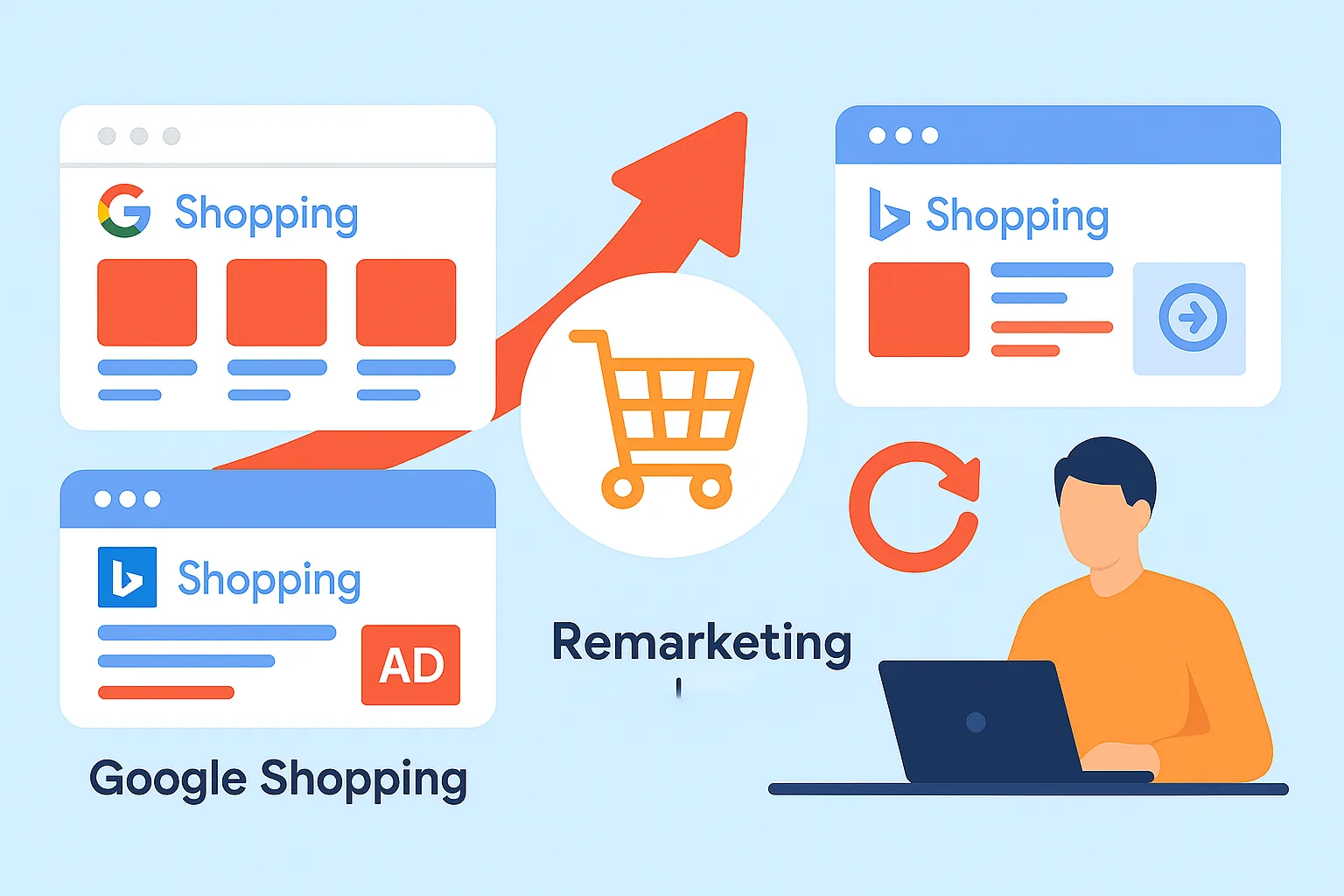
The core channels for eCommerce SEM include:
- Google Shopping Ads: These ads display rich product details, including images, prices, and store names, directly within the search results, allowing shoppers to compare products quickly. They are ideal for driving high-intent buyers ready to purchase.
- Bing Shopping/Microsoft Advertising: Similar to Google Shopping, but with less competition, which can result in lower CPCs for specific product categories and unique audiences not reached by Google.
- Dynamic Search Ad: They are ideal for stores with extensive or frequently changing inventories. They automatically create ads based on your website content, saving time on manual ad creation and covering long-tail product searches.
- Remarketing: An essential channel to re-engage visitors who browsed or added products to the cart but left without buying. You can display personalized ads that remind users of what they've viewed, along with offers or urgency to encourage conversion.
Your product feed is the backbone of your Shopping Ads. If it’s messy, your ads won’t show properly or attract clicks from serious buyers.
Key feed optimization tips:
- Use Clear Product Titles: Include the brand, model, size, color, and keywords that shoppers actually use.
- Add High-Quality Images: Utilize professional, clear photos from multiple angles to establish trust and increase CTR.
- Write Strong Descriptions: Include essential product details, benefits, and keywords naturally.
- Use Custom Labels: Create labels for seasonal items, high-margin products, or clearance stock to bid smarter.
- Keep Feed Updated: Sync with your inventory daily to prevent wasted spend on sold-out products and show accurate pricing and availability.
Smart Bidding & Budget Allocation
To get the best ROI, you need a clear bidding strategy with practical actions you monitor regularly:
- Set ROAS Targets: Define a clear target return on ad spend. Know your break-even point and profitable CPA to guide bids.
- Prioritize Top Products: Analyze sales data and allocate a larger budget to products that convert well and have strong margins.
- Use Smart Bidding: Utilize Google’s automated bidding tools, such as Target ROAS or Maximize Conversions, but monitor performance daily and adjust bids as needed.
- Schedule Ads Strategically: Study when your audience shops — weekdays versus weekends, and the time of day — and increase bids during peak hours to capture more ready buyers.
Most shoppers don’t purchase on their first visit. Remarketing helps you win them back.
Effective remarketing tactics:
- Dynamic Remarketing: Display personalized ads featuring the exact products a shopper has viewed, including images, prices, and even stock levels, to encourage action.
- Abandoned Cart Campaigns: Remind customers to complete their purchase with clear messaging and incentives, such as discount codes or free shipping reminders.
- Cross-Sell & Upsell Ads: Highlight related or complementary products based on what the shopper viewed, encouraging larger orders and increasing lifetime value.
- Time-Limited Offers: Utilize special discounts, countdown timers, or flash sales to create a sense of urgency and motivate shoppers to purchase before the deal expires. By adding countdowns or limited-time deals, we can encourage shoppers to act quickly and avoid delaying their purchase.to convert them.
To know what’s working, you must track key metrics and understand what they reveal about your paid campaigns.
- ROAS: Verify that your ads generate sufficient sales to exceed your spend; compare results across products.
- Conversion Rate: Measure the percentage of visitors who complete purchases compared to the total number of clicks, tracking by device and audience.
- Average Order Value (AOV): Determine if SEM attracts higher-spending customers and impacts total revenue.
- Cost Per Conversion: Compare CPA to your margins to ensure profitable ads.
Connect Google Ads, Analytics, and your eCommerce platform to tie these numbers together for better reporting and more intelligent decisions.
Standard eCommerce SEM Mistakes to Avoid
Avoid these costly errors:
- Neglecting Feed Quality: Poor product titles, missing attributes, or low-quality images can cause your ads to underperform, leading to fewer clicks and sales.
- No Negative Keywords: Without negatives, your ads may appear for irrelevant or low-intent searches, wasting budget and lowering ROI.
- Sending Traffic to Generic Pages: Directing shoppers to a homepage instead of a relevant product or category page can reduce conversion rates and frustrate visitors.
- Ignoring Mobile Shoppers: Many buyers shop on mobile; slow or clunky mobile pages lead to high bounce rates and lost revenue.
- Set and Forget: SEM campaigns need regular checks and optimizations. Failing to adjust bids, ads, or budgets results in missed opportunities and wasted spend.
Final Tips for a Strong eCommerce SEM Strategy
- Keep testing new ads, product groupings, and bids.
- Monitor seasonal trends and adjust campaigns.
- Align SEM with promotions and discounts.
- Always A/B test ad copy and visuals.
- Stay updated on Google Merchant Center policies to avoid disapprovals.
Final Thoughts: Ready to Boost Your Online Sales?
Paid search is a powerful growth tool for e-commerce, but success depends on an innovative strategy, not just ad spend. By combining Shopping Ads, optimized product feeds, smart bidding, and remarketing, you can reach high-intent buyers and turn clicks into sales. Track your performance, avoid common mistakes, and continuously test what works. With the solid SEM foundation, your online store can attract more traffic, boost conversions, and scale profitably.
Want to grow your online store faster? Request a custom eCommerce SEM plan today and unlock your revenue potential.